
Pruning
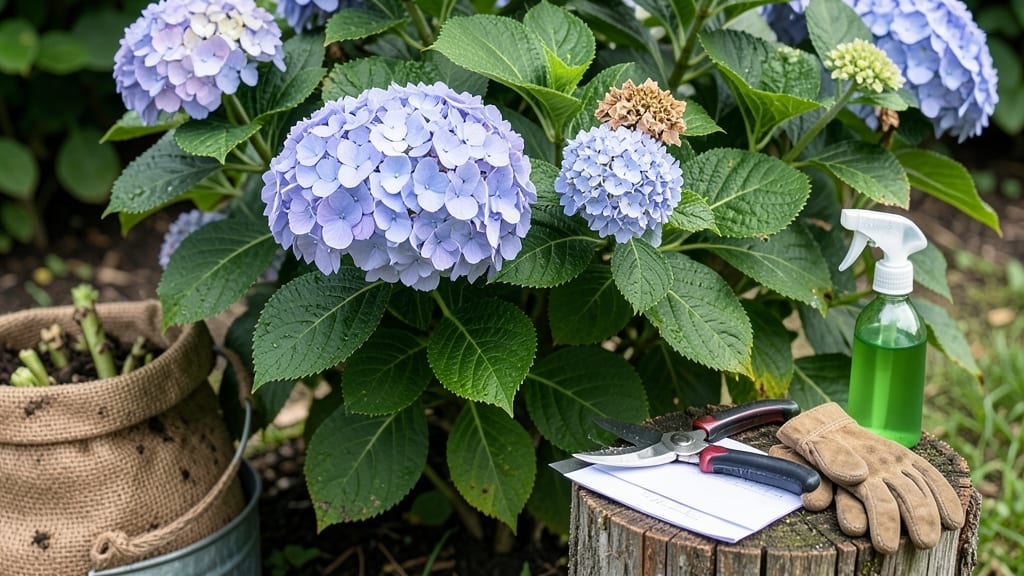
Spring hydrangea pruning care focuses on trimming dead branches and shaping the plant between late winter and early spring before new growth begins, which helps promote larger, healthier blooms. Always use sterilized shears and never cut more than one-third of the plant to avoid stressing it.
Timing is everything with hydrangeas because different varieties bloom on old wood or new growth. 🌸 For example, mophead hydrangeas need pruning right after flowering since they bloom on last year's stems, while panicle types can handle spring cuts because they flower on current season's growth.
I've found that sterilizing your tools with rubbing alcohol prevents bacterial infections that can weaken the plant after pruning.
Beyond just cutting, this is when you should also inspect for pests or disease—spring is the perfect time to catch issues early. The key is balancing aggressive shaping with leaving enough foliage to support photosynthesis. Over-trimming can leave your hydrangea struggling to produce the vibrant blooms you're hoping for.
💡 In This Article
- Best Hydrangea Pruning Timing and Techniques by Variety
- Tools and Mistakes to Avoid in Spring Hydrangea Care
Best hydrangea pruning timing and techniques by variety
Understanding your hydrangea type determines when and how you prune. Mophead varieties, like the classic Hydrangea macrophylla, bloom on last year's wood, so prune them right after flowering—typically late summer or early fall—to preserve next year's buds.
In contrast, panicle hydrangeas (Hydrangea paniculata) thrive with spring cuts because they flower on current season's growth, allowing you to shape them aggressively between February and March.
The key difference lies in their growth habits. Oakleaf hydrangeas (Hydrangea quercifolia) also bloom on old wood, but their stunning fall foliage makes late summer pruning ideal to maintain shape while leaving enough stems for next year's flowers.
Smooth hydrangeas (Hydrangea arborescens) are the most forgiving—they bloom on new growth, so you can prune them anytime in late winter or early spring without fear of losing blooms. 🌿
For mophead types, cut back stems to just above the first set of leaves or buds (about 4-6 inches from the ground) to encourage robust new growth. Panicle varieties respond well to more dramatic cuts—up to one-third of the plant—since they'll produce flowers on fresh shoots.
Oakleaf hydrangeas benefit from selective pruning to open up the center and improve air circulation, which reduces disease risk.
Timing matters because hydrangeas begin their growth cycle when daytime temperatures consistently stay above 50°F. Pruning too early (before late winter) risks exposing tender new shoots to frost damage, while waiting too long (after early spring) can remove next year's flower buds.
I've seen panicle hydrangeas produce 30-40% larger blooms when pruned correctly in early spring compared to those pruned later in the season.
Here's a quick reference for each type:
- Mophead: Prune after flowering (late summer/fall), cut to 4-6 inches above ground
- Panicle: Prune in February-March, can cut up to 1/3 of plant
- Oakleaf: Prune in late summer to maintain shape, leave some stems for next year
- Smooth: Prune anytime in late winter/early spring, aggressive cuts encouraged
The science behind this involves understanding how hydrangeas store energy. When you prune correctly, you're redirecting the plant's resources toward fewer, stronger stems that produce larger blooms. This is why you'll often see professional gardeners recommend selective pruning—removing only the oldest, weakest stems rather than indiscriminate cutting. 🌸