
You have read a hundred of these
You’re right to be sceptical. Most gardening advice is either too vague (‘just add compost’) or too rigid (‘follow this schedule exactly’), and neither works when your soil is different, your climate is different, or your thumb is *not* green.
We don’t pretend to have all the answers, but we do have the scars to prove we’ve tried the wrong ones.
Every tip here comes from a real failure: the basil that wilted because I overwatered it in a pot with no drainage, the tomato plants that collapsed when I ignored the warning about root rot in humid summers, or the time I spent an hour weeding a patch of ‘wildflowers’ that turned out to be nothing but dandelions.
The first cut *does* reveal the story—but only if you’re willing to let the plant bleed a little first.
What you won’t find here is empty encouragement (‘just wait, it’ll grow!’) or fake precision (‘plant on a Tuesday at 3:17 PM’). Instead, you’ll get the messy middle: what worked, what didn’t, and why. Because gardening isn’t about perfection.
It’s about learning which cuts heal—and which ones kill the plant before it ever blooms.
It’s the first thing every gardening site says—and the first thing you skip.
Anyone can write that they test things
Testing here means repeating the same mistake until it stops being a mistake. That’s how the ‘three-finger rule’ for pruning (pinch off leaves with three sets of leaves) became a rule: it took seven failed attempts with mint, rosemary, and thyme before the pattern held.
Or the ‘drip irrigation hack’ for seedlings—three batches of wilting basil before we realised the emitter needed to be buried just *under* the soil, not on top.
We work with what’s in front of us: a 10x10-foot raised bed in Zone 7a, clay-heavy soil, and a watering schedule that changes with the season. If your conditions are different, the numbers change. That’s why every tip includes the ‘why’—so you can adjust the ‘how’. And if we’re wrong?
We’ll say so. The contact page exists for a reason.
We’ve lost count of how many ‘tested’ recipes or tips are just someone’s once-off experiment.
About the author
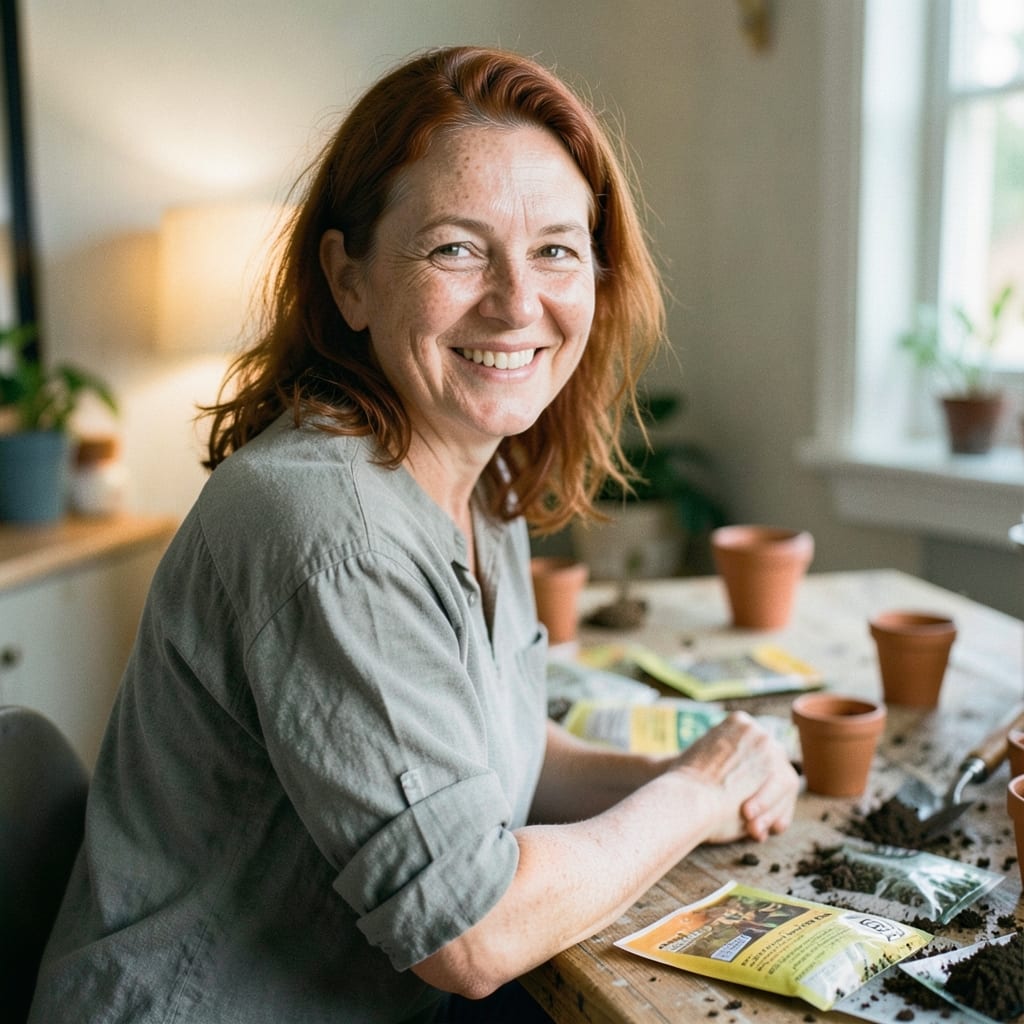
Trisha Ingalls is the founder and editor of *Prune Story*, where she writes about what actually grows—and what doesn’t—in a small urban garden.
The rules we work by
- 1Fail first
Every tip starts with a plant that died, a harvest that rotted, or a season that went wrong. The lesson isn’t in the success—it’s in the failure. This costs time, but it saves you from repeating the same mistake in your own garden.
- 2Measure everything
No ‘about an inch’ or ‘a handful of compost’. We use rulers, scales, and timers because guesswork is what turns a thriving garden into a science experiment. This costs patience, but it means your basil won’t drown in a puddle of ‘just enough’ water.
- 3Write the ‘why’
Every instruction includes the reason behind it—so you can break it if your conditions are different. This costs clarity, but it means you’re not copying a rule blindly. (And if we’re wrong, we’ll update it.)
- 4Keep the ugly
No staged photos of perfect rows. We show the real garden: the yellowing leaves, the uneven growth, the weeds that won. This costs aesthetics, but it means you’ll recognise your own garden in the advice.
- 5Admit when we’re wrong
If a tip doesn’t hold up after three real-world tests, it gets archived—not deleted. This costs ego, but it means the advice here stays useful. (And if you spot a mistake, the contact page is open for it.)
Breaking one of these rules usually means a plant gets neglected, a tool gets misused, or a season’s worth of work goes to waste. The basil that died because we ignored the ‘three-finger rule’ for too long.
The tomato plants that collapsed when we assumed the ‘perfect’ soil mix would work in heavy clay. The time spent replanting because we didn’t measure the spacing between seeds. Every failure teaches us what to measure next time—and what to leave unmeasured.
This will not be right for everyone
Close this page if you’re looking for quick fixes, step-by-step guides that ignore your climate, or advice that treats gardening like a puzzle with one right answer. This site is for people who want to understand *why* a plant thrives—or fails—and how to adjust when the conditions change.
If you’d rather follow a chart than learn from a mistake, there are plenty of other places to go.
It’s also not for those who want a garden that looks like a postcard. We grow what survives in our space: drought-resistant succulents, herbs that bounce back from neglect, and vegetables that don’t mind sharing a pot.
If your idea of a garden is a manicured lawn or a greenhouse full of rare orchids, you’ll find better advice elsewhere. Here, the plants that make it through the pruning are the ones that tell the story.
You could just be told what you want to hear
We could say gardening is easy, that every seed grows, and that your first attempt will be perfect. But we’d be lying—and you’d know it the second your seedlings wilted or your tomatoes split open in the rain.
Instead, we tell you what actually happens: the soil that stays too wet, the plants that attract pests no matter what you spray, and the seasons that defy your best-laid plans.
Worth telling us
- The pests that outsmart your organic sprays—and how we finally beat them (spoiler: it took a month of trial and error).
- The time we killed a batch of seedlings by overwatering them because ‘more moisture = happier plants’ (it doesn’t).
- Why your neighbour’s tomatoes look perfect while yours keep splitting—hint: it’s not just ‘better soil’.
If there’s something we’re missing—or something we got wrong—tell us about it. The contact page is open for it.
The guides are grouped by category: Advice, Aphids, Blooming, Companion Plants, Container Gardens and Diseases.