
Pruning
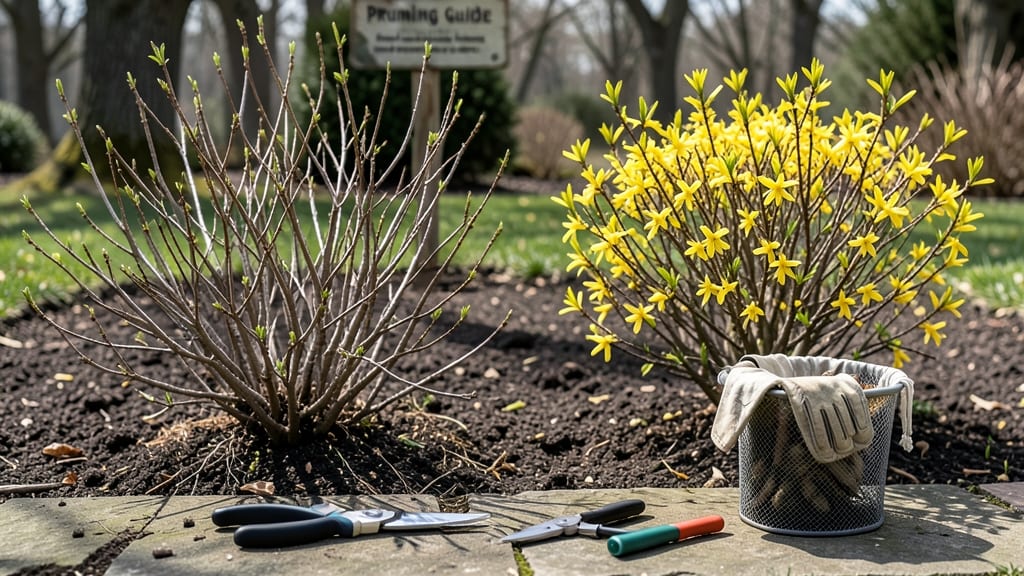
Leggy forsythia steals the spring show with its bright yellow blooms—but those long, bare stems are a sign your bush needs a serious haircut. ✂️ I’ve turned my own straggly forsythia into a dense, blooming powerhouse using these year-round pruning tricks that actually work, not just the "cut it back hard" advice you’ll find everywhere.
The secret isn’t timing—it’s how you prune. Most gardeners wait until after blooming, but that’s too late for leggy growth. Instead, we’ll focus on thinning out the oldest, woodiest stems in late winter and lightly shaping in summer to encourage new growth where it matters.
You’ll need just a few tools: sharp bypass pruners, a hand saw for thicker branches, and rubbing alcohol to sterilize cuts (trust me, this prevents disease).
By next spring, you’ll see thicker foliage and more blooms clustered where they’re visible, not hidden in the middle. The bush will look fuller, bloom earlier, and stay healthier for years—no more apologizing for your forsythia’s "wild" look.
The best part? You can prune at any time, even mid-summer, without ruining next year’s flowers.
Here’s the game-changer: cut back one-third of the oldest stems every year, no matter the season. This forces new growth from the base, and those fresh stems will flower in just one to two seasons.
The key is to never remove more than a third at once—forsythia is tough, but even it has limits. Let’s fix that leggy mess for good.
📚 In This Guide
- What you need
- Instructions
- Tips and common mistakes
- Wrapping up and next steps
What you need
- ● Pruning shears or loppers – Sharp, bypass-style shears (for small branches) or loppers (for thicker stems, up to 1.5 inches in diameter).
- ● Hand pruners – For delicate trimming of smaller branches (replace blades if dull).
- ● Gloves – Heavy-duty gardening gloves (to protect hands from thorns and sap).
- ● Disinfectant (rubbing alcohol or 10% bleach solution) – 1 part bleach to 9 parts water (to sterilize tools between cuts and prevent disease).
- ● Rag or paper towels – For wiping tools clean before and after use.
- ○ Garden twine or zip ties – (Optional) To secure heavy branches temporarily if needed.
- ● Safety gear – Sunglasses (to shield eyes from debris) and closed-toe shoes.
- ● Weather check – Prune on a dry, calm day (avoid pruning when the plant is wet or frost is present).
- ● Cleanup supplies – Garden bag or bucket (for collecting pruned branches) and a hose (to rinse tools afterward).
- ○ Sharpener – (Optional) A file or sharpening stone (to maintain tool sharpness).
Step-by-Step guide to pruning leggy forsythia
Leggy forsythia doesn’t have to be a lost cause—here’s how to rejuvenate it with precision cuts.
✂️ Step 1: Time Your Pruning for Maximum Impact
Forsythia blooms on old wood, so the best time to prune is right after flowering—typically late spring or early summer. This ensures you don’t remove next year’s flower buds. If your forsythia is severely overgrown, you can do light pruning in late summer to shape it, but avoid heavy cuts then. I always mark the blooming branches with a flag in early spring so I know which ones to protect.
Never prune in fall or winter—you’ll cut off the next season’s flowers. If you missed the window, wait until spring and focus only on removing dead or crossing branches. The key is patience: forsythia responds best to gradual reshaping over 2-3 years rather than drastic cuts all at once.
✂️ Step 2: Remove Dead, Diseased, and Crossing Branches First
Start by sterilizing your pruners with rubbing alcohol to prevent spreading disease. Scan the bush and cut out any dead, broken, or diseased branches at the base—these won’t regrow and only take energy from healthy growth. Next, look for branches rubbing against each other (crossing limbs) and shoots growing inward toward the center. These compete for sunlight and air circulation, leading to weak blooms.
Make clean cuts at a 45-degree angle, about ¼ inch above a outward-facing bud or branch collar. Avoid leaving stubs—they invite rot and weaken the plant. If a branch is thicker than your wrist, use loppers or a pruning saw for a smooth cut. I always step back after each cut to visualize the shape—this helps avoid over-pruning.
✂️ Step 3: Thin Out Overcrowded Areas for Better Airflow
Leggy forsythia often suffers from overcrowding, where too many branches compete for light and nutrients. Focus on selective thinning—remove 1 in 3 branches in dense areas, starting with the oldest or weakest stems. Aim to create an open, vase-like shape that allows sunlight to reach the center. This encourages new growth from the base and reduces the risk of fungal diseases like powdery mildew.
Don’t just chop randomly—step back every few cuts to assess balance. You’re not just pruning for shape; you’re training the bush to grow bushier and fuller from the bottom up. If you see long, bare stems with leaves only at the tips, those are prime candidates for cutting back to a strong lateral branch or bud. This forces the plant to send out new shoots lower down.
☀️ Step 4: Encourage New Growth with Strategic Cuts
For severely leggy stems (those stretching 3+ feet long with few leaves), cut them back by ⅓ to ½ their length to a strong lateral branch or outward-facing bud. Avoid cutting back to bare wood—always leave a bud or branch to spur regrowth. Forsythia is resilient, but don’t remove more than ⅓ of the plant’s total foliage in one year—this stresses the bush and can reduce flowering.
After pruning, water deeply to help the plant recover. You’ll notice new shoots emerging within 4-6 weeks from the cuts you made. These are your future blooming branches, so protect them from frost if pruning late in the season. I often apply a balanced fertilizer (10-10-10) in early spring to support this new growth, but avoid heavy nitrogen—it promotes leafy growth at the expense of flowers.
⏰ Step 5: Maintain Year-Round with Light Pruning
Leggy forsythia needs ongoing attention to stay compact. In late summer, do a light shaping prune to remove any shoots that grew too long or crossed branches. This keeps the bush tidy and prevents future overcrowding. Avoid heavy cuts now—you’re just refining the shape and encouraging next year’s flower buds to form.
In winter, do a final check for any dead or storm-damaged branches and remove them at the base. Forsythia is dormant then, so it won’t bleed sap like maples or birches. If you notice suckers (shoots growing from the base or roots), snip them off immediately—they drain energy from the main plant. With consistent pruning, your forsythia will bloom more abundantly and stay fuller, healthier, and easier to manage year after year.
Tips & tricks for pruning leggy forsythia
These precision-focused strategies will help you transform your leggy forsythia into a bushier, more vibrant shrub with minimal stress to the plant.
Timing Secret: The late spring/early summer window after flowering is non-negotiable for preserving next year's blooms. I've learned this the hard way—after accidentally pruning too late, my forsythia took two full years to recover its full bloom potential. Mark your calendar for when forsythia finishes flowering in your area, as this can vary by climate zone. If you must prune outside this window, limit yourself to removing only dead or crossing branches in spring to avoid sacrificing future flowers completely.
The Technique That Changed Everything: When making cuts in Step 2, focus on creating clean, slanted cuts just above outward-facing buds at a 45-degree angle. This technique promotes better healing and directs new growth in the direction you want. I use a small piece of masking tape to mark the exact spot where I'll make my cut before I pick up the pruners—this prevents me from accidentally cutting too close to the bud or leaving unsightly stubs. For thicker branches, I always use my loppers and make the cut slightly above a lateral branch to encourage bushier regrowth.
Pruning Strategy: In Step 3, when thinning overcrowded areas, follow the "one-third rule"—remove one in three branches in dense sections. This creates the open vase shape that allows sunlight to penetrate to the center where new growth will emerge. I've found that using a string or garden twine to outline the desired shape before making cuts helps maintain symmetry. For severely leggy stems in Step 4, cutting back by one-third to one-half their length to a strong lateral branch works wonders—just remember to never remove more than one-third of the plant's total foliage in any single year to prevent shock.
Year-Round Maintenance: The light shaping prune in late summer mentioned in Step 5 is your secret weapon for keeping the bush tidy between major pruning sessions. I schedule this as part of my regular garden maintenance routine, using the same 45-degree angle technique to maintain clean cuts. During winter, don't overlook those pesky suckers—removing them immediately prevents them from draining energy from your main plant. This consistent, year-round approach has transformed my forsythia from a leggy mess into a well-shaped, blooming powerhouse.
Pro Tips for Pruning Leggy Forsythia
- These precision-focused strategies will help you transform your leggy forsythia into a bushier, more vibrant shrub wi...
- Timing Secret: The late spring/early summer window after flowering is non-negotiable for preserving next year's bloom...
- The Technique That Changed Everything: When making cuts in Step 2, focus on creating clean, slanted cuts just above o...
Frequently asked questions
Got questions about pruning leggy forsythia? You’re not alone! Here are answers to the most common concerns to help you tackle the task with confidence.
When is the best time to prune forsythia to encourage more blooms?
The ideal time to prune forsythia is right after flowering (late spring) or during early summer. This timing prevents cutting off next year’s blooms, which form on old wood. Avoid heavy pruning in fall or winter, as it can stress the plant and reduce spring flowers. A light cleanup in late winter is fine, but save major shaping for post-bloom!
What if I prune my forsythia at the wrong time? Can I still save it?
Don’t panic! If you’ve pruned too early (before blooming) or too late (fall/winter), your forsythia can still recover. Focus on removing only dead or overgrown branches and avoid drastic cuts. Over time, the plant will bounce back—just be patient. Next year, time your pruning to late spring for the best results.
How much can I cut back a leggy forsythia without harming it?
You can safely remove up to one-third of the plant’s oldest stems at a time to rejuvenate it. For severely leggy forsythia, thin out the thickest, most overgrown branches first, then gradually shape the rest. Avoid cutting into the center too aggressively, as this can create a “hole” in the shrub. Think of it like a haircut—less is more!
Are there alternatives to pruning if my forsythia is too leggy?
If pruning feels overwhelming, try these gentle alternatives:
- Fertilize: Use a balanced, slow-release fertilizer in early spring to encourage denser growth.
- Thin out: Remove only the most unruly branches instead of a full overhaul.
- Transplant: If the shrub is in poor soil or overcrowded, relocating it can refresh its growth.
- Divide: Older forsythia can be divided in early spring to create bushier, younger plants.
Why does my forsythia keep growing leggy even after pruning?
Leggy growth often stems from overcrowding, poor sunlight, or improper pruning. Check these factors:
- Is it getting at least 6 hours of sunlight daily?
- Are nearby trees or structures blocking light?
- Did you cut too close to the ground last time?
- Is the soil nutrient-poor or compacted?
Wrapping up and next steps
Pruning leggy forsythia doesn’t have to be intimidating—with the right timing, tools, and technique, you can transform your overgrown shrub into a bushier, more vibrant bloomer! 🌸 Whether you tackle it in late winter, after flowering, or even mid-season, the key is consistency and confidence.
Remember, every cut is a step toward a healthier plant.
Now that you’re armed with expert tips, grab your pruners and give your forsythia the fresh start it deserves. Next up? Monitor its growth, adjust your approach as needed, and enjoy those stunning yellow blooms year after year! 🌿