
Pruning
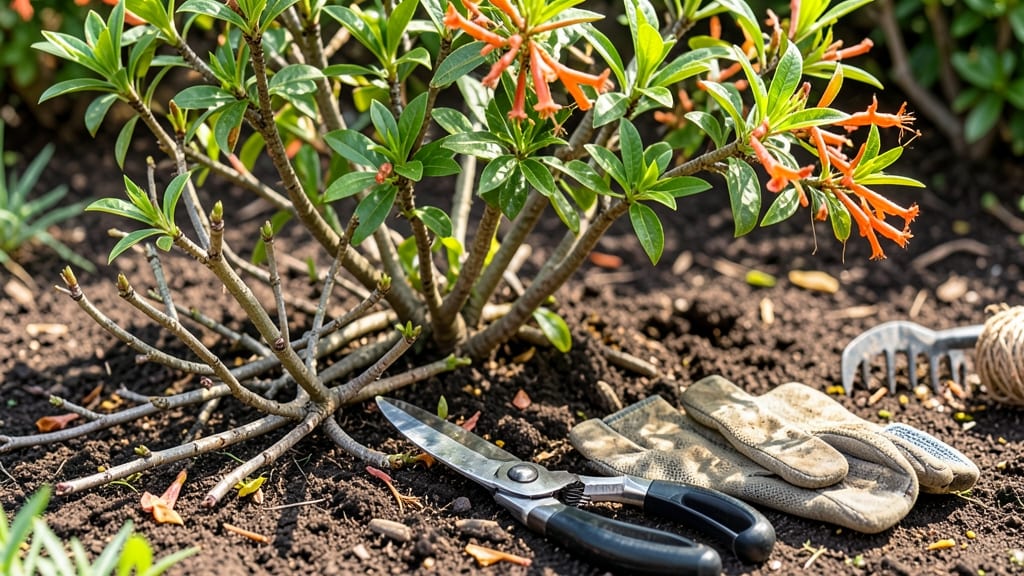
Late-winter pruning transforms Cape honeysuckle from a tangled mess into a year-round flowering powerhouse—and the secret timing is right now, before new growth starts. 🌿 I’ve pruned mine every February for three years, and the difference is stunning: dense foliage, nonstop blooms, and branches that don’t sag under the weight of flowers.
The key? Cutting back by one-third while the plant’s still dormant but buds are swelling.
You’ll need sharp bypass pruners, a small saw for thicker stems, and a bucket for clippings (they make great mulch). Start by removing dead or crossing branches first—these compete with healthy growth and ruin the plant’s natural shape.
Then work on thinning out older wood from the center to let light reach the interior. Think of it like giving your plant a haircut: you’re not just trimming, you’re sculpting.
After pruning, your Cape honeysuckle will rebound with new shoots within weeks, and those branches will burst with blooms by early spring. The flowers keep coming all summer if you deadhead spent blooms, and the plant stays compact enough to fit even small gardens.
Just avoid cutting into old, woody stems—they won’t regrow, and you’ll lose that lush, bushy look.
For mature plants that’ve gotten leggy, do a rejuvenation prune every 2-3 years: cut back half the oldest stems to the ground. It looks brutal, but your plant will thank you with fresh, vigorous growth.
The worst that happens? You get a temporary gap in blooms—until the new branches take over. Trust the process!
📚 In This Guide
- What you need
- Instructions
- Tips and common mistakes
- Wrapping up and next steps
What you need
- ● Pruning shears: Sharp, bypass-style shears (for clean cuts on smaller stems). Size: 6–8 inches.
- ● Loppers: For thicker branches (½–1½ inches in diameter). Look for: Long handles (20+ inches) for leverage.
- ● Pruning saw: For stubborn, woody stems (1½+ inches thick). Type: Curved-tooth saw for clean cuts.
- ● Gloves: Heavy-duty, gardening gloves (cut-resistant, like those with Kevlar or leather palms).
- ● Disinfectant: 70% isopropyl alcohol or a pruning sealant (to prevent disease spread).
- ● Rake or broom: For clearing fallen debris after pruning.
- ● Bucket or bag: To collect pruned branches (5-gallon capacity recommended).
- ● Hand pruners with ratcheting mechanism: For stubborn cuts without extra force.
- ● Extension pole: If your honeysuckle is tall (adds 3–6 feet to reachability).
- ● Plant food: Balanced fertilizer (10-10-10 or similar) to nourish the plant post-prune.
- ● Safety glasses: Protects eyes from debris (especially if using a saw).
Step-by-step instructions for pruning Cape honeysuckle
Here’s how I prune Cape honeysuckle to keep it lush, flowering, and thriving all year—no guesswork involved.
✂️ Step 1: Time Your Prune for Late Winter
Prune Cape honeysuckle in late winter, right before new growth begins—typically February to early March in most climates. This timing ensures you remove dead wood while stimulating fresh spring blooms. You’ll know it’s the right moment when buds swell but haven’t yet burst open. Avoid pruning in fall, as new growth won’t harden off before winter.
If you missed late winter, don’t panic—you can prune again in early spring (March to April). Just avoid pruning after mid-summer, or you’ll cut off next year’s flowers. Cape honeysuckle blooms on new wood, so late pruning won’t harm the plant but may delay flowering.
✂️ Step 2: Remove Dead, Damaged, or Weak Branches First
Start by inspecting the plant for dead, diseased, or crossing branches. Dead wood is easy to spot—it’s brown, brittle, and snaps when bent. Diseased branches may have black spots or oozing sap. Use clean, sharp pruners to make 45-degree cuts just above a healthy bud or lateral branch. This encourages outward growth and prevents unsightly stubs.
Next, look for branches rubbing against each other or growing inward. These compete for space and often lead to weak, tangled growth. Remove one of the crossing branches at its base, cutting back to a healthy outward-facing bud. This opens up the center of the plant for better airflow and sunlight penetration.
✂️ Step 3: Shape the Plant for Balance and Airflow
Cape honeysuckle thrives with an open, rounded shape, so aim to thin out the center while maintaining a natural outline. Start at the outer edges and work inward, removing overly long or leggy branches that spoil the plant’s form. Cut back to a healthy bud or side branch, ensuring your cuts are clean and angled slightly away from the bud.
Pay attention to the plant’s natural growth pattern—Cape honeysuckle often grows in a vase-like shape. If it’s become too wide or top-heavy, focus on shortening the longest branches by about one-third. This encourages bushier growth and prevents the plant from flopping over. Step back frequently to check your progress—you want a balanced silhouette that looks full but not crowded.
🌿 Step 4: Stimulate New Growth with Strategic Cuts
To encourage vigorous new growth and more blooms, prune back some of the oldest stems to half their length. Focus on branches that are woody and less flexible—these are the ones that benefit most from rejuvenation. Cut just above a healthy bud or lateral branch, and avoid leaving stubs. The plant will respond by sending out fresh, flowering shoots from the base.
For a multi-stemmed Cape honeysuckle, you can also prune one or two of the oldest stems all the way to the ground. This may seem drastic, but it’s a great way to reinvigorate the plant and promote new, stronger growth from the base. Just don’t remove more than one-third of the plant’s total stems in a single pruning session.
⏰ Step 5: Clean Up and Monitor for Recovery
After pruning, remove all debris from the area—this includes fallen branches, clippings, and any diseased material. Dispose of diseased branches in the trash (not the compost) to prevent spreading pathogens. Once the area is clear, give the plant a light watering to help it recover from the pruning stress.
In the weeks following pruning, keep an eye out for new growth—you should see fresh buds forming within 2-4 weeks. If the plant looks stressed (wilting, yellowing leaves), it may need more frequent watering or protection from strong winds. Avoid fertilizing immediately after pruning; wait until new growth appears before applying a balanced, slow-release fertilizer to support recovery.
Tips & tricks for pruning Cape honeysuckle like a pro
Here’s what nobody tells you about keeping your Cape honeysuckle thriving after pruning—these tricks make all the difference.
Timing is Everything: Late winter is your golden window (February to early March) because it lets the plant heal before summer heat. If you miss this, early spring works too—but avoid pruning after mid-summer or you’ll sacrifice next year’s blooms. I always check for swollen buds that haven’t burst yet; that’s your cue. Real talk: Pruning in fall is a no-go unless you’re in a mild climate where new growth can harden off before winter.
Tool Prep Prevents Problems: Your pruners are your most important tool—make sure they’re clean and sharp before you start. I sterilize mine with rubbing alcohol to prevent spreading disease between cuts. For thick branches, I use loppers, but for everything else, sharp pruners make cleaner cuts that heal faster. Here’s what I learned the hard way: Dull tools crush stems instead of cutting cleanly, which invites infections and weak growth.
Shape with Purpose: Cape honeysuckle naturally grows in a vase shape, so work with that. When you’re shortening branches in Step 3, cut back to an outward-facing bud—this opens up the center and prevents that crowded, tangled look. I step back every few minutes to check the silhouette; you want to see light and air moving through the plant. Pro tip: Remove no more than one-third of the plant’s total stems in a single session, even if it looks overgrown. The plant needs some structure to bounce back from.
Recovery Care Makes the Difference: After pruning, don’t just walk away—give your plant a light watering to reduce stress and remove all debris to prevent disease. In the weeks after, watch for new buds forming within 2-4 weeks. If you see wilting or yellowing leaves, it’s usually a sign of stress, so adjust your watering or protect it from wind. I wait until I see fresh growth before fertilizing; that’s when the plant can really use the nutrients to recover.
Pro Tips for Cape Honeysuckle Pruning
- Here’s what nobody tells you about keeping your Cape honeysuckle thriving after pruning—these tricks make all the dif...
- Timing is Everything: Late winter is your golden window (February to early March) because it lets the plant heal befo...
- Tool Prep Prevents Problems: Your pruners are your most important tool—make sure they’re clean and sharp before you s...
Frequently asked questions
Got questions about pruning your Cape honeysuckle? You’re not alone! Here are answers to the most common concerns—so you can keep your plant thriving with confidence.
When is the best time to prune Cape honeysuckle?
Late winter (just before new growth starts) is ideal, but you can also prune lightly in early spring or after flowering. Avoid heavy cuts in fall—it disrupts winter hardiness. Pro tip: If you missed late winter, wait until spring, but don’t delay beyond early summer.
How much can I trim back without harming the plant?
Cape honeysuckle is tough—you can safely prune up to ⅓ of the plant’s height in one season. For overgrown shrubs, cut back old wood by ⅓ and shape younger stems. Warning: Avoid over-pruning in one go; spread it out over 2–3 years for healthier regrowth.
Will pruning affect my Cape honeysuckle’s flowers or hummingbirds?
Not if done right! Prune after flowering (late spring/early summer) to preserve next year’s blooms. Hummingbirds love the tubular flowers—just avoid shearing back all the stems at once. Bonus: Deadheading spent blooms encourages more flowers!
Can I prune in extreme heat or cold?
Avoid pruning during heatwaves (above 90°F) or freezing temps (below 20°F). Stress from cuts + extreme weather can shock the plant. Stick to mild days (50–70°F) for best results. Pro move: Water before/after pruning to reduce stress.
What if my Cape honeysuckle looks leggy or sparse after pruning?
Leggy growth often means it needs more light or balanced pruning. Next season, prune to encourage bushier shape—cut back some long stems to outer buds (not inner ones). Fertilize lightly in spring to boost vigor. Patience pays off!
Are there alternatives if I hate pruning?
Yes! If pruning feels overwhelming, try selective shaping (just trim straggly bits) or container growing—it stays compact with minimal cuts. For wild gardens, let it grow naturally and prune only dead/diseased wood. Remember: Cape honeysuckle is low-maintenance—even "messy" shapes attract pollinators!
Wrapping up and next steps
Pruning your cape honeysuckle in late winter isn’t just about tidying up—it’s your secret weapon for year-round vitality and stunning blooms! 🌿 With the right tools, timing, and techniques, you’ll encourage lush growth, prevent pests, and keep your plant thriving.
Whether you’re a pruning pro or a curious beginner, every snip is a step toward a healthier, happier garden.
Now that you’re armed with knowledge, grab those shears and get pruning! 🌟 For extra confidence, revisit the FAQs or double-check your tools. Happy gardening—your cape honeysuckle will thank you with a showstopping display!