
Pruning
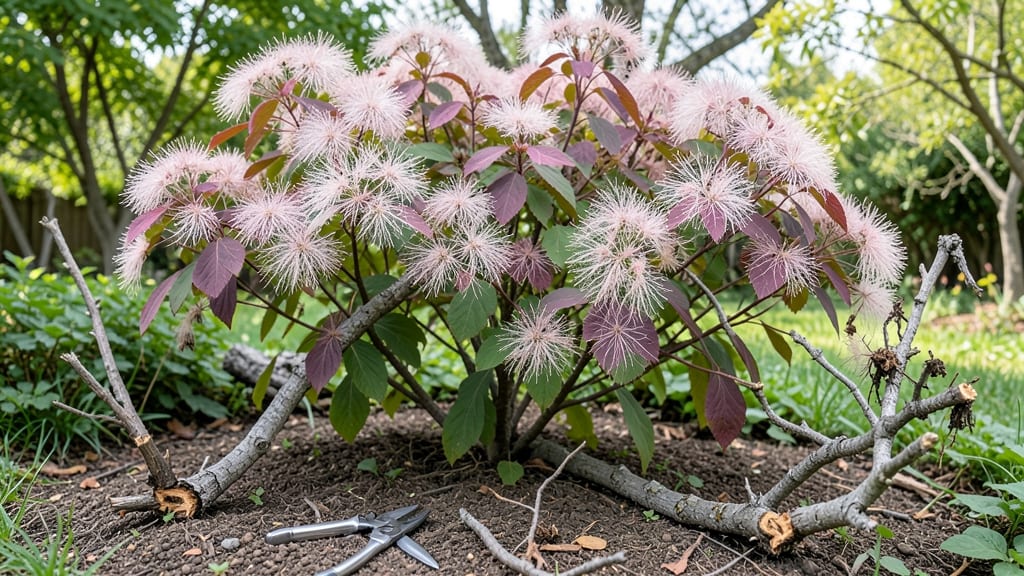
Pruning a smoke tree wrong can turn that fluffy, purple-fringed showstopper into a sad, leggy shadow. 🌿 I’ve watched too many of these stunning plants get butchered by well-meaning gardeners who meant well but missed the mark—here’s exactly what not to do.
The biggest mistake? Pruning at the wrong time. Smoke trees despise late-winter cuts—they bleed sap and lose their natural shape. Even worse, hacking off too many branches at once stresses the plant, leaving it vulnerable to pests or disease.
I’ve seen entire plants struggle for years after a single aggressive trim. What you’ll end up with is a smoke tree that stays lush, vibrant, and full of those signature wispy plumes—no matter how many seasons pass.
The key is patience and precision: small cuts in early spring or after flowering, never more than 25% of the foliage at once. This works for all Cotinus varieties, from ‘Royal Purple’ to ‘Grace’, and keeps them thriving for decades. Let’s get it right this time.
📚 In This Guide
- What you need
- Instructions
- Tips and common mistakes
- Wrapping up and next steps
What you need
- ● Bypass pruners – Sharp, clean, and disinfected (7–10-inch blades, ideal for small to medium branches). Never use dull or rusty tools—they tear bark!
- ● Loppers – For thicker branches (10–12 inches), with a bypass blade (avoid anvil-style, which crushes wood).
- ● Pruning saw – For branches over 2 inches thick (with a fine-tooth blade for clean cuts).
- ● Disinfectant – 70% isopropyl alcohol or a pruning sealant (to prevent disease spread between cuts).
- ● Gloves – Heavy-duty gardening gloves (to protect from thorns and sap).
- ● Extension pole – For high branches (10–12 feet, with a pruner attachment).
- ● Tarp or drop cloth – To collect debris and protect your lawn.
- ● Hand pruners with ratcheting handles – Easier on your hands for long pruning sessions.
- ● Pruning shears for fine-tuning – For shaping smaller branches (avoid hedge trimmers—they shred leaves!).
- ● Ladder – If your smoke tree is over 12 feet tall (use a sturdy, non-slip model).
- ● Marking twine or flags – To tag branches for removal before cutting (helps visualize your pruning plan).
- ● Compost bin or bag – For disposing of pruned branches (smoke trees can be composted, but avoid diseased wood).
- ● Hedge trimmers (they mangle the natural shape of smoke trees).
- ● Chainsaws (unless you’re cutting very thick branches—use them only if necessary).
- ● Shears with dull blades (they rip instead of cleanly cut).
How not to prune a smoke tree: common mistakes that kill your plant
Pruning wrong can turn your smoke tree into a sad, stunted mess. Here’s what I’ve seen destroy these tough but sensitive plants—and how to avoid it.
✂️ Step 1: Don’t Prune at the Wrong Time
Never prune your smoke tree in late summer or early fall. This is when new growth is already pushing hard, and cutting back now sends mixed signals to the plant—it confuses its dormancy cycle. The result? Weak, sparse growth next spring or worse, no growth at all.
Instead, wait until late winter or early spring, just before new buds swell. You’ll know it’s time when you see those fuzzy, pinkish buds forming along the branches. Pruning then gives the plant time to recover and push out fresh, strong growth before summer heat hits.
✂️ Step 2: Avoid Cutting Back Too Aggressively
Some gardeners get overzealous and shear smoke trees down to stubs, thinking it will encourage bushier growth. That’s a fast track to killing your plant. Smoke trees are slow growers, and drastic pruning removes too much energy storage in the branches, leaving the plant vulnerable to stress, disease, or even death.
Stick to removing only 10-20% of the plant’s total volume at a time. Focus on shaping rather than thinning. If you’re unsure, err on the side of caution—you can always prune more next year, but you can’t undo damage from over-pruning.
✂️ Step 3: Never Use Dull or Dirty Tools
Using a dull or contaminated pruner is like inviting disease to your smoke tree. Dull blades tear instead of cleanly cutting, leaving jagged wounds that take forever to heal—or never do. Dirty tools spread bacteria and fungi, which can rot the branches or cause infections that spread throughout the plant.
Before you prune, wipe your shears with rubbing alcohol and sharpen them if needed. Make clean cuts at a 45-degree angle, about ¼ inch above a bud or branch node. This ensures the plant seals off the wound quickly and grows new branches from the right spot.
✂️ Step 4: Don’t Ignore the Plant’s Natural Shape
Smoke trees have a distinctive, layered look with horizontal branches that create that signature "smoky" effect. If you prune to make it look like a traditional shrub or tree, you’ll lose what makes it special. Cutting back too much from the center or removing too many lower branches disrupts its natural form.
Instead, focus on opening up the center for airflow and light while preserving the horizontal layers. Step back often to check your progress—if the plant starts looking too uniform or sparse, you’ve gone too far.
✂️ Step 5: Forgetting to Sterilize After Pruning
Even with clean tools, pruning creates open wounds on your smoke tree. If you don’t sterilize those cuts, sap can ooze, and diseases like powdery mildew or bacterial blight can take hold. I’ve seen entire smoke trees decline because someone ignored this step.
After pruning, apply a thin layer of pruning sealant or a mix of 1 part water to 1 part hydrogen peroxide to the cuts. This helps protect the plant while it heals. Avoid heavy sealants—they can smother small branches and trap moisture, leading to rot.
Tips & tricks for pruning smoke trees the right way
Took me years to figure out these lessons the hard way—here's how to keep your smoke tree thriving after pruning.
Timing is Everything: The late winter/early spring window (when you see those fuzzy pink buds) is your only safe time. I've seen gardeners prune in summer and end up with plants that barely leaf out the next year. The plant needs this dormant period to recover properly—don't rush it. If you miss this window, wait until late fall after leaves drop, but avoid early spring when buds are just starting to swell.
Visual Pruning Guide: Before making any cuts, step back and visualize the plant's natural shape. Look for branches that cross or rub against each other—these should be the first to go. In Step 4, when you're focusing on airflow, aim to create a "cup" shape with the center slightly more open than the outer edges. This preserves that signature smoky silhouette while preventing disease. I always sketch a quick outline on paper first to map out my cuts.
Tool Prep Matters: I can't stress this enough—your pruners need to be sharper than a chef's knife. Before you start, test your tools by making a clean cut through a paper towel—if it tears instead of slices, sharpen them. For stubborn branches, use a fine-tooth saw for clean cuts. And always sterilize between cuts with rubbing alcohol, especially if you're pruning multiple plants. I keep a small spray bottle of diluted bleach (1 part bleach to 9 parts water) handy for quick sterilization between branches.
Pruning Sealant Secrets: When you apply that thin layer of sealant after pruning, don't go overboard—think "light dusting" not "thick coating." I've found that mixing equal parts water and hydrogen peroxide gives the best results without smothering the cuts. For larger wounds (over ½ inch), you can add a pinch of cinnamon powder to the sealant mix—it has natural antifungal properties. Apply within 30 minutes of cutting to prevent sap ooze and disease entry points.
Pro Tips for How Not To Prune A Smoke Tree
- Took me years to figure out these lessons the hard way—here's how to keep your smoke tree thriving after pruning.
- Timing is Everything: The late winter/early spring window (when you see those fuzzy pink buds) is your only safe time...
- Visual Pruning Guide: Before making any cuts, step back and visualize the plant's natural shape. Look for branches th...
Frequently asked questions
Got questions about pruning your smoke tree? You’re not alone! Here are some of the most common concerns—and how to avoid the pitfalls that could harm your plant.
When is the worst time to prune a smoke tree?
Never prune during active growth (spring or early summer) or in deep winter. The worst times are late fall (just before winter dormancy) and mid-summer (when it’s flowering or stressed). Pruning then invites disease, weakens the plant, and can stunt new growth. Wait until early spring (just before buds swell) for the safest timing.
Can I prune too much at once?
Cutting back more than 25-30% of the foliage in a single session stresses the smoke tree, especially if you’re removing large branches. Over-pruning can lead to dieback (dead branches) or even kill the plant if done repeatedly. If your tree looks severely unruly, space pruning over 2-3 years instead of tackling it all at once.
What if I accidentally prune the wrong branches?
No panic—just act fast! If you’ve cut old wood (thick, woody stems) or flowering branches (the red, feathery plumes), your tree may struggle to recover. Do not remove all the old growth at once; leave some structure intact. Focus on new, healthy growth in future pruning sessions to encourage regrowth.
Why does my smoke tree look sad after pruning?
If your smoke tree is drooping, shedding leaves, or producing fewer flowers post-prune, you might’ve overdone it or pruned at the wrong time. Check for yellowing leaves (nutrient stress) or brown, crispy edges (underwatering). Give it time to recover (4-6 weeks), then adjust your approach—like pruning less aggressively next time or improving soil drainage.
Are there alternatives if pruning seems too risky?
Yes! If you’re nervous about pruning, try selective shaping (just trimming a few wayward branches) or letting it grow naturally for a season. Smoke trees are forgiving—they tolerate minimal pruning if you focus on removing dead or diseased wood only. For a neater look, prune lightly after flowering (late summer) to shape without stressing the plant.
Wrapping up and next steps
Pruning your smoke tree doesn’t have to be a gamble—avoiding these common mistakes will keep your plant thriving! Remember, timing, technique, and tools are your best allies. Cut back with confidence, and your smoke tree will reward you with stunning foliage and vibrant blooms.
Now that you’re armed with the don’ts, why not take the next step? Grab your pruners and give your smoke tree the care it deserves—your green thumb is ready for action! 🌿✨