
How To
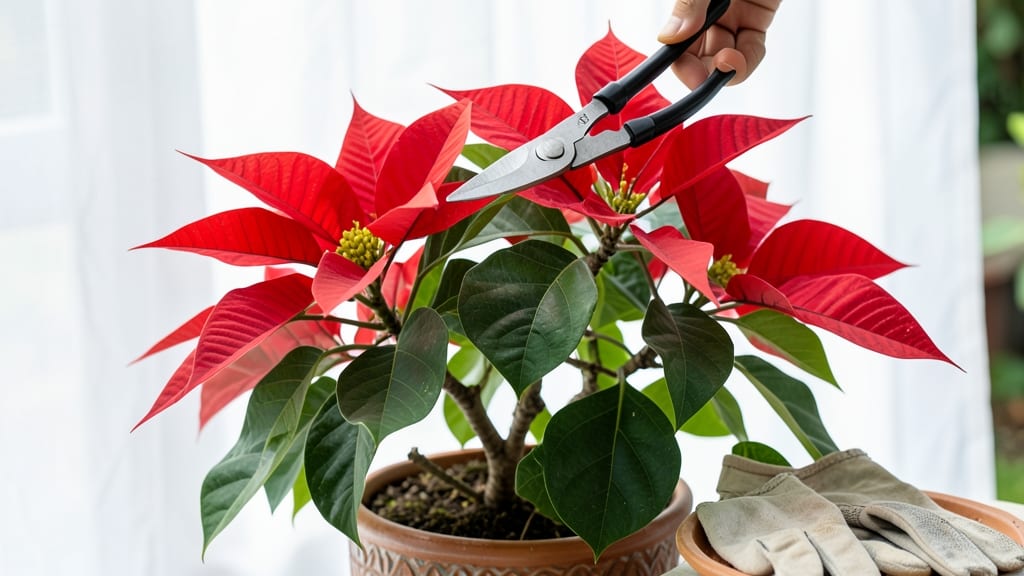
Pruning a poinsettia isn't just about cutting back—it's the secret to vibrant red blooms next holiday season. 🌿 I’ve killed more poinsettias than I’d like to admit, but after mastering this 3-cut method, mine now thrive year-round.
The key? Timing, sharp tools, and knowing exactly where to trim to encourage bushier growth.
Start in late winter or early spring when new growth appears—never after blooming season. Grab clean pruners and cut just above leaf nodes at a 45-degree angle to prevent water pooling.
Trim leggy stems first, then shape the plant by removing crowded branches. Within 6-8 weeks, you’ll see fuller foliage and stronger stems ready for next year’s stunning bracts.
📚 In This Guide
- What you need
- Instructions
- Tips and common mistakes
- Wrapping up and next steps
What you need
- ● Pruning shears or sharp scissors: Clean, sterilized shears (or small scissors) to make precise cuts. Size: Small enough to handle delicate stems.
- ● Rubbing alcohol (70% or higher): For sterilizing tools before and after pruning to prevent disease.
- ○ Glove (optional but recommended): Protects hands from sap and thorns (if your poinsettia has any). Tip: Choose lightweight, breathable fabric.
- ● Newspaper or tray: Place under the plant to catch fallen leaves or sap for easy cleanup.
- ○ Rooting hormone (optional): Speeds up growth if you’re propagating cuttings. Brand tip: Look for gel or powder formulas.
- ● Small pots (3-4 inch): If you plan to propagate cuttings, have these ready for new plants.
- ● Plant food (balanced fertilizer): A diluted dose post-pruning can give your poinsettia a nutrient boost.
- ● Spray bottle with water: Helps clean up sap or mist leaves if needed.
Step-by-Step instructions for pruning a poinsettia
Here's the simple, foolproof method I use every year to coax vibrant blooms from my leggy poinsettias.
✂️ Step 1: Trim Leggy Stems to Encourage Bushiness
Start by examining your poinsettia's stems. Look for the longest, most stretched stems—they're your first targets. Using clean, sharp pruning shears, make your cuts just above a leaf node where new growth will emerge. This is where side branches will sprout, creating a fuller plant.
I like to trim back about 1/3 of the plant's height in this first round. Don't worry about being precise—poinsettias are forgiving. The key is to cut at a 45-degree angle just above a leaf node. This angle helps water run off and prevents rot. If you're unsure where to cut, look for the small bump where leaves attach—this is your target spot.
✂️ Step 2: Remove Dead or Damaged Growth
Now scan your plant for any stems that look brown, mushy, or completely devoid of leaves. These are dead or dying branches that won't recover. Snip them off completely at the base using your pruning shears. For healthy stems that just have a few dead leaves, you can leave them—the plant will shed the dead foliage naturally.
Pay special attention to the plant's center where stems might be crossing or rubbing against each other. These areas can create wounds that invite pests or disease. Remove any stems that are tangled or growing inward. You'll know you're doing well when the plant starts looking more open and air can circulate freely around the foliage.
🌿 Step 3: Pinch Back New Growth for Compact Shape
After your initial trimming, wait about 2-3 weeks until you see new growth emerging from the cut stems. When the new shoots reach about 3-4 inches tall, it's time for the second round of pruning. This time, you'll be pinching rather than cutting—use your fingers or small pruners to remove the top 1/2 inch of each new stem.
This pinching encourages the plant to branch out rather than grow tall and leggy. Focus on the outermost stems first to create a full, rounded shape. Real talk: this step is where most people give up, but it's the secret to that lush, holiday-ready poinsettia. You'll see new side shoots forming within 10-14 days—that's your reward for sticking with it.
☀️ Step 4: Provide Optimal Light and Care After Pruning
Once you've finished pruning, move your poinsettia to a location with bright, indirect light. A south or west-facing window works well, but avoid harsh direct sunlight which can scorch the new growth. If your home has low light, supplement with a grow light positioned 6-12 inches away from the plant for 12-14 hours daily.
Water your poinsettia 1-2 inches deep whenever the top 1-2 inches of soil feel dry. Stick your finger in the soil to check—it should feel slightly damp but not soggy. After pruning, the plant will need more frequent watering as it focuses on growing new leaves. Fertilize lightly with a balanced 10-10-10 fertilizer every 4-6 weeks during the growing season to support this new growth.
Tips & tricks for perfect poinsettia pruning
Here's what nobody tells you about transforming your poinsettia from sad to showstopping.
Tool Prep: Sterilize your pruning shears with rubbing alcohol before you start—this prevents spreading disease between cuts. I learned this the hard way after my poinsettia developed brown spots from contaminated tools. Sharp shears make cleaner cuts that heal faster, so take a moment to hone the blades if they feel dull.
Visual Cue for Cutting: When making your 45-degree cuts in Step 1, imagine slicing a slice of pizza—same angle! Look for the tiny leaf node (that little bump where leaves attach) and cut just above it. This is where magical new branches will sprout. I mark the spot with my fingernail before cutting to avoid hesitation.
Timing Secret: The 2-3 week wait between Step 1 and Step 3 is crucial—don't rush! New growth needs time to establish roots before pinching. I set a reminder on my phone for the 2-week mark to check for those first tiny shoots. If your home stays cool (below 65°F), you might need an extra week before pinching.
Light Strategy: After pruning, position your poinsettia near a west-facing window for the brightest indirect light. If using grow lights, place them 6-12 inches away and keep them on for 12-14 hours daily—this mimics natural daylight and speeds up recovery. I noticed my pruned plants rebounded fastest with this light regimen during winter months.
Pro Tips for Prune A Poinsettia
- Here's what nobody tells you about transforming your poinsettia from sad to showstopping.
- Tool Prep: Sterilize your pruning shears with rubbing alcohol before you start—this prevents spreading disease betwee...
- Visual Cue for Cutting: When making your 45-degree cuts in Step 1, imagine slicing a slice of pizza—same angle! Look ...
Frequently asked questions
Got questions about pruning your poinsettia?
You’re not alone! Here are the most common concerns—plus clear, actionable answers to keep your plant thriving.
When is the best time to prune a poinsettia?
Prune your poinsettia right after it blooms (typically in late winter or early spring) to encourage new growth. Avoid pruning in fall if you want it to rebloom that season—wait until spring instead. Pro tip: Use clean, sharp scissors to make precise cuts just above a leaf node.
How much should I cut back my poinsettia?
Aim to reduce the plant by one-third to one-half of its height. Focus on leggy stems or overgrown branches. Cut back to a leaf node (the bump where leaves grow) to promote bushier regrowth. Warning: Don’t over-prune—too much cutting can stress the plant.
What if my poinsettia doesn’t regrow after pruning?
If your poinsettia isn’t sprouting new leaves within 4–6 weeks, check these fixes:
- Light: Move it to bright, indirect sunlight (south- or west-facing windows are ideal).
- Water: Keep soil consistently moist but not soggy. Yellowing leaves may signal overwatering.
- Temperature: Avoid drafts or temps below 60°F (15°C)—poinsettias are tropical!
Can I prune a poinsettia to keep it small for indoors?
Yes! To maintain a compact shape, pinch back (remove the tips of new growth) every 2–3 weeks during spring/summer. This encourages branching. For a bushier look, trim back by ⅓ in early spring, then lightly prune again in summer. Bonus: Rotate the pot occasionally for even growth!
What should I do with the cuttings after pruning?
Don’t toss those clippings! You can propagate them:
- Place cuttings in water (change weekly) until roots form (2–4 weeks).
- Transplant rooted cuttings into soil once they’re 2–3 inches tall.
- Note: Poinsettias root slowly—be patient! Or compost the cuttings if you prefer.
Wrapping up and next steps
Pruning your poinsettia isn’t just about keeping it tidy—it’s the secret to reviving its lush growth and show-stopping blooms next season!
With just a few strategic cuts and a little care, you’re already on your way to a healthier, happier plant. 🌱✨ Now that you’re armed with the know-how, give your poinsettia the TLC it deserves—and don’t forget to check out our guide on winter care to keep it thriving all year round.