
How To
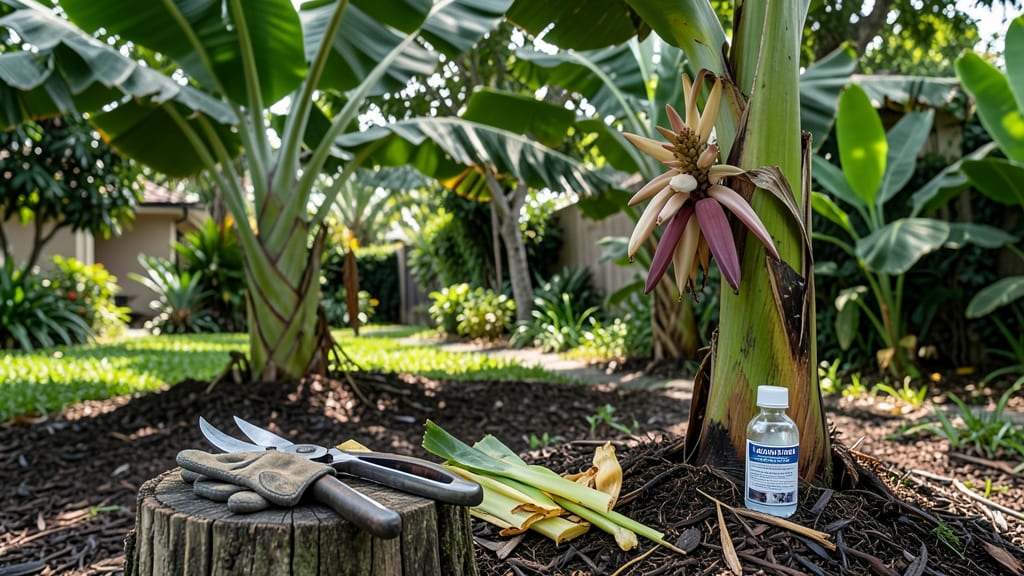
Pruning a banana tree isn’t just about cleaning up—it’s how you unlock bigger, sweeter fruit every season. 🌿 I’ve learned that skipping this step means fewer bananas and more struggling fronds, but the right cuts transform your plant into a productive powerhouse.
The key? Timing it right and knowing what to cut (and what to keep). Start with just 3 tools: sharp pruners, rubber gloves, and a bottle of rubbing alcohol for disinfecting cuts. Banana trees grow fast, but they’re sensitive—one wrong snip can set back your harvest for months.
We’ll focus on removing dead fronds, harvesting the pseudostem (yes, that’s the trunk!), and managing those pesky suckers that steal energy from your main plant.
📚 In This Guide
- What you need
- Instructions
- Tips and common mistakes
- Wrapping up and next steps
What you need
- ● Pruning shears or loppers – Choose bypass pruners (sharp, clean cuts) or loppers (for thicker stems, up to 2 inches in diameter). Disinfect with rubbing alcohol before and after use!
- ● Heavy-duty gloves – Banana trees have serrated edges and sharp thorns. Opt for gardening gloves with reinforced palms (size medium or large).
- ● Disinfectant solution – Mix 1 part bleach to 9 parts water (or use a 70% isopropyl alcohol spray) to sterilize tools and prevent disease.
- ● Rake or garden fork – For clearing away large debris or old pseudostems (the "trunk" of the banana tree).
- ● Compost or mulch – 2–3 inches of organic mulch (e.g., straw, wood chips) to protect the base after pruning.
- ● Watering can or hose – Banana trees are thirsty! Have water ready to hydrate the plant post-pruning.
- ● Safety goggles – Protect your eyes from debris or sap splashes (especially if pruning near power lines!).
- ● Long sleeves/pants – Banana tree sap can be irritating—cover up to avoid rashes!
- ● Pruning saw – For extra-thick pseudostems (if loppers aren’t up to the task).
- ● Plant food or fertilizer – A balanced, slow-release fertilizer (10-10-10 or similar) to give your tree a post-pruning boost.
- ● Camera or notebook – Snap photos or sketch the tree’s structure before pruning to track progress!
Step-by-step instructions for pruning a banana tree
Here’s how I prune my banana trees to keep them healthy and packed with fruit—no fancy tools or degrees required.
✂️ Step 1: Remove Dead or Damaged Leaves and Pseudostems
Start by inspecting your banana tree for leaves that are yellow, brown, or completely dried out. These are dead and won’t recover. Use clean, sharp pruners to cut them back to the base of the plant. The pseudostem (the thick, trunk-like structure) is actually made of tightly packed leaves, so if it’s split or rotting, you’ll need to remove it entirely—just cut it at the base with a saw if it’s too thick for pruners.
I always prune dead leaves first because they can harbor pests and diseases. If you see any black spots or mushy areas on the pseudostem, that’s a sign of rot, and you’ll want to remove that section immediately. Healthy pseudostems should feel firm and upright—if it’s leaning or soft, it’s time to cut it down.
🌿 Step 2: Thin Out Overcrowded Leaves for Better Airflow
Banana trees grow large, lush leaves that can block sunlight and airflow if left unchecked. Look for leaves that are growing too close together or overlapping. Use your pruners to trim back the outer edges of these leaves, leaving about half their length. This opens up the center of the plant, letting sunlight reach the inner leaves and reducing humidity buildup, which can lead to fungal issues.
You’ll notice the plant looks a bit sparser after this step, but that’s a good thing—it encourages stronger growth in the remaining leaves. Focus on the older, lower leaves first, as they’re less productive and can shade the younger, fruit-bearing leaves. If your tree has more than 10-12 mature leaves, thinning is especially important.
☀️ Step 3: Prune Suckers to Encourage Fruit Production
Suckers are the small shoots that grow from the base of the banana tree. While they can eventually become new plants, they drain energy from your main tree. If you’re growing bananas for fruit, you’ll want to remove most of them—leave only 1-2 of the strongest, healthiest suckers if you plan to propagate new trees. Use your pruners to cut them off at the base, making sure to angle the cut slightly to prevent water from pooling and causing rot.
Here’s the thing—if you’re not planning to grow more trees, remove all but one sucker if you want the main plant to focus all its energy on producing fruit. I’ve found that leaving too many suckers results in smaller, less sweet bananas. Watch for suckers that are growing at an angle or look weak—these are the first to go.
⏰ Step 4: Time Your Pruning for Maximum Growth
Banana trees grow year-round in warm climates, but the best time to prune is early spring, just as new growth begins. This gives the plant plenty of time to recover and produce fruit before the next harvest season. If you’re in a cooler climate, wait until after the last frost and when temperatures stay consistently above 60°F before pruning.
After pruning, give your banana tree a balanced fertilizer to help it recover and encourage new growth. Water deeply but avoid overwatering—the roots need to breathe, and soggy soil can lead to rot. Within 4-6 weeks, you should see new leaves emerging, and the plant will start focusing its energy on producing fruit instead of maintaining old growth.
🌱 Step 5: Maintain Year-Round with Light Trimming
Once your banana tree is established, a little maintenance goes a long way. Every 2-3 months, check for any new dead leaves, suckers, or signs of pests. Trim back any leaves that are yellowing or damaged, and remove any new suckers unless you’re intentionally growing more plants. This keeps the tree healthy and ensures it’s putting all its energy into producing fruit.
Real talk: Banana trees are forgiving, so don’t stress if you miss a pruning session. They’ll still produce fruit, but keeping up with regular maintenance means bigger, sweeter bananas and a tree that lives longer. If you notice any leaves with black spots or holes, that’s a sign of pests or disease—address it immediately with neem oil or a fungicide to keep the tree thriving.
Tips & tricks for pruning a banana tree
A few simple tricks that'll transform your banana tree from struggling to thriving—without the guesswork.
Tool Prep Matters: Sterilize your pruners with rubbing alcohol before you start. I learned this the hard way after transferring fungal spores from one cut to another. Clean tools also make sharper cuts that heal faster. For thick pseudostems, a handsaw works best—just make sure to cut cleanly to avoid tearing the plant tissue.
Visual Cues for Healthy Growth: In Step 2, when thinning leaves, look for leaves that are completely vertical—they're mature and can be trimmed back more aggressively. The younger, fruit-bearing leaves will still be slightly curved upward. This visual trick helps me decide exactly how much to trim without overdoing it.
Sucker Strategy: Here's what nobody tells you—if you're keeping suckers for propagation, mark them with a small flag or ribbon immediately after pruning. This helps you track which ones you're nurturing for new plants versus which ones need removal. I've lost track of valuable suckers before when they got mixed in with the mulch!
Seasonal Adjustments: In cooler climates, don't be afraid to prune in late spring if you missed early spring. The key is always waiting until temperatures stay consistently above 60°F for at least a week. I've pruned successfully in May when April was unusually cold—just monitor your tree's recovery closely after pruning.
Pro Tips for Prune A Banana Tree
- A few simple tricks that'll transform your banana tree from struggling to thriving—without the guesswork.
- Tool Prep Matters: Sterilize your pruners with rubbing alcohol before you start. I learned this the hard way after tr...
- Visual Cues for Healthy Growth: In Step 2, when thinning leaves, look for leaves that are completely vertical—they're...
Frequently asked questions
Got questions about pruning your banana tree? You’re not alone! Here are some of the most common concerns—and their answers—to help you prune like a pro.
How often should I prune my banana tree?
Banana trees typically need pruning once or twice a year, depending on growth. Remove dead or yellowing leaves year-round, but focus on major pruning after harvest (when the fruit stalk dies back) and before new growth in spring. Over-pruning can stress the plant, so balance is key!
Can I prune a banana tree at any time of year?
While you can trim dead or diseased leaves anytime, avoid heavy pruning in winter (especially in colder climates). The best times are early spring (before new shoots emerge) or after harvest. Pruning in summer can stress the tree during peak heat.
Will pruning my banana tree increase fruit production?
Yes! Pruning redirects the tree’s energy toward healthier growth and fruit production. Focus on removing old, unproductive stalks (called "pseudostems") and leaving 2–3 strong shoots. Just avoid cutting into the heart of the plant—this can kill it.
What if my banana tree starts dying after pruning?
Don’t panic! Yellowing leaves or wilting can happen if you prune too aggressively. Ensure you’re sterilizing tools (to prevent disease) and leaving at least one-third of the leaves. If the tree looks weak, water deeply and fertilize lightly to help recovery.
Do I need special tools to prune a banana tree?
Not necessarily! A sharp pruning saw or loppers works for thicker stems, while hand pruners suffice for smaller branches. Disinfect tools with rubbing alcohol between cuts to prevent fungal infections. Gloves are a good idea too—banana leaves can be razor-sharp!
Wrapping up and next steps
Pruning your banana tree might feel intimidating at first, but with the right tools, timing, and techniques, you’ll unlock healthier growth, bigger yields, and a more manageable plant. 🌱 Remember, consistency is key—whether you’re trimming dead fronds, managing suckers, or shaping your tree, each cut brings you closer to a thriving harvest.
Now that you’re armed with expert tips, there’s no better time to roll up your sleeves and give your banana tree the care it deserves!
Ready to take action? Pick a sunny day, grab your pruners, and start pruning with confidence! 🌿