
Pruning
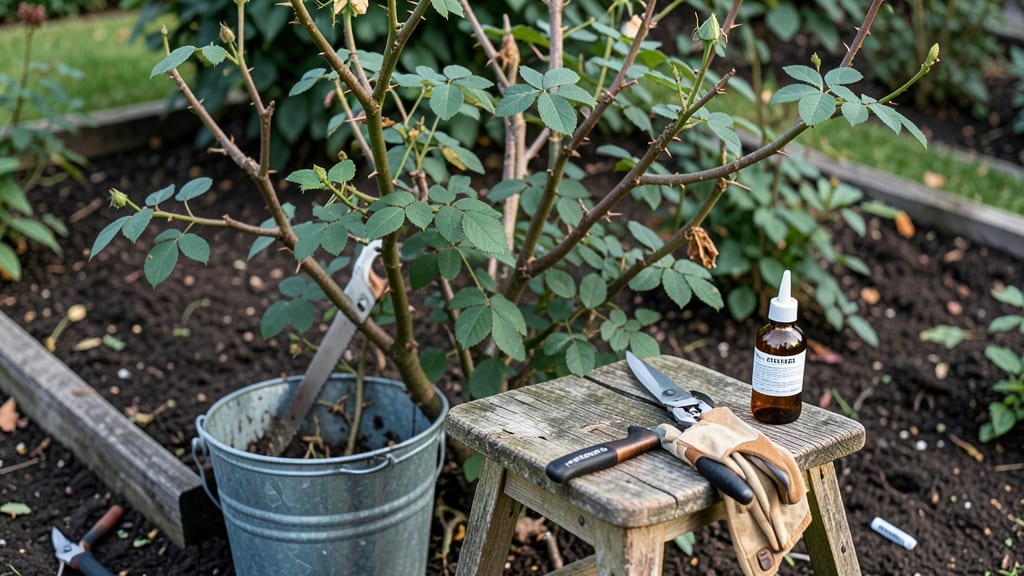
Winter pruning transforms your climbing rose bush into next year’s blooming powerhouse. ✂️ I’ve pruned mine every fall for five years, and the difference in spring growth is shocking—thicker canes, more buds, and flowers that arrive weeks earlier than neighbors’ unpruned bushes.
The key is timing: prune after your first hard frost but before the ground freezes solid—typically late November to December in most zones. You’ll need sharp bypass pruners, rubbing alcohol (to sterilize cuts), and a bucket for trimmings.
The goal isn’t to make it look neat now; it’s to shape the framework for spring’s explosion of growth.
Start by removing dead, diseased, or crossing branches—these compete with healthy canes for energy. Then cut back remaining canes by one-third, always making clean cuts just above an outward-facing bud.
The result? Stronger stems that push out more buds and longer blooms next season, plus better airflow to prevent fungal issues.
After pruning, spread 2-3 inches of mulch around the base to insulate roots, then water deeply before winter sets in. Avoid pruning in winter storms—wet wood snaps easily.
By spring, you’ll see new shoots emerging from those buds, and your rose will reward you with vibrant, abundant blooms all season long.
📚 In This Guide
- What you need
- Instructions
- Tips and common mistakes
- Wrapping up and next steps
What you need
- ● Pruning shears (bypass pruners): A sharp, high-quality pair (e.g., Felco or Fiskars) to make clean cuts. Quantity: 1 pair.
- ● Loppers: For thicker stems (½ inch or larger). Quantity: 1 pair.
- ● Pruning saw: For stubborn, thick branches. Quantity: 1.
- ● Gloves: Heavy-duty, gardening gloves to protect your hands from thorns and debris.
- ● Disinfectant (rubbing alcohol or bleach solution): To clean tools between cuts and prevent disease spread.
- ● Rake or broom: For clearing fallen leaves and debris after pruning.
- ● Twine or plant ties: To secure the rose bush if needed (especially for heavy canes).
- ● Sharpie or permanent marker: To label cuts if you’re training new growth.
- ● Hand pruners: For smaller trims and detail work.
- ● Knee pads: If you’ll be kneeling or working on the ground.
- ● Pruning sealant: To coat larger cuts (controversial but some gardeners swear by it!).
- ● Wheelbarrow or bucket: For collecting pruned branches and debris.
- ● Safety glasses: To shield your eyes from flying debris.
- ● Choose a dry, mild day (avoid frost or extreme cold).
- ● Have a clear plan for where you’ll dispose of pruned branches (compost, mulch, or trash).
- ● Check your local frost dates to ensure you’re pruning at the right time (typically after the first hard frost but before extreme cold).
Step-by-Step guide for pruning climbing roses in late fall
Winter pruning isn't about cutting back—it's about sculpting next year's blooms while protecting your rose from harsh weather.
🌿 Step 1: Wait Until After First Frost
Never prune before two weeks after your first hard frost—this gives the plant time to harden off. You'll know it's ready when the foliage turns brown and crispy but the stems remain firm. Pruning too early stimulates new growth that won't survive winter's chill.
I like to wait until mid-to-late November in my zone 6 climate, but adjust based on your local frost dates. The key is that the plant should be fully dormant. If you see any green leaves or fresh growth, wait another week.
✂️ Step 2: Remove Dead and Weak Canes First
Start by cutting out any dead, diseased, or crossing canes at the base. Dead canes are hollow or crumbly when you scratch them with your fingernail. Diseased canes show black spots or mold—remove these immediately to prevent spreading. Use clean, sharp pruners to make 45-degree cuts just above an outward-facing bud.
Next, thin out any canes that are weak, thin, or growing inward. These compete with stronger canes for nutrients and rarely produce good blooms. Aim to leave 4-6 of the strongest, healthiest canes per plant—this ensures next year's blooms have room to thrive.
🌱 Step 3: Shape the Bush for Next Year's Growth
Now focus on shaping the remaining canes. Cut back each main stem by about one-third—this encourages bushier growth from the base. For climbing roses, I leave 4-6 feet of height on the strongest canes to support next year's blooms. Always cut just above an outward-facing bud to promote growth away from the center.
Look for 5-leaflet leaves along the canes—these indicate strong growth points. Make your cuts 1/4 inch above these buds to ensure new shoots emerge in the right direction. Avoid leaving stubs—this invites disease and weakens the plant.
🪴 Step 4: Clean Up and Protect the Base
After pruning, remove all fallen leaves and debris from the base of the plant. This prevents fungal diseases like black spot from overwintering. I like to apply a 2-inch layer of mulch around the base to insulate the roots—use shredded bark or straw, but keep it 6 inches away from the stem to prevent rot.
For extra protection in cold climates, wrap the entire bush with burlap or rose cones after pruning. Secure it loosely so air can circulate—this prevents moisture buildup that leads to rot. In milder climates, a thick layer of mulch is often enough.
⏰ Step 5: Store Prunings Properly
Don't toss your prunings! Bundle the larger canes and store them in a cool, dry place until spring. I tie them with twine and lean them against a fence or wall. In spring, you can use these as cuttings to propagate new plants—just dip the ends in rooting hormone and plant in moist soil.
Smaller prunings can be composted, but avoid adding them to open compost piles if black spot was present—this can spread spores. Instead, burn them or add them to a hot compost pile where temperatures exceed 140°F to kill pathogens.
Tips & tricks for pruning climbing roses in late fall
Here's what nobody tells you about winter pruning that'll make all the difference for next year's roses.
Timing is Everything: Those two weeks after the first hard frost are non-negotiable. I learned this the hard way after seeing fresh growth appear in December—it froze solid overnight. Check for crispy brown foliage with firm stems, not just cold weather. In my zone 6 garden, I mark November 15th on my calendar as the absolute earliest I'll prune, but I've waited until December if the weather stayed warm.
The Right Tools Matter: Your pruners should be as sharp as your intentions. Dull blades crush stems instead of making clean cuts, which invites disease. I keep a dedicated pair of pruners just for roses, sterilized with rubbing alcohol between uses. For thicker canes over 1/2 inch, use loppers—never prune with hedge shears, which can't make the precise 45-degree cuts needed for proper healing.
Bud Placement Secrets: When making those critical cuts just above outward-facing buds in Step 3, look for the 5-leaflet leaves—they're your growth compass. The bud should be angled slightly away from the center of the plant. I make a mental note to cut at a 45-degree angle that faces the outside, which creates the perfect angle for new shoots to grow outward rather than inward where they'll crowd each other.
Winter Protection Hacks: That 2-inch layer of mulch around the base isn't just decoration—it's insulation. In my coldest winters, I've seen mulch pull away from the stem, leaving gaps where cold air could damage roots. I anchor it with landscape pins and add a second layer of straw on top for extra protection. For roses in windy areas, I also tie the canes together with soft garden twine to prevent them from whipping in winter storms.
Pro Tips for Prune A Climbing Rose Bush For Winter
- Here's what nobody tells you about winter pruning that'll make all the difference for next year's roses.
- Timing is Everything: Those two weeks after the first hard frost are non-negotiable.
- The Right Tools Matter: Your pruners should be as sharp as your intentions.
Frequently asked questions
about pruning your climbing rose bush for winter—because even experts need a little clarity! Here are the answers to the most common queries.When is the exact best time to prune climbing roses for winter?
Prune your climbing roses after their last bloom of the season (typically late fall, after the first hard frost) but before winter dormancy sets in. Aim for late November to early December in most climates. If you’re in a mild-winter zone, wait until early spring instead to avoid encouraging new growth that could freeze.
What if I miss the winter pruning window? Can I still do it in spring?
Yes! If you skip winter pruning, don’t panic—spring is the next best time. Prune before new growth appears (usually late winter to early spring). Just be mindful: Spring-pruned roses may bloom slightly later, but they’ll still thrive. Think of it as a "do-over" for your bush!
How do I know if I’ve cut too much off my climbing rose?
You’ve likely over-pruned if you see bare canes (stems with no buds) or if the bush looks too sparse. A good rule of thumb: Never remove more than 1/3 of the plant’s total growth. If you’re unsure, take a photo before cutting and compare it to your pruned bush—you’ll spot the difference!
Should I worry about pests or diseases after pruning?
Pruning opens the door for pests and diseases, so act fast! Sterilize your tools with rubbing alcohol between cuts, and remove all pruned material from your garden (don’t compost it!). If you notice black spots, mildew, or sawdust-like frass (a sign of rose slugs), treat with neem oil or fungicide before winter sets in.
Will pruning now affect next year’s blooms?
Not if done correctly! Proper winter pruning encourages stronger, healthier growth and more abundant blooms next season. Focus on removing dead, diseased, or crossing branches and thinning out crowded canes. Your rose will thank you with bigger, showier flowers in spring!
Wrapping up and next steps
Pruning your climbing rose bush for winter isn’t just about tidying up—it’s an investment in next year’s vibrant blooms. By removing dead, diseased, or weak canes and shaping the plant thoughtfully, you’ll encourage healthier growth and stunning flowers. Remember, a little effort now means a big reward come spring!
Ready to tackle the task? Grab your pruners and head back to our materials checklist to ensure you’re fully prepared. Happy pruning—your roses will thank you! 🌸✂️