
Pruning
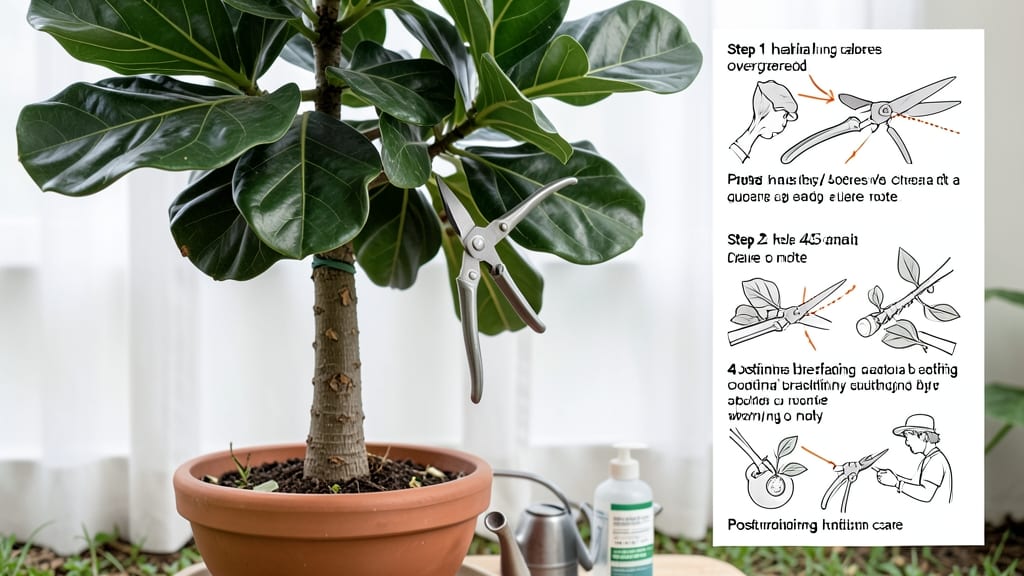
Pruning a fiddle leaf fig tree diagram isn't as scary as it looks—it's all about the right cuts. ✂️ I've turned my once-lanky, leggy plant into a bushy, vibrant centerpiece by focusing on the leaf nodes and branch angles that encourage new growth.
The key is timing: do it right after the growing season, when your plant is ready to bounce back.
You'll need just a few tools: sharp pruning shears, rubbing alcohol to sterilize them, and a small container for trimmings. Look for branches that are too long, crossing, or growing inward—these are the ones to remove.
Always cut just above a leaf node at a 45-degree angle, which helps water run off and prevents rot.
After pruning, your fiddle leaf fig will send out fresh shoots within a few weeks. The new growth comes from those leaf nodes you preserved, so you'll see fuller foliage and a more balanced shape.
Keep the plant in bright, indirect light and water it when the top inch of soil feels dry.
Common mistakes include cutting too close to the trunk or removing too much at once. Start small—just a few branches—and watch how your plant responds. With each trim, you'll get better at reading your fiddle leaf fig's needs, and it'll reward you with lush, healthy growth.
📚 In This Guide
- What you need
- Instructions
- Tips and common mistakes
- Wrapping up and next steps
What you need
- ● Pruning shears: Sharp, clean, and sterilized (bypass pruners work best for clean cuts).
- ● Rubbing alcohol (70% or higher): For sterilizing tools (1 small bottle).
- ● Disposable gloves: To protect your hands from sap and bacteria (1 pair).
- ● Small spray bottle: With water (to mist cuts and reduce stress on the plant).
- ● Newspaper or drop cloth: To protect surfaces (1-2 sheets).
- ○ Sharp pencil or marker: For marking cuts (optional but helpful for beginners).
- ● Rooting hormone: To encourage growth in cuttings (small container).
- ● Small pots or containers: For propagating cuttings (2-3, 4-6 inches in diameter).
- ● Horticultural sealant: To prevent disease in larger cuts (small tube).
- ● Diagram or reference photo: Of your fiddle leaf fig’s growth pattern (print or digital).
- ● Plant food or fertilizer: For post-pruning care (balanced liquid fertilizer).
Step-by-Step guide to pruning a fiddle leaf fig tree
Transform your fiddle leaf fig from leggy to lush with these simple pruning steps.
✂️ Step 1: Gather Your Tools and Assess the Tree
Start by collecting clean, sharp pruning shears or scissors—dull tools crush stems and invite disease. Wipe the blades with rubbing alcohol before you begin. Examine your tree for three types of growth: healthy leaves, leggy stems without leaves, and yellow or brown leaves.
Focus on the leggy stems first—they’re the easiest to prune and will encourage bushier growth. You’ll see these as long, bare branches reaching toward the light. Healthy leaves should have a deep green color and glossy surface, while damaged leaves will look dull or crispy at the edges.
✂️ Step 2: Prune Leggy Stems to Encourage Bushiness
Cut leggy stems just above a leaf node—this is where new growth will sprout. Look for small bumps or the point where a leaf once grew. Make your cut at a 45-degree angle about ¼ inch above the node to prevent water from pooling and rotting the stem.
Don’t trim more than ⅓ of the tree’s total foliage at once—this stresses the plant. If you’re unsure, start with just one or two stems. You’ll notice new leaves forming within 4-6 weeks at the pruned nodes, signaling healthy regrowth.
✂️ Step 3: Remove Damaged or Yellow Leaves
Snip off any yellow, brown, or crispy leaves at their base using clean shears. These leaves drain energy from the plant and can attract pests. For larger branches with dead sections, cut back to the nearest healthy leaf node or outward-facing bud.
If a branch is completely dead (no green leaves at all), remove it entirely at the trunk. You’ll see a smooth, brown stem with no signs of life. This keeps the tree’s energy focused on healthy growth rather than wasted on dead wood.
☀️ Step 4: Adjust Light Exposure After Pruning
Move your fiddle leaf fig to a brighter spot for 1-2 weeks after pruning. New growth is more sensitive to light changes, and you’ll see it respond with vibrant new leaves. Avoid direct midday sun, which can scorch tender foliage—morning or filtered afternoon light works best.
Water lightly after pruning—just enough to keep the soil slightly moist but not soggy. Overwatering now can cause root stress, especially if you’ve removed a lot of foliage. You’ll know it’s time to water again when the top inch of soil feels dry to the touch.
🌱 Step 5: Propagate Cuttings (Optional)
Save your pruned stems for propagation! Place 4-6 inch cuttings in a jar of water, ensuring the node is submerged. Change the water every 3-5 days to prevent bacteria. In 2-4 weeks, you’ll see tiny roots forming—this is your signal to plant them in soil.
Use the same well-draining potting mix you’d use for the parent plant. Keep the new cuttings in bright, indirect light and maintain 60-75°F temperatures. They’ll establish in 4-6 weeks, giving you extra fiddle leaf figs for free!
Tips & tricks for pruning a fiddle leaf fig tree
Real talk: Pruning your fiddle leaf fig might seem intimidating, but these little tricks will help you avoid common mistakes and get results that look like you hired a pro.
Tool Prep is Non-Negotiable: I can't stress this enough—sterilize your pruning shears with rubbing alcohol before you start. I learned this the hard way after my fig developed brown spots from contaminated tools. A quick wipe with alcohol prevents bacterial transfer between cuts. Also, make sure your blades are sharp; dull shears tear stems instead of making clean cuts.
The 45-Degree Angle Secret: When pruning leggy stems in Step 2, that 45-degree angle isn't just decorative—it's functional. The slanted cut prevents water from pooling at the stem base, which would cause rot. Think of it like a tiny roof directing water away from your plant. If you're not confident with angles, practice on scrap paper first!
Visual Growth Check: After pruning, don't guess about new growth—watch for these visual cues: Within 4-6 weeks, you should see tiny buds forming at the leaf nodes. These will grow into new leaves. If you don't see buds after 6 weeks, you may have cut too close to the node or stressed the plant too much. Remember, you can't prune more than ⅓ of the foliage at once!
Light Adjustment Matters: That 1-2 week move to brighter light after pruning isn't optional—it's crucial. New growth needs more light to develop properly. I've seen pruned figs develop weak, pale leaves when kept in low light. Place your tree near an east-facing window for gentle morning sun, or use a grow light if natural light is limited.
Pro Tips for Prune A Fiddle Leaf Fig Tree Diagram
- Real talk: Pruning your fiddle leaf fig might seem intimidating, but these little tricks will help you avoid common mistakes and get results that look like you hired a pro.
- Tool Prep is Non-Negotiable: I can't stress this enough—sterilize your pruning shears with rubbing alcohol before you start.
- The 45-Degree Angle Secret: When pruning leggy stems in Step 2, that 45-degree angle isn't just decorative—it's functional.
Frequently asked questions
Got questions about pruning your fiddle leaf fig? You’re not alone—this tropical beauty can be tricky! Below, we’ve answered the most common questions to help you prune with confidence.
When is the best time to prune a fiddle leaf fig?
Prune your fiddle leaf fig in spring or early summer when it’s actively growing. Avoid winter pruning, as the plant is dormant and more susceptible to stress. If you notice leggy growth or yellowing leaves year-round, light pruning can help anytime—but stick to healthy stems only!
How much can I cut off my fiddle leaf fig?
You can remove up to 20-30% of the plant’s foliage in one session without harming it. For leggy stems, trim just above a leaf node (where new leaves grow). Avoid cutting more than 1/3 of the plant at once—this can shock the tree. Think of it like a haircut: better to do less often!
What should I do with the cuttings?
Don’t toss those pruned stems! Place them in water or moist potting mix to propagate new plants. Fiddle leaf fig cuttings root well in water—just change it weekly and keep them in bright, indirect light. Within a few weeks, you’ll have baby fiddle leaf figs ready for repotting!
My fiddle leaf fig is dropping leaves after pruning—is this normal?
Some leaf drop is normal, especially if you pruned heavily or stressed the plant. However, if leaves turn brown or crispy or drop in large numbers, you may have over-pruned. To help it recover, reduce watering, keep it in bright (but not direct) light, and avoid moving it for a few weeks.
Can I prune a fiddle leaf fig in low light?
Pruning in low light is not ideal—the plant needs energy to recover. If your fiddle leaf fig is struggling in low light, move it to brighter conditions first, then prune only the most damaged or leggy stems. Avoid heavy pruning until you’ve improved its light exposure. Think of it like helping a friend recover before adding more stress!
Wrapping up and next steps
Pruning your fiddle leaf fig doesn’t have to be intimidating—with the right tools, timing, and technique, you’ll keep your tree thriving and looking its best! 🌿 Remember to sterilize your tools, focus on healthy growth, and follow the diagram for clarity.
Whether you’re shaping it for aesthetics or encouraging new growth, your efforts will pay off with lush, vibrant foliage.
Now that you’re armed with knowledge, grab those shears and get pruning! 🌱 For extra confidence, revisit the FAQ section or explore our pruning diagram one last time. Happy gardening—your fiddle leaf fig will thank you!