
Pruning
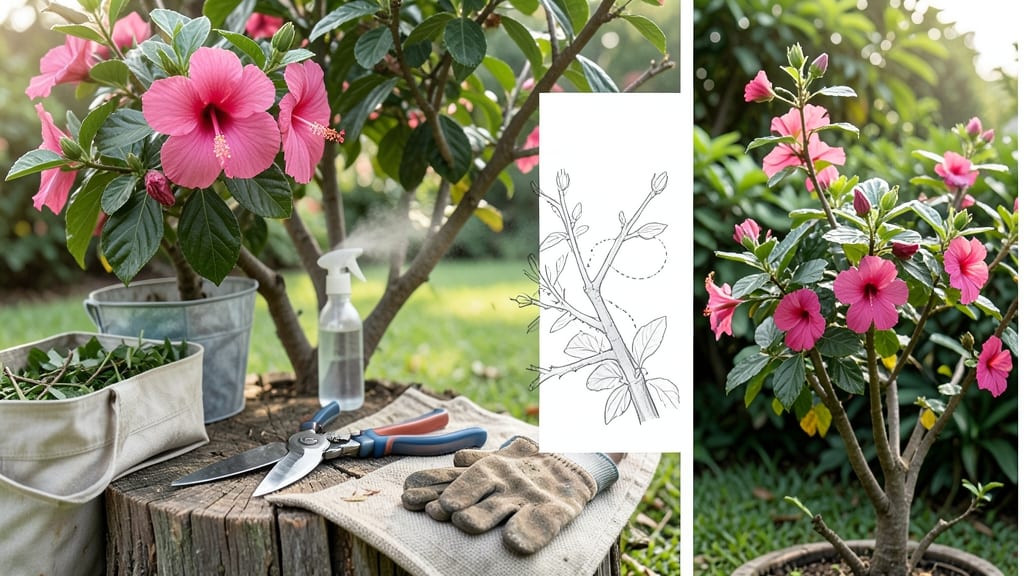
Pruning a hibiscus tree isn't just about shaping—it's about unlocking next year's blooms. ✂️ I've pruned mine for five seasons, and the difference between a leggy, sparse plant and a bush bursting with flowers comes down to timing, technique, and a few key cuts.
The right approach transforms weak growth into strong canes that support heavy blooms all summer long.
You only need three tools: sharp bypass pruners, rubbing alcohol (to sterilize cuts), and a small ladder if your tree is tall.
The best time to prune is late winter or early spring, right before new growth starts—but with hibiscus, you can also do light shaping in summer after blooms fade. Think of it like giving your plant a haircut that encourages thickness, not just height.
Start by removing dead, diseased, or crossing branches first—they're the easy wins. Then cut back last year's growth by about a third, always making clean cuts just above a leaf node or outward-facing bud.
The goal is to open up the center for airflow and sunlight, which means more blooms and fewer pests. Within weeks, you'll see fresh green shoots pushing out from those pruning points.
Here's the secret: hibiscus bloom on new wood, so aggressive pruning in late winter forces the plant to focus energy on vigorous new growth. Just avoid heavy cuts in fall, or you'll stunt next year's flowers.
With consistent pruning, your tree will reward you with longer blooming seasons and thicker, more resilient canes that handle storms better too.
📚 In This Guide
- What you need
- Instructions
- Tips and common mistakes
- Wrapping up and next steps
What you need
- ● Pruning shears – Sharp, bypass-style shears (4-6 inches) for clean cuts on small branches.
- ● Loppers – 8-10 inch loppers for thicker branches (up to 2 inches in diameter).
- ● Pruning saw – A fine-tooth saw for branches thicker than 2 inches.
- ● Gloves – Heavy-duty, cut-resistant gloves to protect your hands from thorns and sap.
- ● Disinfectant – 70% isopropyl alcohol or a 10% bleach solution to sterilize tools between cuts (prevents disease spread).
- ● Rag or paper towels – For wiping tools clean before and after pruning.
- ● Hand pruners with a bypass blade – For precision trimming on delicate stems.
- ● Extension pole saw – If your hibiscus is tall (6+ feet), for hard-to-reach branches.
- ○ Tree wound dressing – Optional for large cuts (controversial—skip if unsure!).
- ● Trash bags or bucket – To collect pruned branches for easy cleanup.
- ● Ladder or step stool – For safety when reaching higher branches.
- ● Choose the right time – Prune during the hibiscus’s dormant season (late winter/early spring) or after blooming (summer/fall). Avoid heavy pruning in extreme heat.
- ● Check the weather – Prune on a dry, overcast day to reduce stress on the plant.
- ● Have a plan – Sketch or mentally map out which branches to remove for shape and airflow.
Step-by-Step instructions for pruning a hibiscus tree
Here's the method I use to keep my hibiscus thriving all year—stronger growth and more blooms guaranteed.
✂️ Step 1: Prune in Late Winter for Spring Growth
Wait until late winter or early spring, just before new growth begins. This is when your hibiscus is dormant but ready to burst into action. I look for bare branches with no buds—these are dead and need removal. Grab your pruners and cut back any dead or damaged wood to the base of the plant.
Next, shape the tree by removing any crossing branches or those growing inward. These compete for energy and can create weak spots. Aim for an open center that allows sunlight to reach all parts of the plant. This is also the time to thin out crowded branches—keep only the strongest, healthiest canes.
✂️ Step 2: Light Pruning During the Growing Season
Throughout the growing season, I do light maintenance pruning to keep my hibiscus looking its best. Remove any spent blooms just above a leaf node to encourage new flowers. This is called deadheading, and it keeps your plant focused on producing more blooms instead of seed pods.
Watch for any branches that are growing too long or leggy. Cut these back by about one-third to encourage bushier growth. Always make cuts just above a leaf node or bud—this is where new growth will emerge. Avoid cutting into old wood, as hibiscus doesn’t regrow well from there.
✂️ Step 3: Heavy Pruning in Early Fall for Winter Prep
About 6-8 weeks before your first frost, give your hibiscus a heavier pruning to prepare for winter. This isn’t about removing dead wood—it’s about shaping the tree for next year’s growth. Cut back any branches that are overcrowded or rubbing against each other. You can also reduce the height of the tree by about one-third if it’s getting too tall.
Focus on removing any weak or sickly-looking branches. These are more likely to suffer in cold weather and can spread disease. After pruning, give your hibiscus a good drink of water to help it recover. This is also a great time to fertilize lightly to support new growth in the spring.
✂️ Step 4: Minimal Pruning in Winter (If Needed)
Winter is the time for minimal pruning—only remove any branches that are clearly dead or damaged by frost. Hibiscus trees are somewhat cold-hardy, but they can suffer in extreme cold. If you live in a very cold climate, consider wrapping the tree in burlap or using a frost cloth to protect it during the worst weather.
If you notice any branches that are struggling but not completely dead, wait until spring to prune them. Sometimes, hibiscus can surprise you by bouncing back even after a rough winter. Just keep an eye on the plant and remove any dead wood as soon as you spot it.
Tips & tricks for pruning a hibiscus tree
These simple tricks will help you prune like a pro and keep your hibiscus thriving for years to come.
Timing is Everything: That late winter timing in Step 1 is crucial because hibiscus is dormant but ready to spring into action. I can't stress enough how important it is to wait until just before new growth begins—usually when you see the first signs of buds swelling. If you prune too early, you risk damaging tender new growth that hasn't emerged yet. And if you wait too long, you'll be cutting back growth that could have contributed to this year's blooms.
The One-Third Rule: Whether you're cutting back leggy branches in Step 2 or shaping the tree in Step 3, always follow the one-third guideline. This magical ratio prevents over-pruning while still encouraging bushier growth. I've learned this the hard way—after cutting back too aggressively one spring, my hibiscus took two full seasons to recover. Trust me, it's better to be conservative with your cuts.
Tool Prep Matters: Before you start pruning, take 5 minutes to sharpen your pruners and sterilize them with rubbing alcohol. Clean tools prevent disease transmission between cuts, which is especially important when you're working with multiple branches in Step 1. I keep a small bottle of alcohol in my gardening toolbox specifically for this purpose—it's a small investment that pays off big time for plant health.
Winter Protection Strategy: In Step 4, if you're in a cold climate, don't just wrap your hibiscus—create an air pocket around it. I use a frame made of PVC pipes wrapped in burlap, leaving space between the plant and the covering. This allows air circulation while still protecting against harsh winds. The hibiscus I've treated this way has survived winters that killed neighboring plants with simpler wrapping methods.
Pro Tips for Prune A Hibiscus Tree
- These simple tricks will help you prune like a pro and keep your hibiscus thriving for years to come.
- Timing is Everything: That late winter timing in Step 1 is crucial because hibiscus is dormant but ready to spring into action.
- The One-Third Rule: Whether you're cutting back leggy branches in Step 2 or shaping the tree in Step 3, always follow the one-third guideline.
Frequently asked questions
Got questions about pruning your hibiscus tree? You’re not alone! Here are answers to the most common concerns—from timing to troubleshooting—so you can keep your beauty queen blooming like never before.
When is the best time to prune a hibiscus tree?
For tropical hibiscus, prune lightly after flowering (late spring to early summer) to encourage new growth. Hardy hibiscus thrive with a late winter/early spring prune (before buds swell) to avoid frost damage. Avoid heavy pruning in fall—it can stress the plant before winter dormancy.
Can I prune a hibiscus tree too much?
Over-pruning—cutting back more than 1/3 of the plant—can stunt growth, reduce blooms, and leave your hibiscus vulnerable to pests or disease. Focus on shaping and removing dead wood, not drastic haircuts. Think "light touches" for long-term health!
What if my hibiscus isn’t blooming after pruning?
Lack of blooms often means too much shade, over-fertilizing with nitrogen, or insufficient sunlight (6+ hours daily). Prune to open the canopy for better airflow and light. Try a bloom-boosting fertilizer (high phosphorus) in spring/summer. Patience helps—hibiscus can take 6–8 weeks to rebound!
Should I seal or treat the cuts after pruning?
No need for sealants! Hibiscus cuts heal naturally. Just use clean, sharp shears to make 45-degree angles (for larger branches) to prevent water pooling. If your climate is humid or rainy, let cuts dry for a day to avoid rot.
Can I prune a hibiscus tree during rainy season?
Prune during dry, mild weather (avoid extreme heat or cold). Rainy seasons can introduce fungal diseases to fresh cuts. If you must prune wet, do it early in the morning so cuts dry quickly. Always sterilize tools with rubbing alcohol to minimize infection risks.
Pro Tip:
Mark your calendar! Late February/March is prime time for hardy hibiscus pruning in most U.S. zones. For tropical varieties, post-flowering (summer) is your window. Consistency beats perfection—even small, regular prunes keep your hibiscus thriving!
Wrapping up and next steps
Pruning your hibiscus tree doesn’t have to be intimidating—with the right tools, timing, and techniques, you’ll soon be rewarded with healthier canes and stunning blooms! 🌸 Remember to focus on removing dead or weak growth, shaping for airflow, and encouraging new growth while keeping safety in mind.
Whether you’re a beginner or a seasoned gardener, a little patience and care go a long way.
Now that you’re armed with these tips, grab your pruners and give your hibiscus the TLC it deserves. Next, why not explore hibiscus care year-round or learn how to propagate new plants from your pruned cuttings? Your garden—and your hibiscus—will thank you!