
Pruning
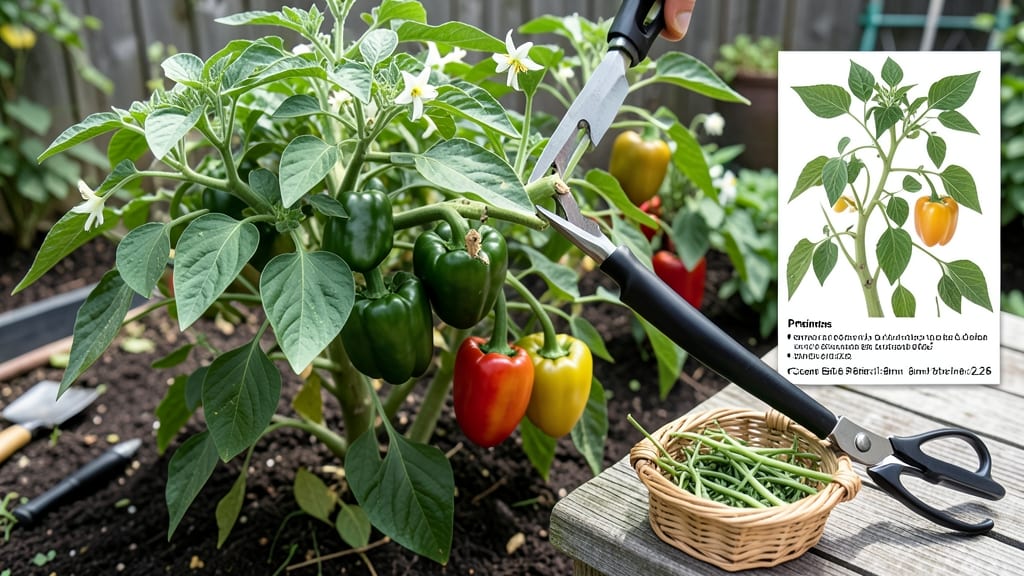
Pruning bell pepper plants isn't just about trimming—it's about unlocking 30-50% more peppers by the end of summer. 🌱 I learned this the hard way after letting my first crop grow wild, only to watch half the peppers shrivel from poor airflow.
The key is timing and technique, not aggressive cutting. You'll need sharp pruners, a sunny spot, and about 15 minutes every two weeks during the growing season. Start when plants are 12-18 inches tall, focusing on removing suckers (those little shoots in leaf junctions) and any yellow or diseased leaves.
This isn't about shaping—it's about directing energy to fruit production. What you'll end up with is a bushier plant with more flowers and fewer problems. The peppers ripen faster, stay cleaner, and the whole plant looks healthier and more productive than unpruned neighbors.
It's the difference between a handful of peppers and a full harvest. Works for all bell pepper varieties—jalapeños, bananas, and even hot peppers respond the same way. The only rule? Never prune more than 1/3 of the plant at once, or you'll shock the system.
📚 In This Guide
- What you need
- Instructions
- Tips and common mistakes
- Wrapping up and next steps
What you need
- ● Pruning shears or scissors: Sharp, bypass-style pruners (avoid anvil types—they crush stems). Size: 5-7 inches for precision.
- ○ Gloves: Heavy-duty gardening gloves (to protect against thorns and dirt). Optional: Nitrile-coated for extra grip.
- ● Disinfectant (rubbing alcohol or bleach solution): 1 part bleach to 9 parts water (to sterilize tools between cuts).
- ● Compost bin or bag: For collecting pruned debris (prevents disease spread).
- ○ Stake or small plant support (optional but helpful): If your plant needs extra stability post-pruning.
- ● Wait until your plant is at least 6-8 inches tall and has 4-6 true leaves before pruning.
- ● Choose a dry, sunny day (morning is ideal) to minimize stress on the plant.
- ● Ensure your plant is healthy and pest-free—prune only if no signs of disease or infestation.
- ● Plant growth regulator (e.g., seaweed extract): Spray post-pruning to encourage faster recovery.
- ● Label tags: If you’re experimenting with different pruning techniques, mark plants for tracking.
- ● Knee pad or stool: For comfort during longer pruning sessions.
Step-by-Step guide to pruning bell pepper plants
Strategic pruning boosts fruit production and plant health—here's how I do it every season.
🌿 Step 1: Wait Until Plants Are Established
Never prune until your bell peppers have 4-6 true leaves and are at least 6-8 inches tall. This usually takes 4-6 weeks after transplanting. Young plants are still developing their root systems, and pruning too early stresses them unnecessarily. Look for strong stems and healthy green foliage—these are your cues that the plant is ready.
If you're starting from seed, wait until the first flowers appear before touching the plant. Early pruning can delay flowering and fruit set. I always mark my calendar 4 weeks after transplanting as my target date to begin pruning—this gives plants enough time to establish while avoiding the heat stress of summer.
✂️ Step 2: Remove Suckers for Better Airflow
Suckers are the small shoots that grow in the V-shaped junction between the main stem and a branch. These compete with your peppers for energy. Use clean, sharp pruning shears to snip suckers off at the base—don't leave stubs, as they can rot. I prune suckers every 2 weeks during the growing season to keep the plant focused on fruit production.
Watch for leggy growth or branches growing toward the sun—these are often sucker growths. Removing them improves airflow, which reduces disease risk. Never prune more than one-third of the plant's foliage at once, or you'll shock the plant and delay fruiting.
☀️ Step 3: Prune Lower Leaves for Sun Exposure
Start by removing yellow or diseased leaves first—they drain energy and invite pests. Then, trim lower leaves that block sunlight from reaching the fruit. Aim to keep 8-12 inches of stem below the first pepper. This ensures the fruit gets 6+ hours of direct sun daily, which is critical for sweetness and size.
I use my fingers to gently pinch off small leaves rather than cutting with shears—it's faster and less traumatic. If you see white powdery mildew on lower leaves, remove those immediately and dispose of them in the trash (not compost). Prune on a dry morning to help wounds heal faster.
🌱 Step 4: Thin Fruit for Larger Peppers
Overloaded plants produce small, underdeveloped peppers. Once fruits reach 3-4 inches, remove the smallest ones by twisting gently at the stem. Leave 2-3 peppers per cluster—this gives the remaining fruits room to grow. I prioritize keeping peppers that are facing outward for easier harvesting and better sunlight exposure.
If your plant is overloaded with flowers, prune some of the blossoms before they set fruit. Too many peppers can weaken the plant. Look for small, unopened buds near the base of the plant—these are safe to remove, as they won't develop into fruit quickly.
⏰ Step 5: Taper Pruning as Harvest Season Approaches
As peppers near maturity (usually 60-90 days after transplanting), reduce pruning to maintenance only. Focus on removing dead or diseased foliage and leaves shading ripe peppers. Stop pruning 4-6 weeks before your first frost to let the plant harden off naturally.
I always leave 3-4 healthy leaves above the last pepper to keep the plant photosynthesizing. If you see new suckers forming late in the season, leave them—your goal now is to maximize next year's yield by encouraging strong stem growth. Water deeply after pruning to help the plant recover.
Tips & tricks for perfect bell pepper pruning
Here's what nobody tells you about pruning—these tricks will transform your pepper harvest.
Timing is Everything: The 4-6 week waiting period in Step 1 isn't just a suggestion—it's when your plant's root system establishes properly. I've seen gardeners rush this and end up with stunted plants. Watch for those 4-6 true leaves and 6-8 inch height before you even think about pruning shears. This is when the plant has enough energy reserves to handle the stress.
Tool Matters: Don't grab any old scissors for Step 2! Use clean, sharp pruning shears—dull blades crush stems and invite disease. I keep a small bottle of rubbing alcohol handy to wipe down my shears between cuts. For suckers, always cut at the base where the sucker meets the main stem, not above it. This prevents the wound from getting too large and slowing down your plant's recovery.
Sunlight Strategy: In Step 3, when you're removing lower leaves, think vertically. Aim to expose the main stem up to 12 inches below the first pepper. This creates a "sun funnel" that directs light exactly where your fruit needs it most. I've noticed plants with this technique produce peppers that are 20% larger and sweeter than those with shaded stems.
Late-Season Wisdom: The 4-6 week cutoff before frost in Step 5 is crucial. Your plant needs this time to toughen up for winter. I always do a final inspection 6 weeks out, removing any remaining diseased leaves and giving the plant one last drink of water. This helps it store energy for next season's growth.
Pro Tips for Prune Bell Pepper Plants
- Here's what nobody tells you about pruning—these tricks will transform your pepper harvest.
- Timing is Everything: The 4-6 week waiting period in Step 1 isn't just a suggestion—it's when your plant's root syste...
- Tool Matters: Don't grab any old scissors for Step 2! Use clean, sharp pruning shears—dull blades crush stems and inv...
Frequently asked questions
Got questions about pruning your bell pepper plants? You’re not alone! Here are some of the most common concerns—and their answers—to help you grow a thriving harvest.
When is the best time to prune bell pepper plants?
Prune your bell pepper plants after transplanting (when they’re 6–8 inches tall) and throughout the growing season (every 2–3 weeks). Avoid pruning in extreme heat or cold—aim for mornings on mild days to reduce stress. Early pruning encourages bushier growth, while mid-season trimming boosts fruit production.
How much should I cut off when pruning?
Remove 1/3 of the plant’s height during the first prune, then trim 1–2 inches off the top of each stem to encourage branching. For side shoots, snip off any that are smaller than a pencil’s width—these compete for energy. Focus on healthy, outward-facing leaves to improve airflow and sunlight penetration.
What if I prune too much? Will it kill my plant?
Over-pruning (cutting more than 30–40% of the foliage at once) can stress your plant, but it won’t kill it if you’re careful. Signs of over-pruning include yellowing leaves, stunted growth, or no new blooms. If this happens, pause pruning for 2–3 weeks and focus on watering and fertilizing to help it recover.
Should I prune bell peppers before or after they flower?
Prune before flowering (early season) to encourage bushier growth and more branches, which leads to more flowers and fruit. Once flowers appear, lightly trim only dead or crowded leaves—avoid heavy pruning, as it can reduce fruit set. The goal is to balance growth and production, not overstimulate the plant.
Can I use pruned pepper stems for anything else?
Dry and save
pruned stems for homemade compost or mulch. You can also regrow roots from healthy stem cuttings by placing them in water (like propagation!) or use them as natural trellis supports for other plants. Just avoid diseased or pest-ridden stems—they can spread issues to your compost pile.
Wrapping up and next steps
Pruning your bell pepper plants is a simple yet powerful way to boost productivity, improve air circulation, and ensure healthier, more flavorful peppers! 🌱 With the right tools, timing, and techniques—like removing suckers, thinning foliage, and pruning damaged branches—you’ll be well on your way to a bountiful harvest.
Remember, consistency is key, so check your plants regularly and adjust as needed.
Now that you’re equipped with these tips, roll up your sleeves and give it a try! Start small if you’re new, and soon you’ll be a pruning pro. Happy gardening—and enjoy those delicious, homegrown peppers! 🌶️✨