
How To
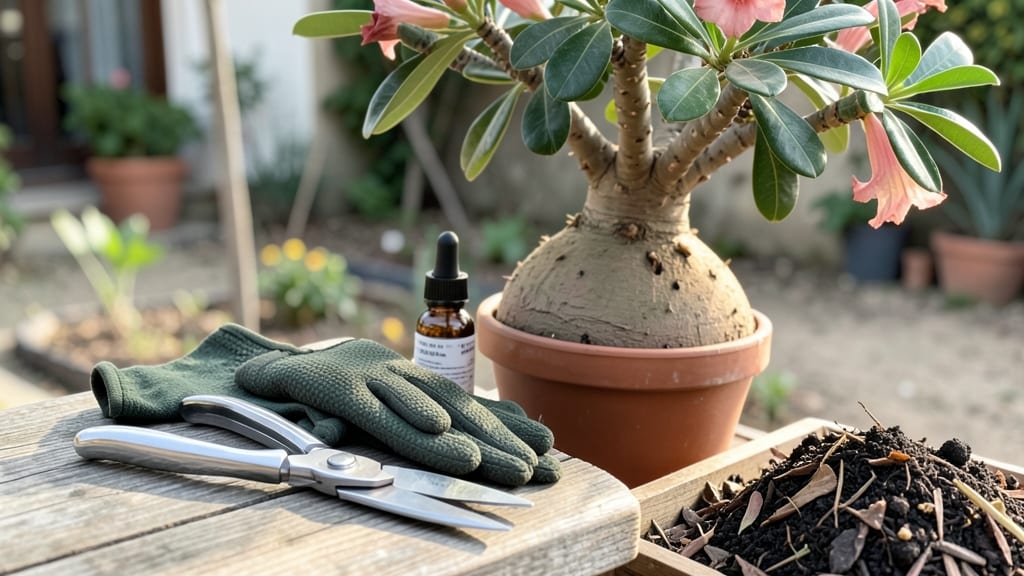
Pruning desert rose isn’t just about shaping—it’s the secret to year-round blooms that make neighbors stop and stare. ✨ I’ve turned my once-sparse Adenium into a flowering powerhouse by mastering three simple cuts that trigger growth without stressing the plant.
The key? Timing, clean cuts, and knowing where to stop. Start with sterilized pruners and a clear day—desert roses hate damp cuts. Trim just above a leaf node at a 45-degree angle to prevent water pooling, and always cut back no more than one-third of the plant at once.
After pruning, give it a light feeding with diluted fertilizer to reward its new growth spurt. Within weeks, you’ll see fresh green shoots and buds forming where you made your cuts.
📚 In This Guide
- What you need
- Instructions
- Tips and common mistakes
- Wrapping up and next steps
What you need
- ● Sharp bypass pruners or shears – Choose sterilized, high-quality pruners (e.g., Felco or Corona) to make clean cuts. Size: 5-7 inches (13-18 cm) for precision.
- ● Disinfectant (70% isopropyl alcohol or hydrogen peroxide) – Quantity: Small bottle (4-8 oz) to sterilize tools before and after pruning.
- ● Rubbing alcohol wipes – Quantity: 10-20 wipes for quick tool cleaning between cuts.
- ○ Gloves (optional but recommended) – Wear nitrile or latex-free gloves to protect against sap irritation or thorns. Size: Medium or large for comfort.
- ● Small hand trowel or knife – For trimming stubborn or thick stems. Blade length: 2-3 inches (5-7 cm).
- ● Pruning saw (if needed) – Only for very thick stems (over 1 inch in diameter). Type: Fine-tooth saw for clean cuts.
- ● Cactus/succulent soil or sand – Quantity: Small bag (5-10 lbs) to cover cut areas and prevent rot.
- ○ Rooting hormone (optional but helpful) – Type: Powder or gel (e.g., Clonex or Hormex) for propagating cuttings.
- ● Pruning sealant – Not essential for Desert Rose, but can help if you’re concerned about sap oozing (e.g., Tree Seal or beeswax-based products).
- ● Spray bottle with water – To mist cuttings if propagating new plants.
- ● Notebook & pen – For tracking pruning dates, cuts made, or growth observations.
- ● Camera or phone – Capture before/after shots to monitor progress!
- ● New pot & well-draining soil mix – If propagating cuttings, have a 4-6 inch pot ready with a succulent/cactus mix.
How to prune desert rose for abundant, year-round blooms
This is how I keep my desert rose flowering like crazy—even in the dead of winter. The key is strategic cuts that balance shape and growth.
✂️ Step 1: Time Your Pruning for Maximum Impact
Prune desert rose right after the last frost or in early spring when new growth begins. This timing ensures you're cutting back just as the plant prepares for its next flush of blooms. Avoid pruning in late summer or fall—you'll sacrifice next year's flowers. I mark my calendar for early March in most climates, but adjust based on your last frost date.
Wait until you see new green growth emerging from the base of the plant. This signals the plant has broken dormancy and is ready for shaping. If you prune too early, you risk encouraging tender new growth that won't survive unexpected cold snaps. Desert rose is tough but not invincible—timing matters.
✂️ Step 2: Cut Back to Encourage Bushier Growth
Use clean, sharp pruners to make 45-degree cuts just above a leaf node or bud. This angle prevents water from pooling on the cut, which could rot the stem. I never cut more than one-third of the plant's height at once—this maintains the plant's energy balance while still encouraging bushier growth.
Look for the healthiest stems with multiple buds along their length. Cut these back by about half their length to stimulate branching. The goal is to create a fuller, more compact plant that will produce more flowers. Avoid cutting into old, woody stems—these won't regrow and will leave ugly scars.
✂️ Step 3: Remove Dead, Diseased, or Crossing Branches
Scan the plant for any dead or dying branches—these will be brittle and snap easily when bent. Remove these completely at the base. Next, look for branches that are rubbing against each other or growing inward. These crossing branches compete for sunlight and nutrients, weakening the plant and reducing flower production.
Make your cuts just outside the branch collar—the swollen area where the branch meets the main stem. This ensures the plant can seal the wound properly. I always sterilize my pruners with rubbing alcohol between cuts to prevent spreading any potential diseases hiding in the plant.
✂️ Step 4: Shape for Better Airflow and Sunlight
Step back and examine the plant's overall shape. Desert rose responds well to an open, vase-like shape that allows maximum airflow and sunlight penetration. Cut back any branches that are growing too close together or blocking light from reaching the center of the plant. This encourages even growth and prevents fungal issues.
Focus on creating a balanced silhouette. You want the plant to be wider at the base and gradually narrow toward the top. This shape mimics the plant's natural growth habit and makes it easier to maintain over time. Avoid shearing or giving the plant a "haircut"—desert rose blooms on new growth, and precise cuts encourage more flowers.
💧 Step 5: Post-Pruning Care for Strong Recovery
After pruning, give your desert rose a deep watering to help it recover from the stress of cutting. The roots need moisture to support new growth, but avoid overwatering—this plant is drought-tolerant and prefers to dry out between waterings. I water until I see moisture emerge from the drainage holes, then let the soil dry completely before watering again.
Apply a balanced, water-soluble fertilizer diluted to half strength at the time of pruning. This gives the plant a gentle boost of nutrients to support its recovery and new growth. Avoid heavy-handed fertilizing—desert rose is sensitive to excess salts, which can burn the roots. Monitor the plant closely for the first few weeks after pruning for any signs of stress.
Tips & tricks for perfect desert rose pruning
These precision techniques will transform your desert rose into a blooming powerhouse—without sacrificing its natural beauty.
Seasonal Timing Secret: The early spring timing in Step 1 is non-negotiable for desert roses. I've learned this the hard way—pruning too late in summer can shock the plant, while early spring cuts align perfectly with its natural growth cycle. Check your local frost dates and mark your calendar for that critical window between last frost and new growth emergence. This timing ensures you're cutting back just as the plant prepares for its next flush of blooms, maximizing flower production.
Cutting Angle Technique: When making those 45-degree cuts in Step 2, visualize the water running off a roof. This angle prevents water pooling that could lead to rot. I use a small mirror to check my angle—it's easier to see than you'd think! For stubborn branches, I make a small notch at the base first to guide my cut. The goal is clean cuts that heal properly while stimulating new growth from those leaf nodes.
Branch Selection Strategy: In Step 2, focus on stems with multiple buds along their length—they're your plant's growth engines. I look for stems that are about pencil-thick with visible buds spaced every 2-3 inches. These stems will produce the most flowers when cut back by half. Avoid cutting into woody stems—they won't regrow and will leave permanent scars on your plant. Think of it as sculpting rather than hacking.
Post-Pruning Recovery Hack: After your deep watering in Step 5, I recommend adding a handful of perlite to the soil surface. This improves drainage while retaining just enough moisture for recovery. The diluted fertilizer application is crucial—desert roses are sensitive to salt buildup. I use a spray bottle to apply the fertilizer solution to avoid over-saturating the roots. Monitor for yellowing leaves in the first few weeks, which can indicate over-fertilization.
Pro Tips for Prune Desert Rose
- These precision techniques will transform your desert rose into a blooming powerhouse—without sacrificing its natural beauty.
- Seasonal Timing Secret: The early spring timing in Step 1 is non-negotiable for desert roses.
- Cutting Angle Technique: When making those 45-degree cuts in Step 2, visualize the water running off a roof.
Frequently asked questions
Got questions about pruning your Desert Rose (Adenium obesum)? You’re not alone! Here are answers to the most common concerns—from timing to troubleshooting—to keep your plant thriving and blooming beautifully.
When is the best time to prune Desert Rose?
Prune your Desert Rose after its blooming season (typically late spring or early summer) to encourage new growth and more flowers. Avoid pruning in winter, as the plant is dormant. Light trimming for shaping can happen anytime, but major cuts should wait for the active growing season.
How much can I cut back my Desert Rose?
Never remove more than 1/3 of the plant’s foliage in a single pruning session. For shaping, trim back leggy stems to just above a leaf node (where new growth emerges). Over-pruning can stress the plant, so take it slow—especially with young or newly planted Desert Roses.
What if my Desert Rose doesn’t bloom after pruning?
If your plant skips blooming, check these fixes:
- Light: Ensure it gets 6+ hours of direct sunlight daily.
- Water: Let the soil dry completely between waterings (overwatering causes root rot).
- Fertilizer: Use a balanced, low-nitrogen fertilizer (like 10-10-10) during growing season.
- Patience: New growth from pruning may take 4–8 weeks to produce buds.
Can I prune a Desert Rose in winter?
No—avoid pruning during winter dormancy (typically November–February in most climates). Pruning stimulates growth, which stresses the plant when it’s already conserving energy. If you must trim, do so lightly for dead or damaged branches only.
What if my Desert Rose looks leggy or sparse?
Leggy or sparse growth often means it needs more light or a pruning reset. Try these steps:
- Move it to a sunnier spot (south-facing window or outdoor full sun).
- Prune back overly long stems to encourage bushier growth.
- Use a growth regulator (like B1 vitamin spray) to promote compact growth.
Wrapping up and next steps
Pruning your Desert Rose (Adenium obesum) doesn’t have to be intimidating—it’s all about timing, technique, and a little love! 🌸 By following these steps, you’ll encourage lush growth, vibrant blooms, and a healthier plant year-round.
Remember, confidence grows with practice, so don’t hesitate to grab those shears and get started.
Now that you’re armed with the know-how, take the next step! Observe your Desert Rose over the next few months—notice how it responds to your pruning.
Adjust as needed, and soon, you’ll have a thriving, show-stopping centerpiece that turns heads (and maybe even a few green thumbs of envy!). Happy pruning! ✂️💚