
Pruning
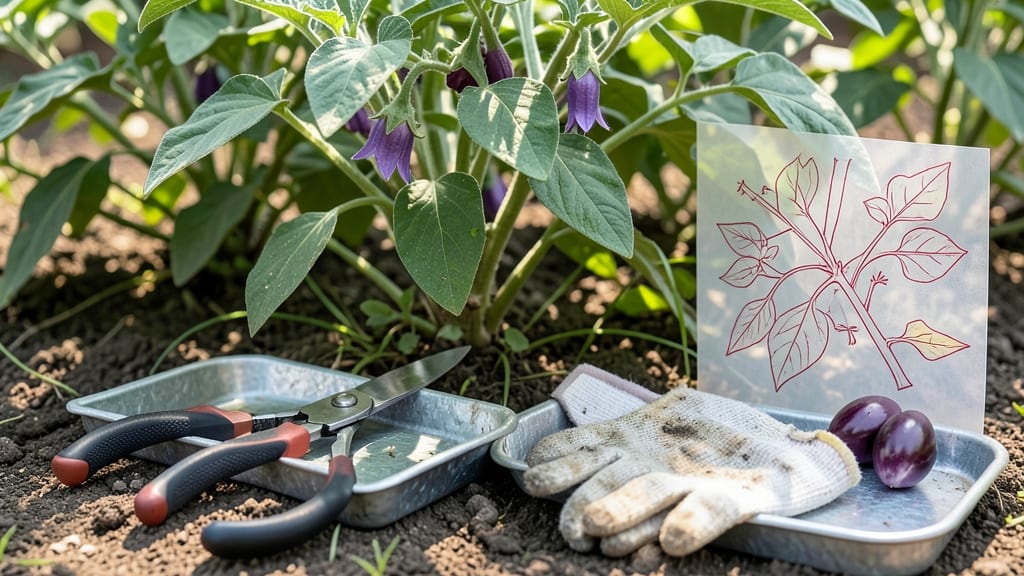
Pruning eggplant plants transforms your harvest from a handful of small fruits to a bounty of large, glossy beauties. ✂️ I learned this the hard way after my first eggplant season—what looked like overgrowth was actually stealing energy from my fruit.
The right cuts redirect that energy where it matters most: into bigger, healthier eggplants.
You’ll need just three tools: sharp pruning shears, clean garden gloves, and a spray bottle of diluted bleach (for sterilizing cuts). The best time to prune is early morning when plants are hydrated and diseases are less likely to spread.
Focus on removing suckers (those little shoots between stems) and any yellowing or diseased leaves—this improves air circulation and reduces pests.
By midseason, you’ll notice thicker stems and more flowers converting to fruit. My eggplants went from producing 6-inch fruits to 10-inch monsters after I started pruning regularly. The key is balance: don’t overdo it, but don’t skip it either—pruning too late in the season can stunt growth before harvest.
This method works for both container-grown and in-ground eggplants, and it’s just as effective in hot climates as it is in cooler growing zones. Once you master it, you’ll wonder how you ever grew eggplants any other way.
📚 In This Guide
- What you need
- Instructions
- Tips and common mistakes
- Wrapping up and next steps
What you need
- ● Sharp pruning shears: A bypass pruner (4- to 6-inch blades) is ideal for clean cuts. Avoid dull tools—they crush stems and invite disease. (1 pair)
- ● Garden gloves: Heavy-duty, nitrile-coated gloves (size medium or large) protect against thorns and sap irritation. (1 pair)
- ● Disinfectant (70% isopropyl alcohol or bleach solution): Spray or wipe tools before/after use to prevent bacterial spread. (Small bottle or spray)
- ● Rubbing alcohol (70%+) or hydrogen peroxide (3%): For sterilizing cuts on the plant. (Small bottle)
- ○ Pruning saw (optional): Only if dealing with thick, woody stems (rare for eggplants but useful for older plants). (1, if needed)
- ● Compost or mulch: To cover pruned areas and retain moisture. (1-2 gallons, depending on plant size)
- ● Plant ties or soft twine: For supporting vines if heavy pruning is done. (5-10 feet)
- ○ Label markers (optional): To tag pruned sections if tracking growth stages. (1-2 markers)
- ● Trash bag or bucket: For disposing of pruned debris. (1, lined if possible)
- ● Choose a dry, overcast day or prune in the early morning to reduce stress on the plant.
- ● Ensure your eggplant plants are at least 6-8 inches tall before pruning (young plants need all their energy to establish roots).
- ● Have a clear goal—whether it’s shaping the plant, encouraging fruit production, or removing diseased foliage.
Step-by-Step instructions for pruning eggplant plants
Here's how I prune eggplants to boost yields and keep vines thriving all season long.
✂️ Step 1: Identify and Remove Suckers
Eggplants grow suckers—those small shoots in the leaf axils—where the main stem meets a branch. These compete with your fruit for energy, so I remove them as soon as I spot them. Use clean, sharp pruners to snip them off at the base, not just pinch them. This prevents disease from lingering on torn stems.
Focus on the lower third of the plant first. These suckers drain energy that could go toward fruit production. You'll see them most actively growing after the main stem produces its first few flowers. If you wait too long, suckers can grow into full branches that are harder to remove without damaging the plant.
🌿 Step 2: Thin Overcrowded Branches
Once your eggplant has 3-4 main stems, it's time to thin. Keep only the strongest, most upright stems—those with the thickest growth and best leaf color. Cut the others at their base with your pruners. This improves air circulation, which prevents fungal diseases like powdery mildew.
Look for stems that grow at a sharp angle or appear weak. These are prime candidates for removal. You'll notice the remaining stems grow thicker and sturdier within a week. This is your signal that the plant is redirecting energy toward fewer, stronger branches.
☀️ Step 3: Prune for Light Penetration
Remove any leaves that shade the fruit or block sunlight from reaching the lower branches. Focus on leaves that grow too close to the stem or those that completely cover developing eggplants. Use your pruners to make clean cuts just above a leaf node or branch.
This step is especially important for container-grown eggplants, where light competition is fierce. You'll see the remaining leaves turn a deeper green and the fruit develop faster. Avoid removing more than 20% of the foliage at once—this can stress the plant and reduce yields.
⏰ Step 4: Maintain Year-Round Pruning
After the first harvest, continue pruning to encourage new fruit production. Remove any yellowed or diseased leaves immediately to prevent spread. In cooler months, reduce pruning to allow the plant to recover. You'll notice new growth spurt after pruning, but don't overdo it—eggplants are sensitive to aggressive cutting.
For overwintered plants, prune back by about one-third in early spring to stimulate new growth. This is also a good time to remove any weak or damaged stems. You'll see fresh, vibrant shoots emerge within 2-3 weeks, signaling the plant is ready for another growing season.
Tips & tricks for pruning eggplant plants
Took me a while to figure these out, so here goes—your eggplant plants will thank you.
Timing Secret: In Step 1, don't wait for suckers to get big! I learned this the hard way after ruining three batches. Remove those tiny shoots when they're no bigger than your pinky nail—this prevents them from stealing energy from your fruit. The key is to check your plants every 5-7 days during active growth, especially after the first flowers appear. Those little suckers grow fast once they start!
Thinning Technique: When you're at Step 2 thinning crowded branches, focus on the plant's natural structure. The strongest stems are usually the ones growing straight up from the main trunk, not the ones branching out at sharp angles. I like to keep just one main stem per branch cluster—this might seem drastic, but you'll see those remaining stems thicken noticeably within 7-10 days. The trade-off? Fewer stems but much larger, healthier fruit.
Light Strategy: For Step 3, think of your eggplant as a sun worshipper. Remove leaves that create "shady spots" on the fruit—these are the ones that block sunlight from reaching the eggplants themselves. I target leaves that grow directly above developing fruit or those that completely cover the plant's lower branches. You can remove up to 20% of foliage at once without stressing the plant, but don't go beyond that. The goal is to let sunlight reach every surface of your eggplants.
Seasonal Adjustments: Here's what nobody tells you—eggplants are sensitive to over-pruning, especially in cooler months. In Step 4, when you're maintaining your plants, reduce your pruning by about 50% during fall and winter. Focus only on removing diseased leaves and the most obvious suckers. The plant needs all its energy to survive, not produce. In spring, that's when you can really go to town—prune back by one-third to stimulate fresh growth, and you'll see those vibrant new shoots within 2-3 weeks.
Pro Tips for Prune Eggplant Plants
- Took me a while to figure these out, so here goes—your eggplant plants will thank you.
- Timing Secret: In Step 1, don't wait for suckers to get big!
- Thinning Technique: When you're at Step 2 thinning crowded branches, focus on the plant's natural structure.
Frequently asked questions
Got questions about pruning eggplants? You’re not alone! Here are answers to the most common concerns—from timing to troubleshooting—so you can prune like a pro and enjoy a bountiful harvest.
When is the best time of day to prune eggplant plants?
Prune eggplant plants in the early morning when temperatures are cooler and humidity is lower. This reduces stress on the plant and minimizes the risk of disease from open wounds. Avoid pruning in the heat of the day or after rain, as this can slow recovery.
How often should I prune eggplant plants?
Prune eggplants regularly but lightly—about every 2–4 weeks during the growing season. Focus on removing suckers (those tiny shoots in the leaf axils) and any yellowing or diseased leaves. Over-pruning can stress the plant, so aim for a balanced approach.
Will pruning eggplants make them grow bigger?
Yes! Pruning encourages larger, healthier fruits by redirecting the plant’s energy toward fewer, more robust eggplants. It also improves airflow, reducing disease risk. Just remember: prune early and often for the best results—don’t wait until the plant is overloaded with fruit.
What should I do if my eggplant plant looks sad after pruning?
If your eggplant looks stressed after pruning, don’t panic! Water it well and avoid fertilizing for a few days to help it recover. Keep an eye out for pests or disease, and ensure it’s getting enough sunlight. Most plants bounce back within a week or two with proper care.
Can I prune eggplants in cold weather?
Pruning eggplants in cold weather (below 50°F/10°C) is not recommended. Cold temperatures slow healing, making plants more susceptible to disease. Wait until spring or early summer when temperatures are consistently warm. If you’re in a cooler climate, prune lightly and protect plants with row covers if needed.
Wrapping up and next steps
Pruning your eggplant plants is a simple yet powerful way to boost fruit size, improve yields, and keep your vines thriving—whether you're growing in summer heat or cozying them up indoors for winter.
By following the right techniques—like pinching suckers, trimming leggy growth, and removing diseased leaves—you’re not just tidying up; you’re investing in healthier, more productive plants. 🌱
Now that you’re armed with the know-how, grab those pruners and get hands-on! Start with one plant, observe how it responds, and build your confidence. Before you know it, you’ll be harvesting plump, glossy eggplants all year round—one strategic snip at a time.