
Pruning
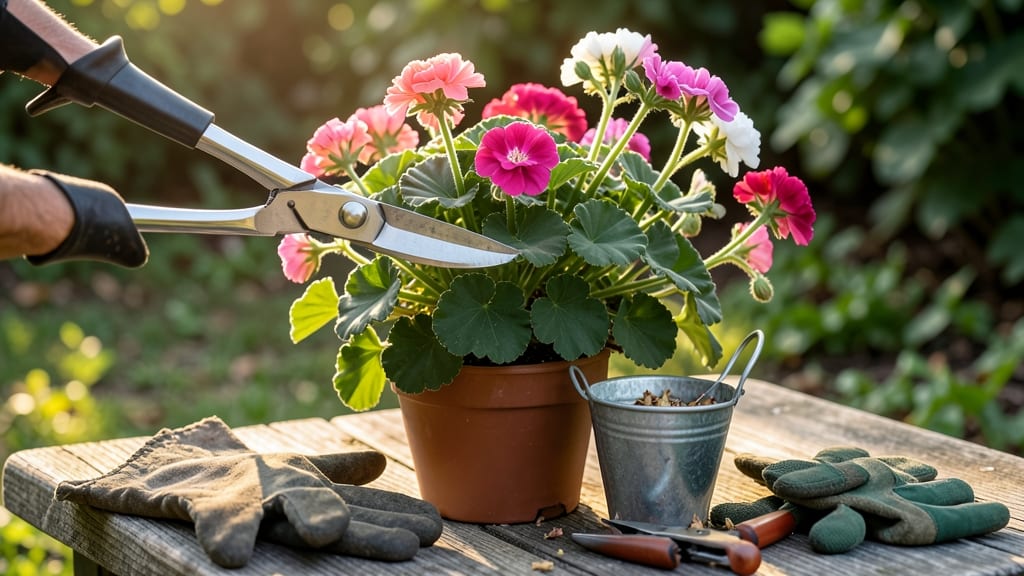
Pruning geraniums in pots transforms leggy, wilted plants into bushy, blooming powerhouses—I’ve revived even the most sad-looking specimens with just three strategic cuts. 🌿 The secret isn’t complicated: timing, technique, and a little patience.
Most people wait too long, but early spring or early summer is when geraniums respond best, sending out fresh growth within weeks.
You’ll need sharp pruners (clean cuts prevent disease), gardening gloves (geraniums can be prickly), and a clear morning for the job—lighting matters when you’re making precise cuts. The goal is to remove up to one-third of the plant’s height while keeping the shape balanced.
Think of it like giving your geranium a haircut: shorter on top, fuller on the sides.
After pruning, your geraniums will bounce back with bold new growth and a flush of blooms by midsummer. Water deeply the next day, then feed with a balanced fertilizer to support the recovery.
The key is consistency—prune again in late summer to extend the blooming season, and you’ll have geraniums that thrive in pots all year.
This method works for zone 5–10 and any pot size, from tiny window boxes to large containers. Even my black thumb can’t mess this up—just follow the three-cut rule, and your geraniums will thank you with vibrant foliage and nonstop flowers. Ready to give it a try?
📚 In This Guide
- What you need
- Instructions
- Tips and common mistakes
- Wrapping up and next steps
What you need
- ● Sharp pruning shears or scissors: Choose bypass pruners (not anvil-type) to avoid crushing stems. Opt for 4- to 6-inch blades for precision.
- ● Clean, sterilized cutting tool: A small bottle of rubbing alcohol (70% or higher) or a 10% bleach solution to disinfect tools between cuts (prevents disease spread).
- ○ Gloves (optional but recommended): Lightweight gardening gloves to protect hands from thorns or sap.
- ● Potting mix (if repotting): A well-draining blend (e.g., 60% peat/coir, 30% perlite, 10% vermiculite) for potted geraniums.
- ○ Slow-release fertilizer (optional): A balanced 10-10-10 or 20-20-20 formula to nourish post-pruning.
- ○ Mulch (optional): A thin layer of orchid bark or coconut coir to retain moisture.
- ● Choose the right time: Prune in early spring (before new growth) or late summer (after flowering). Avoid pruning during frost or extreme heat.
- ● Inspect for pests: Check leaves/stems for aphids, spider mites, or whitefly before pruning. Treat with neem oil if needed.
- ● Water lightly the day before: Slightly moist (not soggy) soil ensures cleaner cuts and less stress on the plant.
Step-by-step guide to pruning potted geraniums
Here's the precise technique I use to rejuvenate leggy, overgrown geraniums—it works every time.
✂️ Step 1: Assess and Prepare for Pruning
Start by examining your geraniums for signs of legginess or overgrowth. Look for stems that have stretched excessively toward light sources or those with sparse foliage. This is your cue that pruning is needed to encourage bushier, more compact growth. I always prune in the morning when the plants are fully hydrated and the air is cool, which minimizes stress.
Gather your tools: clean, sharp pruning shears (sterilized with rubbing alcohol to prevent disease transmission) and a small container to collect clippings. Remove any dead, yellowed, or diseased leaves or stems first—they'll only hinder new growth. You'll know a stem is dead if it feels mushy when squeezed or has blackened spots.
✂️ Step 2: Perform the First Cut to Shape the Plant
Begin by cutting back the longest, leggiest stems to about 4-6 inches from the base. Make your cuts at a 45-degree angle, just above a leaf node or lateral bud. This angled cut helps water run off the stem rather than pool and rot. I like to make these cuts slightly above a set of leaves to encourage branching from that node.
Don't worry about how sparse the plant looks immediately after this cut—geraniums are resilient and will bounce back. Focus on creating an open center to improve air circulation, which prevents fungal issues. If your geranium has multiple stems, aim to cut back about one-third of the plant's total height during this first pruning session.
✂️ Step 3: Encourage Bushier Growth with Secondary Cuts
Next, trim any remaining stems that are overcrowded or crossing each other. These cuts should be made just above a leaf node to promote new side shoots. I typically make these cuts about 2-3 inches above the node, which gives the plant enough energy to produce new growth while maintaining structural integrity.
Pay special attention to the plant's center—this is where many geraniums develop bare spots. Cut back any weak or spindly growth here to redirect the plant's energy toward stronger, more vibrant stems. You'll notice the plant's shape becoming fuller and more balanced as you work. Avoid cutting into old wood (woody stems) as these won't regrow leaves effectively.
💧 Step 4: Post-Pruning Care for Revitalization
After pruning, water your geraniums deeply to help them recover from the stress of cutting. The soil should be moist to a depth of about 2-3 inches, but avoid waterlogging, which can cause root rot. I usually wait until the top inch of soil feels dry before watering again, typically every 2-3 days depending on your climate.
Place your pruned geraniums in a location with bright, indirect light for the first week to allow them to adjust. Too much direct sun immediately after pruning can scorch new growth. You'll see fresh, vibrant leaves emerging from the nodes within 2-3 weeks, signaling that your pruning was successful. Fertilize lightly with a balanced, water-soluble fertilizer after new growth appears to support the plant's recovery.
Tips & tricks for perfect geranium pruning
Here's what nobody tells you about transforming leggy geraniums into lush, vibrant plants.
Timing is Everything: The morning after a light watering is the absolute best time to prune. Geraniums are fully hydrated, which means less stress on the plant and cleaner cuts. I've learned this the hard way after seeing plants wilt dramatically when pruned in the afternoon heat. Also, avoid pruning during periods of extreme heat or cold—aim for temperatures between 60-75°F for optimal recovery.
The Angle Game: That 45-degree angle isn't just for show—it's a hydroponic hack! When you cut at this angle, you create a larger surface area for water to be absorbed, preventing rot. Make sure your pruning shears are sharp to avoid crushing stems, which can introduce disease. I like to wipe my shears with rubbing alcohol between cuts on different plants to keep everything sterile.
Don't Fear the Sparse Look: After your first cuts, your geranium might look shockingly bare, but this is exactly what you want! The open center allows better air circulation, which prevents fungal diseases like powdery mildew. Focus on creating that open vase shape rather than trying to maintain the original form. Think of it as giving your plant a fresh haircut—sometimes less is more, and the new growth will be fuller and healthier.
Post-Pruning Care Secrets: The first week after pruning is critical. Place your plants in bright, indirect light to avoid sunburn on new growth. I've found that using a sheer curtain to diffuse harsh afternoon sun works wonders. Also, resist the urge to fertilize immediately—wait until you see new growth emerging (usually within 2-3 weeks) before applying any fertilizer. This gives the plant time to recover and prevents burning the roots.
Pro Tips for Prune Geraniums In Pots
- Here's what nobody tells you about transforming leggy geraniums into lush, vibrant plants.
- Timing is Everything: The morning after a light watering is the absolute best time to prune. Geraniums are fully hydr...
- The Angle Game: That 45-degree angle isn't just for show—it's a hydroponic hack! When you cut at this angle, you crea...
Frequently asked questions
Got questions about pruning geraniums in pots? You’re not alone! Here are some common concerns and quick answers to help you keep your plants thriving.
When is the best time to prune geraniums in pots?
Prune geraniums in pots after the last frost in spring (for warm-season varieties) or in early spring before new growth starts. For year-round care, light trims can happen anytime, but avoid heavy pruning in winter—geraniums are semi-dormant then.
How much can I cut back my geraniums?
For a rejuvenating cut, trim back ⅓ to ½ of the plant’s height, focusing on leggy stems and overcrowded growth. Avoid cutting into woody stems—this can stress the plant. Pro tip: Use clean, sharp shears for a cleaner cut!
What if my geraniums look sad after pruning?
Don’t worry—wilting is normal! Geraniums often need 1–2 weeks to bounce back. Ensure they’re in bright, indirect light and keep the soil slightly moist (not soggy). If yellow leaves persist, check for overwatering or pests.
Can I prune geraniums indoors?
Yes! Indoor geraniums benefit from pruning too—just mimic outdoor timing. Place them in a sunny window (south-facing is ideal) and reduce watering slightly post-prune. Avoid drafts, which can stress them.
What should I do with the cuttings?
Geranium cuttings root easily! Dip stems in rooting hormone (optional) and place them in water or moist potting mix. Keep them in bright, indirect light until roots form (2–4 weeks). Once rooted, transplant to pots for new plants!
Wrapping up and next steps
Pruning your potted geraniums doesn’t have to be intimidating—just a few strategic cuts can breathe new life into your plants and keep them thriving all season long! 🌿 With the right tools, timing, and technique, you’ll transform leggy stems into lush, bushy growth.
Now that you’re armed with the know-how, grab those shears and give your geraniums the TLC they deserve—your green thumb is about to shine!
Ready to take it further? Experiment with deadheading blooms or try propagating those pruned cuttings to expand your garden—your next step is just a pair of scissors away! 🌱