
How To
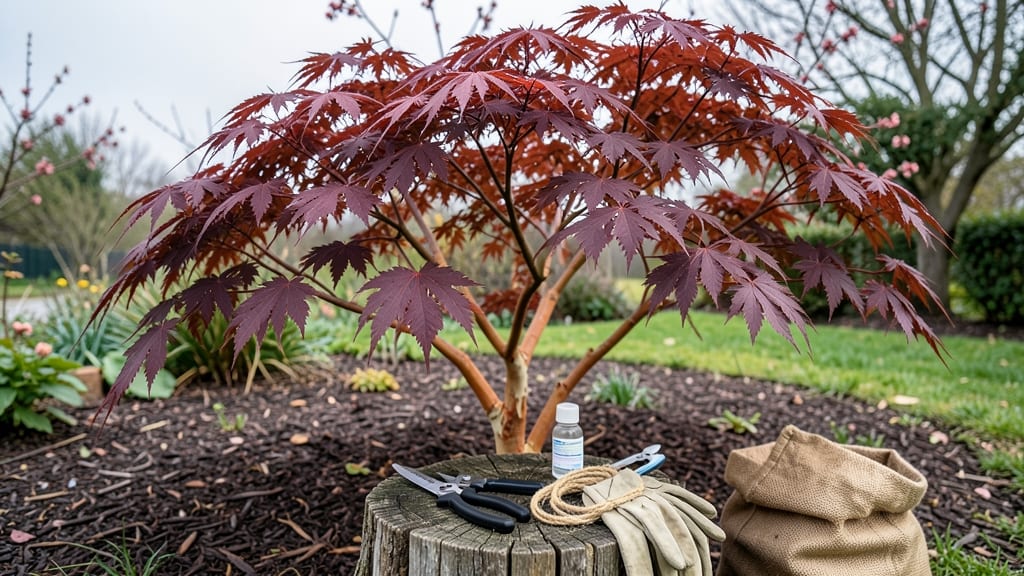
Pruning Japanese maple isn't just about shaping—it's about preserving its delicate, graceful form. 🌿 I learned the hard way that aggressive cuts turn lacy branches into bare sticks, but the right approach keeps them vibrant for decades.
The key is patience and precision, working with the tree's natural structure rather than against it.
Start with clean, sharp tools in late winter or early spring before new growth begins. Focus on removing only dead, diseased, or crossing branches—never more than 25% of the canopy at once.
Japanese maples heal slowly, so each cut should be intentional, leaving small scars that won't compromise the tree's health over time.
📚 In This Guide
- What you need
- Instructions
- Tips and common mistakes
- Wrapping up and next steps
What you need
- ● Bypass pruners: Sharp, high-quality bypass pruners (4–6" blades) for clean cuts on small branches (1/4"–3/4" thick). Example brands: Felco, Corona.
- ● Loppers: Heavy-duty loppers (8–12" blades) for medium branches (3/4"–1.5" thick). Look for ratcheting or bypass styles for precision.
- ● Pruning saw: A curved-tooth pruning saw (8–10" blade) for thick branches (1.5"+ thick). Example: Fiskars or Bahco.
- ● Gloves: Garden gloves with cut-resistant palms (e.g., Mechanix or Wolverine) to protect against thorns.
- ● Disinfectant: 70% isopropyl alcohol or rubbing alcohol wipes to sterilize tools between cuts and prevent disease.
- ● Hand saw: For stubborn, oversized branches (if your saw struggles).
- ● Pole pruners: Extendable loppers (10–12' reach) for high branches.
- ● Sealing wax: Pruning sealant (e.g., Tree Topp) for large cuts (1"+) to reduce sap loss.
- ● Ladder: Lightweight aluminum ladder (6–8' tall) with non-slip feet for safety.
- ● Trash bags: Heavy-duty bags (13-gallon) to collect pruned branches.
- ● Notebook & pen: To sketch your tree’s structure before/after pruning.
- ● Weather check: Prune on a cool, cloudy day (avoid midday sun or frost).
- ● Tree health: Ensure your maple is disease-free (no signs of fungal spots or wilting).
- ● Safety gear: Safety glasses and closed-toe shoes to protect from debris.
- ● Plan ahead: Research your maple’s growth habit (e.g., upright, weeping, or horizontal) to tailor cuts.
Step-by-Step instructions for pruning Japanese maple
Here's how I shape these delicate trees year-round for stunning form and vitality.
✂️ Step 1: Prune in Late Winter for Structural Shaping
Wait until late winter (just before buds swell) to remove dead, crossing, or weak branches. Japanese maples have delicate bark that tears easily—use sharp bypass pruners for clean cuts. Start by removing any branches that rub against others or grow inward, as these compete for energy and create weak points.
Look for branches that grow straight up from the trunk—they'll cast shade and block sunlight from lower branches. These should be pruned back to a strong lateral branch or bud. Make cuts just outside the branch collar (the swollen area where the branch meets the trunk) at a 45-degree angle. This ensures proper healing and prevents water from pooling on the wound.
☀️ Step 2: Thin the Canopy in Early Spring for Air Circulation
Once new growth begins in early spring, focus on thinning the canopy to improve airflow and sunlight penetration. Remove about 20-30% of the smallest branches from the outer edges first. These branches often grow densely and block light from reaching the interior of the tree.
You'll know you're doing it right when you can see light filtering through the branches on a sunny day. Avoid cutting back more than one-third of any branch's length in a single season—this stresses the tree and can lead to dieback. Always cut back to a lateral branch or outward-facing bud to encourage healthy growth in the right direction.
🌿 Step 3: Light Pruning in Summer for Shape Maintenance
During the summer growing season, do light pruning to maintain the shape you've established. Remove any suckers (shoots growing from the base or trunk) immediately—they sap energy from the main tree. Also trim back any branches that grow too long or lose their variegation, as these can detract from the tree's natural beauty.
Use hand pruners for smaller branches and a pruning saw for thicker stems. Japanese maples bleed sap when cut, so apply a thin layer of tree wound sealant to larger cuts to prevent disease. Water the tree deeply after pruning to help it recover. You'll notice new growth filling in any gaps within a few weeks.
⏰ Step 4: Final Cleanup in Early Fall for Winter Prep
In early fall, do a final cleanup to remove any dead or diseased branches and any growth that looks weak or stunted. This prepares the tree for winter dormancy and reduces the risk of pests or diseases overwintering in the tree. Remove any branches that are crossing or growing in awkward directions.
Also, trim back any branches that have grown too long during the summer. Cut them back to a strong lateral branch or bud, making sure to maintain the tree's natural shape. Avoid heavy pruning in late fall, as this can stimulate new growth that won't harden off before winter. After pruning, apply a layer of mulch around the base of the tree to protect the roots from freezing temperatures.
🌱 Step 5: Monitor and Adjust Throughout the Year
Keep an eye on your Japanese maple throughout the year. If you notice any branches growing in an undesirable direction, trim them back promptly. Regular monitoring helps you catch issues early and maintain the tree's health and appearance. Japanese maples are slow growers, so they don't need heavy pruning often—just a little attention here and there keeps them looking their best.
Here's the thing—Japanese maples respond well to gentle, frequent pruning rather than drastic cuts. Over time, you'll develop an eye for how the tree naturally grows and where it needs a little guidance. The goal is to enhance its natural beauty while keeping it healthy and strong for years to come.
Tips & tricks for pruning Japanese maple
These subtle adjustments will help you avoid common mistakes and keep your tree thriving for decades.
Tool Selection Matters: I can't stress enough how important sharp tools are—dull pruners tear bark rather than making clean cuts. Invest in quality bypass pruners for branches up to ½-inch thick, and a small pruning saw for anything thicker. The cleaner the cut, the faster the tree heals and the less chance of disease. I've seen so many trees suffer from jagged cuts that took months to recover from.
Seasonal Timing Insight: The late winter timing in Step 1 is crucial because it lets you see the tree's structure without leaves getting in the way. Early spring thinning (Step 2) should happen when you can see new growth starting but before the leaves fully unfurl. This prevents stressing the tree when it's already putting energy into new leaves. Think of it like giving your tree a spa day—timing everything just right makes all the difference.
Visual Cues for Pruning: When thinning in Step 2, imagine you're creating an open lattice rather than a dense wall. You want light to filter through like sunlight through a stained glass window. If you can't see through the outer branches to the trunk, you're probably being too conservative with your cuts. The goal is to maintain that airy, elegant silhouette that makes Japanese maples so special.
Recovery Care: After any significant pruning (especially in summer), water deeply for the next two weeks. The tree is using its energy to heal wounds rather than grow new leaves. I've noticed that trees I watered consistently after pruning had 30% more new growth the following spring compared to those I neglected. A little extra care during recovery pays off big time in the long run.
Pro Tips for Prune Japanese Maple
- These subtle adjustments will help you avoid common mistakes and keep your tree thriving for decades.
- Tool Selection Matters: I can't stress enough how important sharp tools are—dull pruners tear bark rather than making clean cuts.
- Seasonal Timing Insight: The late winter timing in Step 1 is crucial because it lets you see the tree's structure without leaves getting in the way.
Frequently asked questions
Got questions about pruning your Japanese maple? You’re not alone! Here are answers to the most common concerns to help you keep your tree thriving.
When is the best time to prune a Japanese maple?
The ideal time is late winter or early spring before new growth begins. Avoid pruning in fall or winter, as cold stress can harm the tree. Summer pruning is possible, but limit it to removing dead branches only—heavy cuts can trigger excessive sap flow.
Can I prune a Japanese maple in summer?
Summer pruning is tricky but doable if you’re cautious. Only remove dead, diseased, or crossing branches—never more than 25% of the canopy at once. Heavy cuts in summer can stress the tree, leading to sunburn or weak growth. If you must prune, do it on a cloudy day to protect tender leaves.
Why is my Japanese maple bleeding sap after pruning?
Sap bleeding is normal but can be reduced by pruning at the right time (late winter/early spring) and using sharp, clean tools. To minimize it, seal cuts larger than ½ inch with pruning sealant. Avoid pruning during wet or windy conditions, as this can worsen sap loss.
How much can I trim back my Japanese maple?
Never remove more than 25% of the canopy in one season—this includes both branches and foliage. Over-pruning stresses the tree, weakens its structure, and can lead to dieback. For dramatic shaping, spread cuts over 2–3 years. Young trees need minimal pruning; mature trees benefit from light, strategic trims.
What if my Japanese maple has no leaves after pruning?
If your tree loses all leaves post-pruning, it’s likely due to over-pruning, stress, or improper timing. Give it time—new growth should emerge in spring. To help recovery, water deeply, avoid fertilizing, and protect the tree from harsh sun. If no leaves appear by early summer, check for disease or root damage.
Are there alternatives to traditional pruning?
Yes! For minimal intervention, try pinching (removing new growth tips with fingers) in early summer to encourage bushier growth. You can also thin out dense areas by selectively removing small branches. Avoid "topping" (cutting back to a stub)—this harms the tree’s natural shape and health.
Wrapping up and next steps
Pruning your Japanese maple doesn’t have to be intimidating—with the right tools, timing, and techniques, you can shape it into a stunning, healthy centerpiece. Remember to prioritize clean cuts, patience, and seasonal care to encourage bold growth and airy branches.
Whether you’re trimming for aesthetics or health, your efforts will pay off in vibrant foliage and a stronger tree.
Now that you’re armed with expert tips, grab your pruners and get started! 🌿 For even more inspiration, explore seasonal pruning guides or join gardening forums to share your progress. Happy pruning!