
Pruning
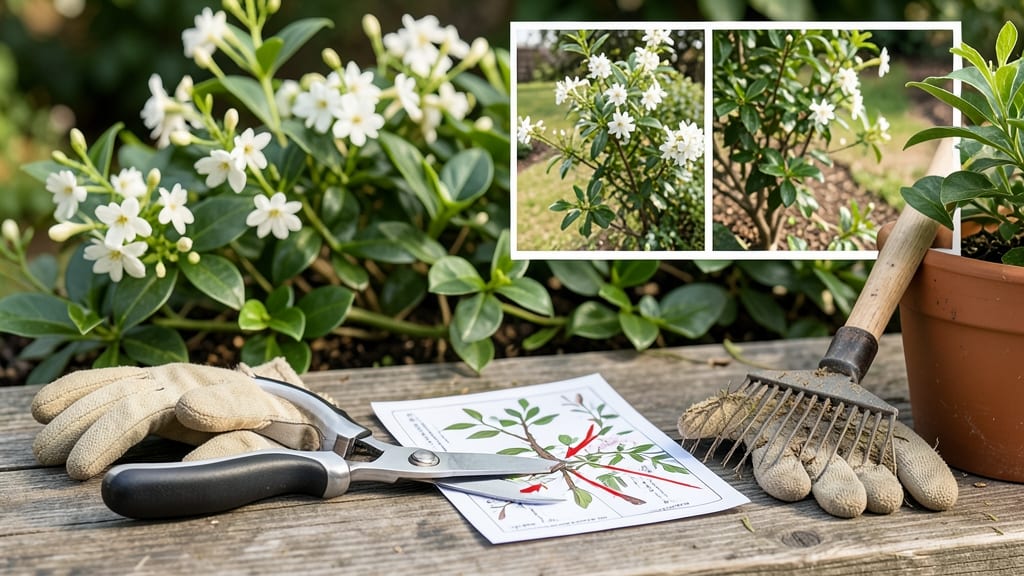
Pruning jasmine plants isn't just about shaping—it's the secret to doubling your blooms next spring. 🌿 I learned the hard way that skipping this step means fewer fragrant flowers and leggy growth, but once I mastered the timing and technique, my jasmine turned into a fragrant cloud of white blossoms every season.
The key is understanding when to cut (and when to leave it alone) because different varieties bloom at different times.
You'll need just three basic tools: sharp pruning shears, clean hand pruners, and rubbing alcohol for sterilizing cuts. For climbing jasmine like star jasmine (Trachelospermum jasminoides), focus on trimming back overgrown branches in late winter—right before new growth starts.
Shrub types like gardenia jasmine (Jasminum polyanthum) prefer a light prune in early spring to encourage bushier growth. Always cut just above a leaf node at a 45-degree angle to prevent water pooling.
The payoff comes in June and July when your plant explodes with flowers—more than you’ve ever seen before. You’ll notice new shoots appearing within 2-3 weeks of pruning, and the plant’s overall shape becomes fuller and more balanced.
The fragrance alone makes it worth the effort, but the healthier growth means your jasmine will live longer and thrive year after year.
Here’s the trick most beginners miss: never prune after the first flush of blooms in late spring, or you’ll cut off next year’s flowers. And if you’re dealing with a climbing variety, avoid heavy pruning in summer—it stresses the plant when it’s already working hard to produce blossoms.
Start small, observe how your plant responds, and adjust your approach each season.
📚 In This Guide
- What you need
- Instructions
- Tips and common mistakes
- Wrapping up and next steps
What you need
- ● Sharp bypass pruners – Choose a high-quality pair (e.g., Felco F-2 or Gonicc) with 4-6 inch blades for precision cuts.
- ● Hand pruners (for small branches) – A pair with ergonomic grips (e.g., Fiskars) for easier handling.
- ● Disinfectant (70% isopropyl alcohol or bleach solution) – 1 part bleach to 9 parts water to sterilize tools and prevent disease.
- ○ Garden gloves (optional but recommended) – Nitrile-coated gloves for protection against thorns and sap.
- ● Pruning saw (for thick stems) – A curved-tooth saw (e.g., Fiskars) if your jasmine has woody stems over ½ inch thick.
- ● Small bucket or bag – For collecting pruned branches and debris.
- ● Sharpie or permanent marker – To label cuts if training the plant (e.g., for espalier shapes).
- ● Rooting hormone – If you plan to propagate cuttings, use a gel or powder (e.g., Dyna-Gro) to boost success.
- ● Hose or spray bottle – To clean tools and rinse off sap after pruning.
- ● Plant tie or twine – For supporting new growth or training vines (e.g., jute twine).
- ○ Mulch (optional for outdoor plants) – 2-3 inches of organic mulch (e.g., shredded bark) to retain moisture and protect roots.
Step-by-step guide to pruning jasmine plants for abundant blooms
Here’s the method I’ve used for years to keep my jasmine lush and flowering—no guesswork, just precision cuts.
✂️ Step 1: Identify the Right Time to Prune
Jasmine thrives on timing. For spring-blooming varieties like Jasminum officinale, prune immediately after flowering—typically in late spring or early summer—to encourage new growth for next season. Summer-blooming types like Jasminum grandiflorum get their best pruning in early spring before buds swell. Never prune in fall or winter; you’ll cut off next year’s blooms.
Watch for new growth—when you see fresh, tender shoots emerging, that’s your cue. These young stems will become your plant’s flowering framework. I always mark the branches with a soft ribbon before cutting; it helps me visualize where to direct future growth.
✂️ Step 2: Remove Dead, Diseased, or Crossing Branches
Start with the easy cuts: dead, broken, or diseased wood. Snip these back to healthy tissue at a 45-degree angle—this prevents water from pooling and rotting the wound. For diseased branches, sterilize your pruners with rubbing alcohol between cuts to avoid spreading pathogens.
Next, target crossing or rubbing branches. When two stems grow toward each other, they weaken each other and create entry points for pests. Remove the smaller of the two, cutting just above a leaf node (the bump where leaves attach). This encourages outward growth rather than inward tangles.
✂️ Step 3: Shape the Plant for Airflow and Light
Jasmine needs open, airy structure to prevent fungal issues and encourage blooms. Step back and look for overcrowded areas—these are where humidity lingers and flowers struggle to form. Thin out the center by removing one-third of the oldest, thickest branches, cutting them back to their base.
For climbing jasmine, prune to train vines along a trellis or fence. Trim back long, leggy growth to 6-8 inches from the main stem, and pinch back new shoots to 4-6 leaves to promote bushier growth. You’ll see a denser, more fragrant plant within weeks.
✂️ Step 4: Encourage Blooms with Strategic Cuts
To maximize flowers, focus on last year’s growth. For spring-bloomers, cut back one-third of the oldest stems to the ground—this forces energy into new, flowering shoots. For summer-bloomers, prune lightly (just 10-15%) to avoid sacrificing current blooms.
Look for flower buds forming at the ends of branches. Avoid cutting these off—leave 2-3 inches beyond the last bud to ensure next year’s blooms. If your jasmine is woody and sparse, prune selectively to stimulate new growth from the base.
🌿 Step 5: Clean Up and Maintain Post-Pruning
After pruning, sterilize your tools again and dispose of clippings in the trash (not compost)—they can harbor fungal spores. Water the plant deeply to help it recover, but avoid overwatering, which can stress fresh cuts.
Monitor the plant for new shoots emerging within 2-3 weeks. These are your signal that pruning worked. Fertilize lightly with a balanced, low-nitrogen formula (like 10-10-10) to support regrowth. Mulch around the base to retain moisture and protect roots from temperature swings.
Tips & tricks for perfect jasmine plant pruning
Precision cuts make all the difference—here's how to elevate your jasmine's blooming potential with these insider techniques.
Timing is Everything: The late spring/early summer window for spring-bloomers isn't just arbitrary—it's when your plant has finished flowering and is preparing for next year's growth. I've seen jasmine plants go from sparse blooms to lush fragrance simply by sticking to this schedule. For summer-bloomers, that early spring trim before buds swell is crucial because it gives the plant time to develop strong new growth before the flowering season begins.
Tool Technique: That 45-degree angle cut isn't just about aesthetics—it's a hydraulic engineering trick. The sloped cut prevents water from pooling in the wound, which dramatically reduces the risk of fungal infections. Pro tip: Use sharp, clean pruners every time. Dull blades crush stems instead of cutting cleanly, creating larger wounds that heal poorly. I keep a small bottle of rubbing alcohol handy to sterilize between cuts, especially when dealing with diseased branches.
Visual Cues Matter: When shaping your plant in Step 3, look for branches that form a "V" shape when viewed from above—these are your keepers. The ones growing straight up or inward? Those are the ones to trim. For climbing varieties, I've found that training vines along a trellis at 6-8 inches from the main stem creates the perfect balance between air circulation and structural support. The 4-6 leaf pinch on new shoots might seem arbitrary, but it's actually about creating the right leaf-to-stem ratio for optimal photosynthesis.
Post-Pruning Care: That 2-3 week window for new shoots isn't just a guess—it's when your plant is most vulnerable to stress. Deep watering immediately after pruning helps establish new root growth, but the key is consistency. I've seen jasmine plants recover beautifully when given this careful attention, while others struggle when watering becomes inconsistent. The 10-10-10 fertilizer ratio might sound technical, but it's actually about balance—too much nitrogen promotes leafy growth at the expense of flowers, while too little weakens the plant.
Pro Tips for Prune Jasmine Plant
- Precision cuts make all the difference—here's how to elevate your jasmine's blooming potential with these insider tec...
- Timing is Everything: The late spring/early summer window for spring-bloomers isn't just arbitrary—it's when your pla...
- Tool Technique: That 45-degree angle cut isn't just about aesthetics—it's a hydraulic engineering trick. The sloped c...
Frequently asked questions
Got questions about pruning your jasmine plant? Here are some of the most common ones—plus quick, expert answers to keep your fragrant beauty thriving!
When is the best time to prune jasmine?
The ideal time is late winter or early spring (just before new growth starts) for hard pruning. For light maintenance, prune after flowering to encourage bushier growth. Avoid heavy pruning in fall—jasmine needs time to harden off for winter!
How much can I trim back my jasmine plant?
For mature plants, you can cut back up to one-third of the total height during dormant season pruning. For younger plants, limit trimming to 10-20% to avoid stress. Always prune just above a leaf node or bud for best regrowth.
What if my jasmine isn’t blooming after pruning?
Jasmine needs sunlight (6+ hours/day) and balanced fertilizer (high in phosphorus) to bloom. If pruning didn’t help, check for:
- Overcrowding (thin out dense areas)
- Nutrient deficiency (feed with bloom booster in spring)
- Pests/disease (inspect leaves for damage)
Can I prune jasmine in winter?
Yes, but only if it’s dormant (no leaves or tender growth). Light pruning to remove dead wood is fine, but avoid heavy cuts—jasmine is sensitive to cold stress. Wait until spring for major shaping!
What if I accidentally prune too much?
Don’t panic! Jasmine is resilient. Water deeply and fertilize with a high-nitrogen mix to encourage leafy regrowth. If the plant looks weak, reduce pruning next time and focus on light maintenance until it recovers.
Still unsure? Drop your jasmine pruning dilemmas in the comments—we’re happy to help!
Wrapping up and next steps
Pruning your jasmine plant is a rewarding way to keep it healthy, lush, and bursting with fragrance—and now you’ve got all the know-how to do it like a pro! 🌿 Whether you’re trimming for shape, encouraging blooms, or controlling growth, the key is patience, timing, and sharp tools.
Remember, a little effort now means more beautiful flowers and happier plants all year round.
Ready to give your jasmine the TLC it deserves? Grab those shears, step outside, and start pruning with confidence! For extra inspiration, check out our guide on reviving a struggling jasmine—you’ve got this! ✨