
How To
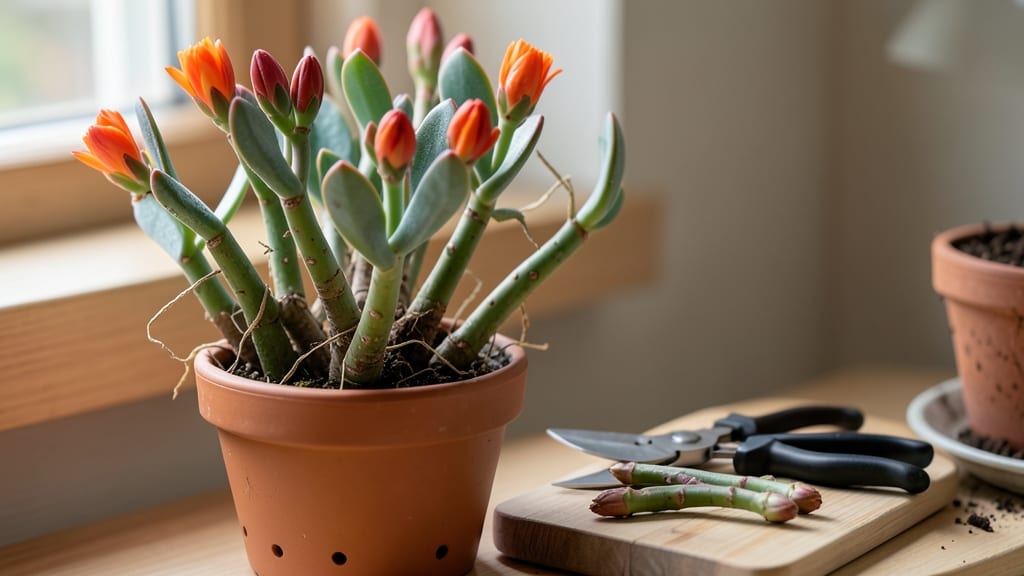
Pruning kalanchoe transforms leggy stems into a bushy, blooming powerhouse—just 3 minutes after the flowers fade. 🌸 I’ve turned my once-skinny plants into dense, flower-covered shrubs by mastering the right cuts and timing, and you can too.
Start by snipping spent flower stalks at the base, then trim leggy stems just above a leaf node. The key is to cut at a 45-degree angle to prevent water pooling. This simple habit triggers new growth from those leaf nodes, creating a fuller plant in just 4-6 weeks.
Use clean, sharp scissors or pruners to avoid crushing stems, and never cut more than 1/3 of the plant at once. Post-pruning, move your kalanchoe to bright, indirect light and hold off on watering until the soil dries completely.
The result? A plant that blooms again in 8-10 weeks instead of stretching toward the window.
📚 In This Guide
- What you need
- Instructions
- Tips and common mistakes
- Wrapping up and next steps
What you need
- ● Sharp pruning shears or scissors: A pair with sterilized, stainless-steel blades (e.g., Felco or Fiskars) to avoid crushing stems or spreading disease. Size: Small handheld (4-6 inches) for precision.
- ● Rubbing alcohol (70% isopropyl) or hydrogen peroxide (3%): To sterilize tools before and after use. Quantity: Small bottle (4 oz) for quick clean-ups.
- ○ Gloves (optional but recommended): Nitrile or latex-free gloves to protect against sap irritation or thorns. Tip: Look for breathable, lightweight options for comfort.
- ● Well-draining potting mix: A blend for succulents or cacti (e.g., 50% cactus/succulent soil + 50% perlite/pumice). Quantity: Enough to refresh pruned sections (1-2 cups per plant).
- ● Small pots or containers: For propagating cuttings. Size: 2-4 inch pots with drainage holes.
- ○ Rooting hormone (optional but helpful): A gel or powder (e.g., Clonex or Dyna-Gro) to boost cutting success. Quantity: Small tube (1 oz).
- ● Spray bottle with water: To mist cuttings and prevent dehydration.
- ● Charcoal granules: A pinch to sprinkle on cuttings to prevent rot.
- ● Plant labels: To track cuttings if you’re experimenting with propagation.
- ● Grow lights or sunny windowsill: For cuttings needing extra light (6+ hours/day).
Step-by-step instructions for pruning kalanchoe
Here's how I keep my kalanchoes lush and blooming year after year—no fancy tools needed.
✂️ Step 1: Identify the Right Time to Prune
Prune your kalanchoe right after it finishes blooming, typically in late spring or early summer. This gives the plant time to recover and grow new stems before winter dormancy. You'll know it's ready when flower stalks turn brown and crispy—snip those off first at the base with clean scissors. Avoid pruning in fall or winter when the plant is resting.
Look for leggy stems that stretch toward the light. These are your signal to prune. I like to wait until the plant has at least 3-4 inches of new growth after flowering—this ensures you're not cutting into dormant wood. If you prune too early, you risk stunting the plant's ability to rebound.
✂️ Step 2: Cut Back Leggy Stems for Bushier Growth
Use sharp, sterilized pruning shears to make clean cuts just above a leaf node or set of leaves. This is where new growth will sprout. I aim to cut back about one-third of the leggiest stems to encourage branching. Never cut into woody, thick stems—they won't regrow.
If your kalanchoe has grown too tall and top-heavy, you can prune the very top of the plant to promote bushier growth. Just make sure to leave at least 2-3 sets of leaves on each stem you trim. After cutting, place the clippings in water to propagate new plants—it's a great way to multiply your collection!
🌱 Step 3: Encourage New Growth with Light and Care
After pruning, move your kalanchoe to a spot with bright, indirect light for a few days to help it recover. Too much direct sun right after pruning can stress the plant. Once new growth appears—usually within 2-3 weeks—you can gradually reintroduce it to morning sun for a few hours a day.
Water lightly after pruning, keeping the soil slightly moist but not soggy. Overwatering now can cause rot, especially if the plant is stressed. I like to check the soil by sticking my finger 1 inch deep—if it's dry, it's time to water. Avoid fertilizing right after pruning; wait until you see fresh new growth before adding a diluted houseplant fertilizer.
☀️ Step 4: Maintain Shape and Bloom Cycle
Throughout the growing season, keep an eye on your kalanchoe's shape. Pinch back any new growth that gets too leggy by snipping just above a leaf node. This encourages the plant to branch out instead of growing tall and sparse. I do this every 4-6 weeks during the active growing months to keep my plants compact and full.
To encourage blooming, your kalanchoe needs 12-14 hours of darkness each night for at least 6 weeks before flowering. In summer, you can achieve this by covering the plant with a dark box or moving it to a closet for the required hours. This darkness triggers the plant's natural blooming cycle, leading to those vibrant flowers you love.
Tips & tricks for pruning kalanchoe like a pro
These simple tricks will help your kalanchoe stay bushy and blooming all year long.
Timing is Everything: The 12-14 hours of darkness your kalanchoe needs to bloom is non-negotiable—this triggers the natural flowering cycle. I use a small cardboard box to cover my plants each evening during summer months. Place the box over the plant around 7 PM and remove it by 7 AM. This mimics the shorter days that signal blooming time, and I've seen dramatic results in just 6 weeks of consistent darkness.
Tool Tip: Don't have pruning shears? A pair of clean, sharp scissors works perfectly fine. Just make sure to sterilize them first with rubbing alcohol—this prevents spreading disease between cuts. I keep a small bottle of alcohol and a spray bottle of water nearby for quick cleaning between plants. The key is making clean cuts just above leaf nodes, so sharp tools make all the difference when you're cutting back those leggy stems.
Recovery Strategy: After pruning, resist the urge to fertilize immediately. Your kalanchoe is already stressed from the cutting process, and fertilizer can burn the new growth. Wait until you see fresh, new leaves emerging—usually within 2-3 weeks—and then use a diluted houseplant fertilizer. I like to use half-strength solution to be extra gentle during this recovery period. This patience pays off with stronger, healthier plants that bloom more vigorously next season.
Propagation Hack: Those clippings you're removing don't have to go to waste! Place them in a small container of water with just the base submerged. Change the water every 3-4 days to prevent bacterial growth. Within 2-3 weeks, you'll see tiny roots forming. This is a fantastic way to multiply your kalanchoe collection without spending a dime—just be patient and keep the water level consistent.
Pro Tips for Prune Kalanchoe
- These simple tricks will help your kalanchoe stay bushy and blooming all year long.
- Timing is Everything: The 12-14 hours of darkness your kalanchoe needs to bloom is non-negotiable—this triggers the n...
- Tool Tip: Don't have pruning shears? A pair of clean, sharp scissors works perfectly fine. Just make sure to steriliz...
Frequently asked questions
Got questions about pruning your Kalanchoe? You’re not alone! Here are some of the most common concerns—and their simple solutions.
When is the best time to prune Kalanchoe for blooms?
Prune your Kalanchoe right after flowering (late winter or early spring) to encourage new growth and future blooms. Avoid heavy pruning in fall if you want winter flowers—light shaping is fine. Think of it like giving your plant a fresh start for the next blooming season!
Can I prune Kalanchoe too much? What are the signs?
Yes! Over-pruning can stress your plant, leading to leggy growth or no blooms. If leaves yellow, stems stretch, or growth stalls, you’ve likely pruned too aggressively. Aim for 1/3 of the plant max per session and always leave healthy leaves at the node.
What do I do with the cuttings after pruning?
Don’t toss those cuttings! Root them in water or well-draining soil to propagate new plants. Use a small container, keep it in bright (indirect) light, and mist occasionally. In 2–4 weeks, you’ll have baby Kalanchoes ready to pot up!
Why did my Kalanchoe stop blooming after pruning?
Blooming issues often stem from light or timing. Ensure your plant gets 6+ hours of sunlight daily and follows a 14-hour dark period (like nighttime) for 6+ weeks to trigger blooms. Pruning alone won’t force flowers—combine it with proper light and care!
Can I prune Kalanchoe in winter?
Light pruning (like removing dead leaves) is fine in winter, but avoid heavy cuts. Kalanchoes are semi-dormant then and need energy for survival. Save major pruning for spring when growth resumes. Think of winter as a cozy nap for your plant!
Wrapping up and next steps
Pruning your Kalanchoe isn’t just about tidying up—it’s your secret weapon for vibrant blooms and lush growth! 🌸 By mastering the timing, tools, and techniques shared here, you’ll encourage bushier plants and even propagate new cuttings. Think of each snip as an investment in next year’s stunning flowers.
Ready to transform your Kalanchoe care? Grab those shears and try pruning a section today—your future blooms will thank you! For extra inspiration, explore how to propagate your cuttings and expand your plant family.