
Pruning
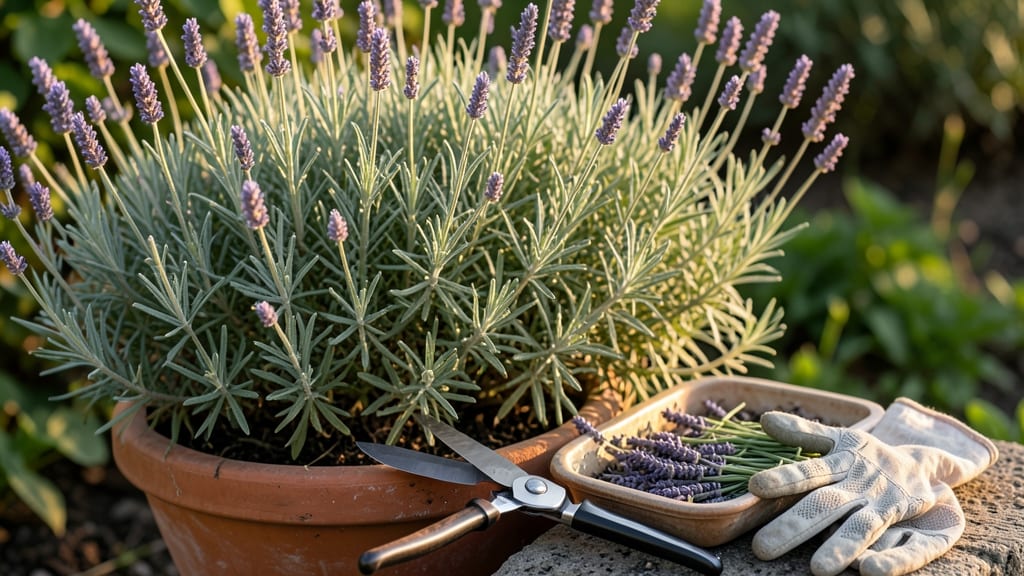
Pruning lavender in pots keeps it fragrant and bushy year after year. ✂️ I’ve learned the hard way—skipping this step turns your pretty lavender into a leggy, woody stick. The key is timing, technique, and knowing when to stop before you strip the plant of its growth potential.
You’ll need sharp pruning shears (dull blades crush stems), gloves to protect from those tiny leaves, and a sunny spot to work—lavender hates being pruned in shade. The best time is right after it flowers in early summer, but a light trim in late winter also encourages fresh growth.
Never cut into woody stems; you’re aiming for the green, leafy parts only.
After pruning, your lavender will bounce back with new growth within 4-6 weeks, smelling even stronger than before. The secret is patience—don’t overdo it. A well-pruned potted lavender can live for 10+ years with just this simple care, and you’ll never buy it again.
For container-grown lavender, watch the roots—crowded pots mean less space for recovery. If your plant looks stressed after pruning, hold off on fertilizing until new growth appears. And if you accidentally cut too much? Don’t panic—lavender’s tough, and it’ll tell you what it needs.
📚 In This Guide
- What you need
- Instructions
- Tips and common mistakes
- Wrapping up and next steps
What you need
- ● Sharp pruning shears: Bypass pruners (4-6 inch blades) for clean cuts—avoid dull tools that crush stems.
- ○ Hand pruners (optional but helpful): For smaller stems or tight spaces (3-4 inch blades).
- ● Gloves: Garden gloves (nitrile-coated for grip) to protect hands from thorns and oils.
- ● Disinfectant (70% isopropyl alcohol or bleach solution): Clean tools between cuts to prevent disease spread (1 part bleach to 9 parts water).
- ● Newspaper or tarp: Lay down to catch clippings and debris (1-2 sheets or a 3x3 ft tarp).
- ○ Water spray bottle (optional): Lightly mist lavender after pruning to reduce stress.
- ● Timing: Prune in early spring (March–April) or right after flowering—never cut into old wood or late in the season.
- ● Weather: Choose a dry, overcast day to minimize stress on the plant.
- ● Health check: Inspect the lavender for pests (like spider mites) or disease before pruning.
- ● Horticultural oil: Spray on tools to prevent rust (apply after cleaning).
- ● Compost bin: For repurposing healthy clippings (lavender mulch is great for gardens!).
- ● Plant food (balanced fertilizer): Lightly feed after pruning (e.g., 10-10-10, diluted to half strength).
- ● Pruning guide or ruler: Mark 1/3 of the plant’s height to avoid over-pruning.
Step-by-Step instructions for pruning lavender in pots
Here’s how I keep my potted lavender looking full, fragrant, and healthy all year—without sacrificing next season’s blooms.
✂️ Step 1: Prune Immediately After First Flowering
Lavender blooms on old wood, so timing matters. As soon as the first flowers fade (usually late spring to early summer), trim back the spent flower stalks by one-third of their height. Use sharp, clean pruners to cut just above a set of healthy leaves or a side branch. This encourages fresh growth and prevents leggy stems.
I like to do this in the morning when the plants are dry—wet foliage can tear and invite disease. If you wait until flowers fully brown, you risk losing next year’s buds. Think of it like giving your lavender a haircut right after its first bloom show.
✂️ Step 2: Shape the Plant in Late Summer
After the main flowering season, focus on shaping. In late August or early September, trim any woody or overgrown stems back by another third. This keeps the plant compact and prevents it from becoming too dense in the center, which can lead to mold or dead spots.
Work from the bottom up, cutting at a 45-degree angle just above a leaf or bud. Avoid cutting into old, bare wood—this kills the plant. If you accidentally do, don’t worry; lavender is tough and will bounce back with proper care.
✂️ Step 3: Light Pruning in Winter (If Needed)
Potted lavender rarely needs heavy winter pruning, but if stems look leggy or bare, give them a light trim in late winter (February). Cut back any dead or damaged growth by half an inch, focusing on the outer edges to maintain shape. This is more about tidying up than shaping.
Skip heavy pruning in winter—lavender needs its energy to establish new growth for spring. A light touch is all it takes. If your plant looks healthy but just a little unruly, a pair of scissors and a quick once-over will do the trick.
✂️ Step 4: Annual Spring Cleanup
In early spring (March), before new growth starts, do a final cleanup. Remove any dead, diseased, or crossing branches. This improves airflow and keeps the plant looking neat. If your lavender has outgrown its pot, this is also the time to repot—though lavender prefers being slightly root-bound.
After pruning, give your plant a light feeding with a balanced, water-soluble fertilizer. This jumpstarts growth for the season. Water lightly afterward, but don’t overdo it—lavender hates soggy roots. A quick mist and you’re set for another year of fragrant blooms.
⏰ Step 5: Monitor and Adjust Year-Round
Throughout the year, keep an eye on your lavender. If it looks crowded or leggy between prunings, do a light trim to encourage bushiness. Avoid pruning in fall if your climate gets cold—new growth won’t harden off before winter.
Here’s the thing—lavender is forgiving. Even if you skip a pruning season, it’ll bounce back. The key is consistency. A little maintenance now means a fuller, fragrant plant that thrives in pots for years.
Tips & tricks for pruning lavender in pots
These simple strategies will help you keep your potted lavender thriving year after year without sacrificing next season's blooms.
Timing is Everything: Lavender blooms on old wood, so pruning too late can reduce next year's flowers. In Step 1, when you're cutting back those spent flower stalks by one-third, do it as soon as the first flowers fade—not after they've fully browned. I've learned the hard way that waiting too long means fewer buds for spring. If you miss this window, don't panic—just focus on shaping in Step 2 during late summer.
The Right Tools Make All the Difference: Sharp, clean pruners are non-negotiable. Dull blades tear stems instead of making clean cuts, which can invite disease. Before you start Step 2 shaping, wipe your pruners with rubbing alcohol to sterilize them—this prevents spreading any potential pathogens between cuts. For small plants, even sharp kitchen scissors work in a pinch, but invest in proper pruners for larger pots.
Angle Matters in Step 2: When you're shaping your lavender in late August or early September, cutting at a 45-degree angle above a leaf or bud isn't just for looks—it helps water run off the cut and prevents rot. I like to visualize making a tiny roof over each cut to keep moisture away from the stem. This is especially important for potted lavender since they're more susceptible to fungal issues in crowded pots.
Winter Pruning Wisdom: That light trim in February (Step 3) isn't about major shaping—it's about tidying up. Focus on removing only dead or damaged growth by about half an inch. I've seen people over-prune in winter and end up with bare stems that never recover. Think of it like giving your lavender a spa day rather than a major makeover during its dormant period.
Pro Tips for Prune Lavender In Pots
- These simple strategies will help you keep your potted lavender thriving year after year without sacrificing next sea...
- Timing is Everything: Lavender blooms on old wood, so pruning too late can reduce next year's flowers. In Step 1, whe...
- The Right Tools Make All the Difference: Sharp, clean pruners are non-negotiable. Dull blades tear stems instead of m...
Frequently asked questions
Got questions about keeping your potted lavender thriving? Here are answers to the most common concerns—so you can prune with confidence!
When is the best time to prune lavender in pots?
The ideal time is right after flowering (late spring to early summer) to encourage new growth. Avoid heavy pruning in fall or winter—lavender needs energy to establish roots before dormancy. A light tidy-up in early spring (before buds form) is fine, but skip major cuts then.
How much should I cut back lavender in pots?
Never trim more than one-third of the plant at once. For potted lavender, aim for a 1/3 to 1/2 reduction of flowered stems (cut just above a leaf node or woody base). Over-pruning stresses the plant—think "less is more" for woody stems. Pro tip: Use sharp shears to avoid crushing stems!
My lavender looks leggy—what’s the fix?
Leggy growth usually means it’s overcrowded or underpruned. Trim back all stems by half in early spring, then fertilize lightly with low-nitrogen food (like 5-10-10). Repot if roots circle the container, and place in full sun (6+ hours/day). Avoid rich soil—lavender hates wet feet!
Can I prune lavender in pots in winter?
Light pruning (removing dead or damaged stems) is safe in mild winters, but avoid heavy cuts. Lavender is semi-dormant in winter—pruning then can stimulate weak, floppy growth. Wait until spring for shaping. If your lavender is in a protected spot (like a greenhouse), you can do minimal trimming.
What if I accidentally prune too much?
Don’t panic! If you’ve trimmed more than half the plant, stop pruning for the year and focus on care:
- Water only when soil is dry (lavender hates soggy pots).
- Fertilize sparingly with a diluted, low-nitrogen mix.
- Move to bright, indirect light temporarily if leaves yellow.
Wrapping up and next steps
Pruning your potted lavender doesn’t have to be intimidating—it’s all about timing, technique, and a little love. 🌿 By following these simple steps, you’ll encourage lush, fragrant growth and keep your plants thriving for seasons to come.
Now that you’re armed with the know-how, grab those shears and give your lavender the care it deserves—your future blooms will thank you!
Ready to level up your pruning game? Next, explore seasonal lavender care tips to keep your pots looking their best year-round!