
Pruning
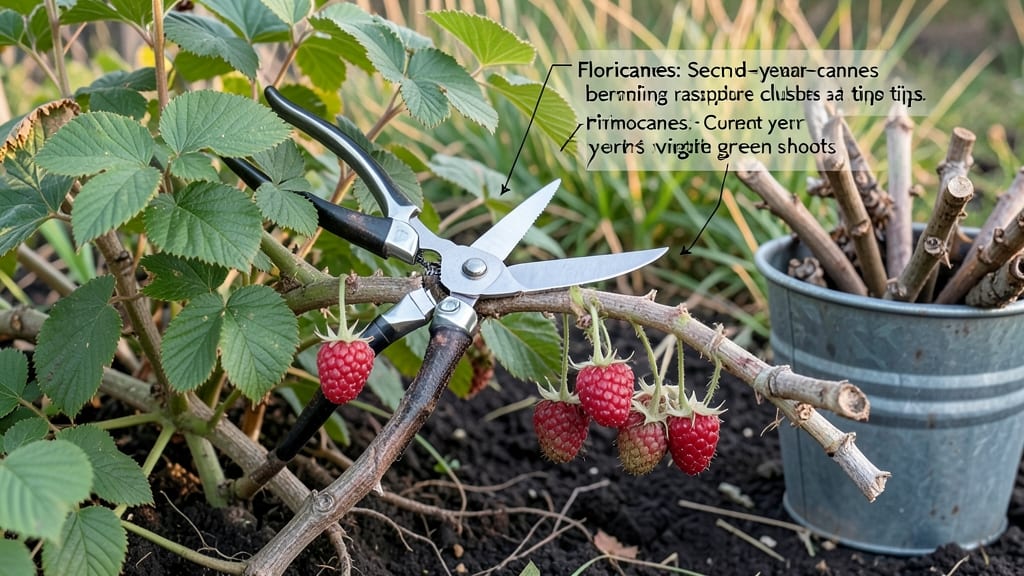
Late-winter pruning turns raspberry plants from tangled messes into fruit-producing powerhouses. ✂️ I’ve watched my raspberries go from struggling canes to producing pounds of berries—the difference is knowing when and how to cut. The right timing and technique unlock bigger harvests, healthier plants, and fewer pests.
You’ll need just three tools: sharp pruners, clean gloves, and rubbing alcohol for sterilizing cuts. Summer-bearing varieties get pruned in late winter, while fall-bearing types need a second trim in summer. The key is removing dead wood first, then thinning crowded canes to let sunlight reach the center.
After pruning, your plants will send out fresh green shoots within 2-3 weeks. Fertilize lightly with compost or balanced fertilizer, water deeply, and watch those canes thicken. The result? Double the fruit next season—and fewer tangled vines to fight.
Works for both summer- and fall-bearing varieties, whether you’re pruning a small patch or a full fence row. Let’s get those canes shaped for success!
📚 In This Guide
- What you need
- Instructions
- Tips and common mistakes
- Wrapping up and next steps
What you need
- ● Pruning shears or loppers: Sharp, bypass-pruners (4-6" blades) or loppers (for thicker canes). Choose sterilized tools to prevent disease spread.
- ● Gloves: Heavy-duty, cut-resistant gloves (e.g., leather or reinforced fabric) to protect against thorns and scrapes.
- ● Disinfectant: Rubbing alcohol (70%+), bleach solution (1 part bleach to 9 parts water), or hydrogen peroxide (3%) to sterilize tools between cuts.
- ● Garden twine or zip ties: For securing canes to stakes or trellises (if needed).
- ○ Stakes or trellis system: Optional but helpful for training canes (bamboo stakes, wire trellis, or T-posts).
- ● Garden rake or hoe: To clear debris and weeds around the plant base.
- ● Trash bags or compost bin: For disposing of pruned canes (avoid composting diseased canes).
- ● Pruning saw: For very thick canes (rare in raspberries but useful for neglected plants).
- ● Knee pads: If you’ll be kneeling for extended periods.
- ● Label markers: To tag new canes if you’re experimenting with varieties.
- ● Mulch (straw or wood chips): To protect the soil and suppress weeds post-pruning.
- ● Hand sanitizer: For quick clean-ups between plants.
Instructions for pruning raspberry plants
Late winter is the perfect time to revive your raspberry bushes—here’s how to do it right.
✂️ Step 1: Identify and Remove Dead or Weak Canes
Start by examining each cane at the base, looking for signs of life. Healthy canes have firm, green bark and a sturdy structure, while dead or dying canes appear hollow, brittle, or covered in dark, mushy spots. I always run my thumb along the length of the cane—if it feels soft or crumbly, it’s time to cut it out completely.
Remove any canes that produced fruit last season (unless you’re growing fall-bearing varieties, which fruit on second-year growth). These old canes have given their energy to fruiting and won’t produce well again. Use sharp, clean pruners to cut at a 45-degree angle about ½ inch above the ground. This prevents water from pooling on the stub and reduces disease risk.
✂️ Step 2: Thin the Canes for Better Airflow and Light
Raspberries thrive when they have room to breathe. Aim to leave 5-7 of the strongest, healthiest canes per plant, spaced evenly around the center. Thin by cutting the weakest canes at the base—these are usually thinner, leggier, or showing signs of disease like rust or spots.
If you’re unsure which canes to keep, look for those with thick, green stems and multiple buds along their length. These will produce the most fruit. Avoid keeping canes that are crossing or rubbing against others, as this creates wounds that invite pests and disease. Step back occasionally to visualize the plant’s shape—you’re sculpting, not just hacking.
✂️ Step 3: Prune for Shape and Fruit Production
For summer-bearing varieties, focus on first-year canes (those that grew last year but didn’t fruit). These will produce this season’s harvest. Cut back any side shoots that formed on last year’s fruiting canes—these are called "suckers" and drain energy from the main plant. Use your pruners to trim them off at the base.
For fall-bearing varieties, leave last year’s fruiting canes intact—they’ll produce again this season. However, you will need to prune out any second-year canes (those that fruited last year but didn’t produce in fall) after harvest. This keeps the plant from getting overcrowded. Lightly trim the tips of remaining canes to encourage bushier growth and more fruiting laterals.
✂️ Step 4: Clean Up and Protect the Plant
After pruning, rake up and dispose of all debris—especially fallen leaves and old canes. This removes overwintering pests and diseases that could reinfect your plants. I like to compost the healthy-looking debris, but burn or trash anything that looks diseased or infested.
Apply a 2-3 inch layer of mulch around the base of the plant (but not touching the stems) to retain moisture and suppress weeds. This is also a great time to fertilize lightly with a balanced, organic fertilizer (like 10-10-10) to give the plant a nutrient boost before new growth starts. Water deeply to help the roots absorb the nutrients and settle the mulch.
⏰ Step 5: Monitor and Adjust as Growth Begins
Once new growth starts in early spring, keep an eye out for suckers (shoots growing from the base or roots). These can be aggressive and compete with your main canes for nutrients. Pinch them off as soon as you see them to redirect the plant’s energy into fruit production.
If you notice any canes growing at odd angles or crossing others, trim them back to encourage an open, airy structure. This isn’t just about looks—good airflow reduces humidity around the canes, which prevents fungal diseases like cane blight. A well-pruned raspberry plant will reward you with stronger canes, more fruit, and fewer pests come summer.
Tips & tricks for perfect raspberry plant pruning
Late-winter pruning can transform your raspberry bushes from overgrown tangles to productive powerhouses—here’s how to avoid common pitfalls and maximize your harvest.
Tool Prep: Before you start, sanitize your pruners with rubbing alcohol or a bleach solution (1 part bleach to 9 parts water). Diseased canes can harbor pathogens that spread to healthy ones. I also sharpen my blades with a file—dull tools crush stems instead of cleanly cutting them, which stresses the plant. This simple step prevents unnecessary damage and keeps your tools ready for years of use.
Visual Cues for Healthy Canes: In Step 1, when checking for dead canes, look for a crisp, snapping sound when you bend a healthy cane—it should break cleanly, not bend like a green twig. For summer-bearing varieties, focus on the first-year canes (last year’s growth) as these will fruit this season. If you’re unsure which canes to keep, remember: thicker stems with multiple buds mean more fruit potential. A quick thumb test along the cane’s length reveals its structural integrity.
Pruning Angle Matters: The 45-degree angle cut in Step 1 isn’t just for aesthetics—it creates a larger surface area for water to evaporate, reducing the risk of rot. Always cut just outside the bud or branch collar (the swollen area where the stem meets the trunk). Avoid leaving stubs, which can trap moisture and invite disease. For fall-bearing varieties, this precise cut is especially important since you’re preserving last year’s fruiting canes for another harvest.
Seasonal Timing Insight: Late winter (just before buds swell) is ideal because the plant is dormant, making it easier to identify dead canes. If you miss this window, you can still prune in early spring, but you risk encouraging new growth that could be damaged by late frosts. For summer-bearing varieties, this timing ensures you’re working with last year’s non-fruiting canes, which will produce this season’s berries.
Pro Tips for Prune Raspberry Plants
- Late-winter pruning can transform your raspberry bushes from overgrown tangles to productive powerhouses—here’s how to avoid common pitfalls and maximize your harvest.
- Tool Prep: Before you start, sanitize your pruners with rubbing alcohol or a bleach solution (1 part bleach to 9 parts water).
- Visual Cues for Healthy Canes: In Step 1, when checking for dead canes, look for a crisp, snapping sound when you bend a healthy cane—it should break cleanly, not bend like a green twig.
Frequently asked questions
Got questions about pruning raspberries? You’re not alone! Here are answers to the most common concerns—so you can confidently shape your plants for a juicy, harvest-packed summer.
When is the best time to prune raspberry plants?
For summer-bearing varieties, prune immediately after harvest (late summer) to remove old canes. For fall-bearing types, prune in late winter or early spring (before buds swell) to clear out last year’s fruited canes. Ever-bearing raspberries need a two-step prune: cut old canes post-harvest, then trim new growth in spring.
What if I prune at the wrong time?
Pruning too early (before dormancy) can stress plants, while late pruning (after buds break) may reduce fruit yield. Summer-bearing raspberries are most forgiving—just avoid heavy cuts in spring. Fall-bearing types are sensitive: Never prune in fall (it removes next year’s fruit!). If you miss the window, focus on light shaping to encourage new growth.
How do I know which canes to cut?
Raspberry canes come in two types: floricanes (last year’s canes that bore fruit) and primocanes (current year’s growth). Summer-bearing: Cut all floricanes to the ground. Fall-bearing: Remove all canes after harvest—new growth will fruit next year. Ever-bearing: Trim half the old canes post-harvest, leaving some for a second crop.
Can I prune raspberries too much?
Yes! Over-pruning removes too much foliage, reducing the plant’s ability to photosynthesize and store energy. Leave at least 6–8 healthy canes (or 3–4 for young plants). If you’re unsure, err on the side of caution—raspberries bounce back better from under-pruning than over-pruning. Thin crowded canes first, then prune selectively.
What if my raspberries have pests or disease after pruning?
Pruning improves airflow, reducing fungus risks like cane blight. To prevent pests:
- Dispose of pruned canes far from the garden (or burn them).
- Sanitize pruners with rubbing alcohol between cuts.
- Apply copper fungicide if you spot spots or mold.
- Encourage beneficial insects (like ladybugs) to deter aphids.
Wrapping up and next steps
Pruning raspberry plants in late winter isn’t just about tidying up—it’s your secret to a thriving, fruit-filled summer! 🌱 By removing old canes, thinning crowded growth, and sharpening your tools, you’re setting the stage for healthier plants and bigger harvests.
Remember, consistency is key, so make pruning a yearly ritual and watch your raspberry bushes reward you with abundance.
Ready to take the next step? Mark your calendar for late winter or early spring and grab those pruners—your future berry feasts are waiting! 🍓✨