
Pruning
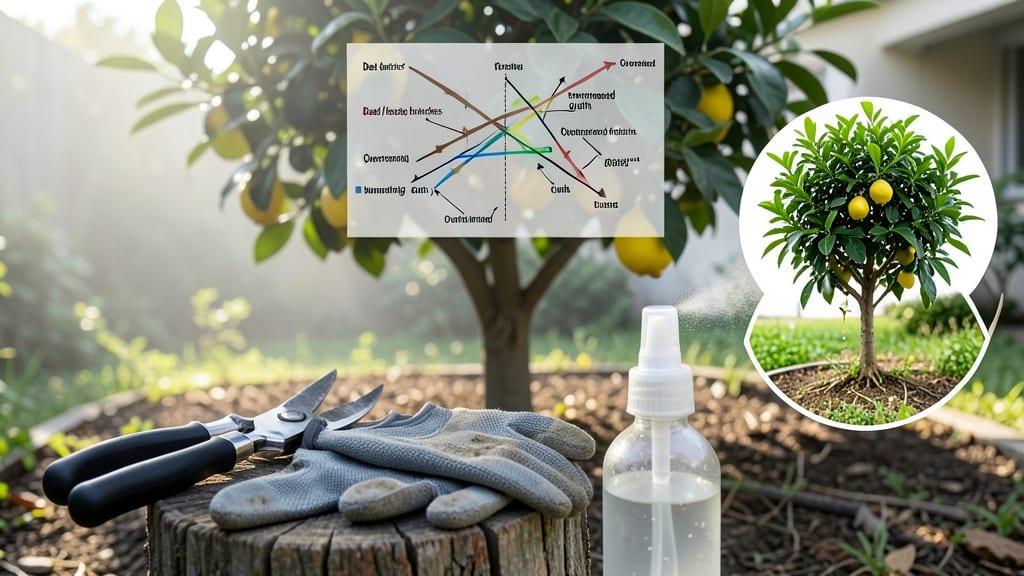
A lemon tree pruning diagram can transform your tree from a tangled mess into a thriving, fruit-bearing powerhouse—if you make the right cuts. ✂️ Pruning isn’t just about shaping; it’s about directing energy where it matters most: into fruit production and strong branches.
I’ve pruned mine for five years, and the difference between a scraggly bush and a productive tree comes down to these key cuts. The best time to prune is late winter or early spring, right before new growth kicks in.
You’ll focus on three things: removing dead/diseased branches, thinning crowded growth, and shaping the tree to let sunlight reach the center. A sharp pair of pruners and a clean workspace are all you need—no fancy tools required.
After pruning, your tree will send out fresh, vibrant shoots within 4-6 weeks, and those new branches are where the fruit forms. The canopy opens up, reducing disease risk and making it easier to spot pests before they become a problem.
This method works for both dwarf and standard lemon trees, whether you’re growing in containers or in the ground. Let’s get those branches looking intentional—and your kitchen stocked with homegrown lemons.
📚 In This Guide
- What you need
- Instructions
- Tips and common mistakes
- Wrapping up and next steps
What you need
- ● Pruning shears (bypass or anvil type) – Sharp, clean, and sterilized (1 pair). Bypass shears are ideal for clean cuts.
- ● Lopping shears or pruning saw – For thicker branches (1-2, depending on tree size).
- ● Gloves (gardening or cut-resistant) – Protects hands from thorns and sap (1 pair).
- ● Disinfectant (rubbing alcohol or bleach solution) – To sterilize tools between cuts (small bottle).
- ○ Pruning sealant (optional but helpful) – For sealing larger cuts (small tube).
- ● Ladder or step stool – For reaching higher branches (1, if needed).
- ● Bucket or trash bag – For collecting pruned branches (1-2).
- ● Permanent marker – To mark cuts if planning ahead (1).
- ● Lemon tree pruning diagram (printed or digital) – For reference (1 copy).
- ● Hand sanitizer – To clean hands after pruning.
- ● Safety glasses – If working with large branches.
- ● Compost bin or mulch – To recycle pruned branches.
- ● Notebook & pen – To track pruning progress or notes.
Step-by-step guide to pruning your lemon tree for optimal growth
Pruning isn't just about shaping your lemon tree—it's about unlocking bigger fruit, better airflow, and a stronger structure.
✂️ Step 1: Gather Tools and Safety Gear
Start with a pair of sharp, clean pruning shears (for small branches) and loppers (for thicker limbs). I always sterilize my tools with rubbing alcohol before cutting—this prevents bacterial infections that can weaken the tree. Wear gloves to protect your hands from thorns and sap, and have a bucket ready to collect clippings for compost.
Work on a dry day when the tree isn't stressed. The best time to prune is late winter or early spring, just before new growth begins. This ensures you're not removing buds that could produce flowers or fruit later in the season.
🌿 Step 2: Identify and Remove Dead or Diseased Branches
Scan the tree for dead wood (branches that are brown, brittle, or lack leaves) and diseased limbs (those with black spots, oozing sap, or unusual growths). These should be your first cuts—they're dead weight and can spread problems to healthy parts of the tree. Use your loppers to make a clean cut just outside the branch collar (the swollen area where the branch meets the trunk).
If a branch is diseased, bag it immediately and dispose of it in the trash—not the compost. Healthy branches should have a green interior when you cut into them. If you see dark, mushy wood, that branch is a hazard and needs to go.
☀️ Step 3: Thin Out Crowded Branches for Airflow
Lemon trees thrive when they get good airflow, so your next goal is to open up the canopy. Look for branches that cross or rub against each other—these create wounds and invite pests. Remove one of the offending branches entirely, cutting back to the branch collar. Aim to reduce crowding by 20-30% total, but never remove more than 25% of the tree’s foliage in one session.
Pay special attention to suckers (shoots growing from the base or along the trunk). These drain energy from the main tree. Snip them off at the base with your shears. You’ll see the tree’s structure become more open and airy as you work.
🌱 Step 4: Shape the Tree for Balance and Fruit Production
Now it’s time to guide the tree’s shape. Lemon trees grow best with a central leader (one main upward-growing branch) and scaffold branches (larger limbs spreading outward). If your tree has multiple competing leaders, choose the strongest one and prune the others back to a lateral branch or the trunk. This ensures energy goes to one strong leader instead of splitting growth.
For scaffold branches, aim to space them 6-12 inches apart along the trunk. Prune back any branches that grow inward or downward—they’ll never get enough sunlight to produce fruit. Cut just above an outward-facing bud to encourage new growth in the right direction.
⏰ Step 5: Finish with Light Maintenance Pruning
After the major cuts, do a final walkthrough to neaten the tree. Trim back any branches that are growing too long or leggy, cutting just above a leaf node or bud. Avoid topping (cutting the very top of the tree flat)—this stresses the plant and leads to weak, water-sprout growth. Instead, make angled cuts that follow the natural branch structure.
Step back and admire your work. A well-pruned lemon tree should look balanced, with an open center that lets sunlight reach all parts of the canopy. Water the tree deeply after pruning to help it recover, and keep an eye out for new growth in the next few weeks.
Tips & tricks for perfect lemon tree pruning
These simple strategies will help you prune your lemon tree like a pro—without the guesswork.
Tool Preparation: Before you start, sharpen your pruning shears and loppers with a file or sharpening stone. Dull blades tear wood instead of making clean cuts, which slows healing and invites disease. I also like to wrap my loppers in duct tape for the first few uses—this prevents sap from sticking to the metal and dulling them over time.
Season Timing: Late winter or early spring is ideal for pruning, but if you missed that window, you can do light maintenance pruning in summer after harvest. Avoid pruning in fall—this removes the tree's natural protection against winter cold. I've learned the hard way that pruning too late can leave your tree vulnerable to frost damage during dormancy.
Visual Pruning Cues: When shaping your tree, look for branches that grow at a 45-degree angle or less from the trunk—these are your scaffold branches. Aim to space them 6-12 inches apart along the trunk. For the central leader, choose the strongest upward-growing branch and remove any competing vertical stems at their base. This creates a strong framework that supports more fruit.
Pro Tips for Lemon Tree Pruning Diagram
- These simple strategies will help you prune your lemon tree like a pro—without the guesswork.
- Tool Preparation: Before you start, sharpen your pruning shears and loppers with a file or sharpening stone. Dull bla...
- Season Timing: Late winter or early spring is ideal for pruning, but if you missed that window, you can do light main...
Frequently asked questions
Got questions about keeping your lemon tree thriving with the right cuts? Here are answers to the most common concerns—no green thumb required!
When is the best time to prune a lemon tree?
The ideal time is late winter or early spring, just before new growth begins. This helps avoid stressing the tree during dormancy. For container-grown lemon trees, you can also prune lightly after fruiting in late summer to encourage new branches. Pro tip: Avoid heavy pruning in fall—it can leave the tree vulnerable to cold damage.
How much can I trim off without harming the tree?
Never remove more than 25-30% of the tree’s foliage in one session. Over-pruning weakens the tree, reduces fruit production, and stresses its roots. Focus on shaping, removing dead wood, and thinning crowded branches. Use a lemon tree pruning diagram to visualize safe cuts—aim for clean, angled snips just above a leaf node or bud.
Will pruning my lemon tree reduce fruit yield?
Not if done correctly! Pruning actually boosts fruit quality by improving airflow and sunlight penetration. However, avoid heavy cuts during flowering or fruiting seasons. Light pruning in winter encourages stronger branches that support more fruit later. Think of it like a haircut—less volume, but better growth!
What if my lemon tree has frost damage? Can I still prune it?
Yes, but wait until spring after the last frost. Dead or blackened branches should be cut back to healthy green wood. Disinfect pruners with rubbing alcohol between cuts to prevent disease. If the tree is severely damaged, focus on removing only the worst-affected areas to avoid shocking the plant further. Pro tip: Mulch the base to protect roots during recovery.
Can I use the same pruning technique for dwarf vs. standard lemon trees?
Yes, but adjust the scale! Dwarf trees (under 6 ft) need smaller, more frequent prunes to maintain size, while standard trees benefit from structural shaping early on. Both should follow the same pruning diagram principles—just scale the cuts. Dwarf trees also respond well to pinching (removing new growth tips) to encourage bushiness.
What should I do if my lemon tree bleeds sap after pruning?
Sap bleeding is normal and harmless—it’s the tree’s way of sealing cuts. To minimize it, prune on a dry, cool day (not hot) and use sharp tools for clean cuts. If sap attracts pests, wipe it away with a damp cloth. Avoid pruning during wet weather, as this can invite fungal infections. Most trees stop "weeping" after a few days.
Wrapping up and next steps
Pruning your lemon tree isn’t just about keeping it tidy—it’s the secret to bountiful harvests and long-term health! 🌿 With the right cuts (and a handy diagram as your guide), you’ll encourage stronger growth, better airflow, and those sweet, juicy lemons you’ve been dreaming of.
Whether you’re a pruning pro or just starting out, every snip brings you closer to a thriving tree.
Ready to take the next step? Grab your pruners, dust off that diagram, and schedule your first pruning session—your lemon tree (and your future lemonade!) will thank you. Happy pruning! 🍋✨