
Pruning
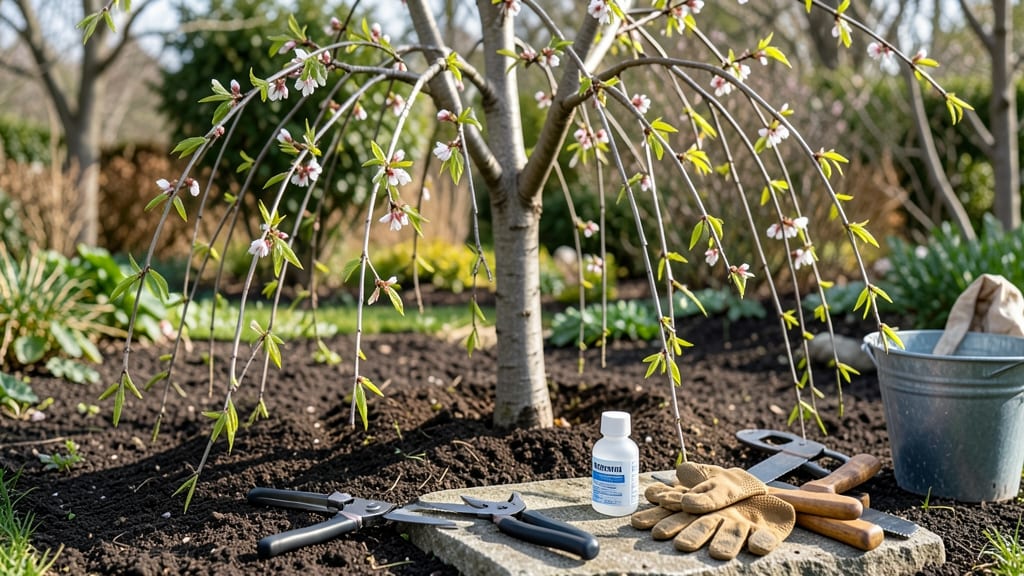
Pruning a weeping cherry tree in late winter unlocks its full potential—stronger branches, more blooms, and a graceful shape that lasts for decades. 🌸 I’ve seen these trees go from ragged and overgrown to showstopping centerpieces in just one season, and the secret lies in timing, technique, and a little patience.
The best time to prune is right after the last frost but before buds swell, when the tree’s energy is still dormant but ready to respond. You’ll need just three basic tools: sharp pruning shears for small branches, loppers for thicker stems, and a saw for any stubborn wood.
Start by removing dead, diseased, or crossing branches—these are the first to go, as they compete with healthy growth. Then, shape the canopy by thinning out crowded areas, letting light and air circulate where it matters most. The goal isn’t perfection; it’s balance.
After pruning, your tree will reward you with vibrant spring blooms and a denser, more resilient structure. The key is to avoid cutting back more than one-third of the canopy at once—this prevents stress and keeps the tree thriving.
Seal any large cuts with pruning sealant to protect against pests and disease, and water deeply afterward to help it recover. This method works for both young trees and mature specimens, whether you’re shaping a new addition to your yard or revitalizing an older weeping cherry.
The results? A tree that not only looks stunning but also lives longer and blooms more abundantly every year.
📚 In This Guide
- What you need
- Instructions
- Tips and common mistakes
- Wrapping up and next steps
What you need
- ● Pruning shears: Bypass pruners (sharp, 6–8" blades) for clean cuts on small branches (1/4"–3/4" diameter). Quantity: 1 pair.
- ● Loppers: Bypass or anvil type (long-handled, 18–24") for thicker branches (3/4"–2" diameter). Quantity: 1 pair.
- ● Pruning saw: Curved-tooth or folding saw for stubborn, woody branches (>2" diameter). Quantity: 1.
- ● Disinfectant: 70% isopropyl alcohol or diluted bleach solution (1 part bleach to 9 parts water) to sterilize tools between cuts. Quantity: Small spray bottle.
- ● Garden gloves: Cut-resistant, breathable (e.g., nitrile-coated) to protect hands from thorns and sap. Quantity: 1 pair.
- ● Rags or paper towels: For wiping tools and hands. Quantity: 2–3.
- ● Ladder or step stool: Sturdy, non-slip (if tree exceeds 6' tall). Height: Adjustable to reach canopy.
- ○ Sealing wax or pruning paint: Optional for large cuts (>1" diameter) to prevent disease entry (apply only if needed).
- ● Marking spray: White or colored to flag branches for removal (e.g., Fiskars Marking Spray).
- ● Heavy-duty trash bags: For collecting debris. Size: 30+ gallons.
- ● Safety glasses: Protect eyes from debris (especially when using a saw).
Step-by-step guide to pruning a weeping cherry tree
Here's how I shape my weeping cherry for years of stunning spring blooms and healthy growth.
✂️ Step 1: Gather Your Tools and Safety Gear
First, grab your sharp pruning shears (for cuts under ½ inch thick) and loppers (for thicker branches). I always wear gloves—weeping cherries have thorns that pack a punch. A disinfectant spray keeps tools sanitized between cuts, preventing disease spread. Clear the area of debris and lay down a tarp to catch fallen branches.
Check your tools before starting. Dull blades tear bark and damage the tree. A quick wipe-down with rubbing alcohol ensures no lingering bacteria from previous cuts. I like to organize my tools in a bucket so I don't waste time searching mid-prune.
✂️ Step 2: Remove Dead, Diseased, or Damaged Branches
Start by scanning the tree for branches that are dead (no green bark), diseased (mushrooms, ooze), or damaged (broken, split, or rubbing against others). These are your first targets—remove them completely at the branch collar (the swollen area where the branch meets the trunk). Never leave stubs; clean cuts heal faster and look better.
I cut just outside the branch collar at a 45-degree angle if needed, but I make most cuts straight across. For larger branches, I make a second cut slightly above the first to control the branch's fall. Watch for water sprouts (thin, upright shoots)—these steal energy from blooms and should go.
✂️ Step 3: Thin Out Crowded Branches
Now focus on the tree's structure. Weeping cherries naturally grow in a graceful arch, but over time, branches can crowd each other. Remove 10-20% of the oldest, thickest branches to improve airflow and light penetration. Start from the inside and work outward—this opens up the canopy and reduces disease risk.
Look for branches growing straight up or crossing others. These compete for resources and can create weak points. I aim to keep a well-spaced framework with branches evenly distributed along the tree's natural shape. Never remove more than 25% of the canopy in one year—this stresses the tree.
✂️ Step 4: Shape the Tree's Natural Form
Weeping cherries thrive when you enhance their natural weeping habit. Step back and visualize the tree's ideal shape—a graceful, cascading silhouette. Prune to encourage the long, horizontal branches that create that signature look. Shorten overly long branches by cutting just above a bud that faces outward.
I avoid heavy pruning on the lower branches—these are what give the tree its stunning, weeping appearance. For upward-growing branches, make your cut just above a bud that points downward to encourage growth in the right direction. This step is all about refinement, not drastic changes.
✂️ Step 5: Clean Up and Monitor for Recovery
After pruning, rake up all debris and dispose of it (don't compost diseased branches). A light application of mulch around the base helps retain moisture and protect the tree as it recovers. Water deeply if the weather is dry—this helps the tree heal and reduces stress.
Keep an eye on the tree over the next few weeks. New growth should appear within 4-6 weeks if the cuts were made correctly. If you see oozing sap or fungal growth at any cut, apply a pruning sealant to protect the wound. Avoid heavy pruning for the next 1-2 years—let the tree recover and focus on maintaining its shape.
Tips & tricks for pruning a weeping cherry
Let me save you the frustration I went through after seeing my weeping cherry's blooms fade too early—these are the secrets that'll keep yours thriving for decades.
Tool Prep is Non-Negotiable: I learned this the hard way after ruining three branches with dull shears. Always test your pruning shears on a scrap piece of bark first—if they don't cut cleanly, sharpen them. The 45-degree angle for larger branches isn't just about looks; it helps water run off properly and prevents rot. Keep your disinfectant spray handy between cuts to stop disease spread, especially when pruning diseased branches.
Timing Secret for Blooms: Late winter is perfect because the tree is dormant, but don't prune too early—wait until the last hard frost has passed in your area. This 4-6 week recovery window before spring growth is critical. I mark my calendar for February in most zones, but check your local frost dates. The goal is to shape before new buds swell, so you're not removing potential bloom sites.
Branch Selection Strategy: When choosing which branches to remove in Step 3, I use the "third branch rule"—if you can see three branches growing from the same point, keep only the strongest one. Look for branches that cross or rub against others; these create wounds where diseases can enter. The 10-20% removal guideline might seem strict, but it prevents over-stressing the tree. Think of it as giving your tree a spa day—less is more for long-term health.
Recovery Monitoring: After pruning, I check for new growth every 2 weeks during the first month. If you don't see fresh green shoots by 6 weeks, there might be an issue with your cuts or the tree's health. The 1-2 year recovery period is serious—don't be tempted to do major pruning again too soon. A lightly mulched area around the base helps retain moisture while the tree heals, and that pruning sealant isn't just for show—it really helps large cuts heal properly.
Pro Tips for Pruning A Weeping Cherry
- Let me save you the frustration I went through after seeing my weeping cherry's blooms fade too early—these are the s...
- Tool Prep is Non-Negotiable: I learned this the hard way after ruining three branches with dull shears. Always test y...
- Timing Secret for Blooms: Late winter is perfect because the tree is dormant, but don't prune too early—wait until th...
Frequently asked questions
When is the best time to prune a weeping cherry tree?
The ideal window is late winter (just before buds swell) or early spring. Avoid pruning in fall or winter when the tree is dormant—this can invite disease. If you must prune outside this window, do it after flowering (but expect fewer blooms the next year).
How much can I cut back without harming the tree?
For young trees, limit pruning to 20-30% of the canopy per year to avoid stress. Mature trees can handle up to 1/3 of the oldest branches in one session, but never remove more than 25% of the total foliage in a single pruning. Focus on shaping rather than drastic cuts!
What if my weeping cherry tree isn’t blooming after pruning?
Bloom loss usually means you pruned too late (after buds formed) or too aggressively. To fix it:
Patience helps—some trees rebound in 1-2 years!
Can I prune a weeping cherry in cold climates?
Yes! Cold-hardy varieties (like ‘Kanzan’ or ‘Okame’) tolerate winter pruning, but:
If snow covers the tree, wait until it melts before pruning.
Are there alternatives if my weeping cherry tree is too large to prune safely?
If your tree is too tall or weak for DIY pruning, consider:
- Hiring a certified arborist (look for _ISA_ credentials).
- Using extendable pruners or a pole saw for high branches.
- Opting for dwarf varieties (like ‘Craveable’ or ‘Stella Pink’) if replanting.
Wrapping up and next steps
Pruning your weeping cherry tree in late winter isn’t just about shaping—it’s about inviting vibrant blooms and long-term health into your garden. With the right tools, timing, and technique, you’ll transform your tree into a stunning focal point that rewards you with season after season of beauty. 🌸
Now that you’re armed with the know-how, grab those pruners and get ready to roll up your sleeves! Start small—even a single branch can make a difference—and watch your weeping cherry thrive. Ready to dive in? Check out our step-by-step guide to begin your pruning journey today!