
Pruning
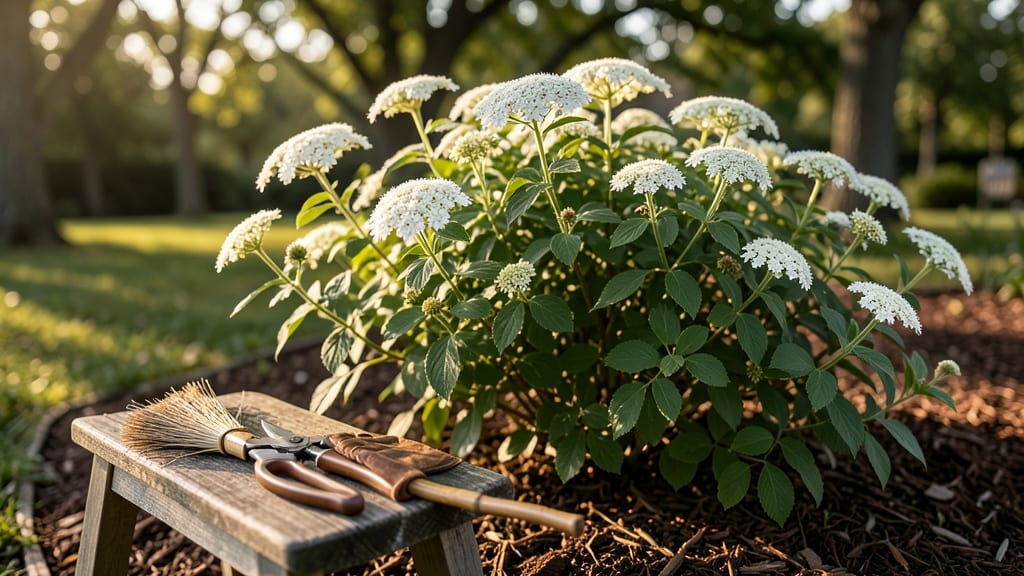
Pruning bridal spirea transforms it from a wild shrub into a showstopping garden focal point. ✂️ I’ve pruned mine every spring for five years, and the difference is night-and-day—dense foliage, clouds of white blooms, and a shape that looks intentional (not like it was shaped by a drunk toddler with shears).
The key is timing: prune right after flowering in early summer, then do light shaping in late winter. You’ll need sharp bypass pruners, a pair of gloves, and a bucket for clippings.
The goal is to remove 1/3 of the oldest stems each year while keeping the center open for airflow. After pruning, water deeply and avoid heavy fertilizer—bridal spirea thrives on neglect once established.
The first flush of new growth appears in 3-4 weeks, and by next spring, your shrub will look like a million bucks. For overgrown shrubs, rejuvenation pruning in stages over three years works wonders.
Just don’t cut back more than 1/3 in any single season—this is a tough plant, but even it has limits.
📚 In This Guide
- What you need
- Instructions
- Tips and common mistakes
- Wrapping up and next steps
What you need
- ● Sharp bypass pruners – Must-have! Choose bypass-style (not anvil) for clean cuts. Look for 5-inch blades for medium branches.
- ● Loppers – For thicker stems (2–3 inches in diameter). Opt for ratcheting or bypass loppers for ease.
- ● Hand pruners (for fine-tuning) – 4–6 inch blades for trimming smaller branches.
- ● Gloves – Garden gloves (preferably nitrile-coated) to protect from thorns and debris.
- ● Disinfectant (70% isopropyl alcohol or pruning sealant) – 1 small bottle to sterilize tools between cuts and prevent disease.
- ● Heavy-duty trash bags or bucket – For collecting pruned branches (1–2 large bags depending on plant size).
- ○ Pruning saw (optional) – Only if dealing with very thick branches (>3 inches).
- ● Choose the right time – Prune late winter/early spring (before buds swell) or right after flowering (summer). Avoid pruning in fall.
- ● Check the weather – Aim for a dry day (no rain forecasted for 24 hours) to prevent fungal issues.
- ● Assess the plant – Look for dead, diseased, or crossing branches to prioritize.
- ● Have a plan – Sketch a rough shape if needed, especially for formal hedges.
Step-by-Step guide to pruning bridal spirea for abundant blooms
Here’s how I keep my bridal spirea looking fresh year-round with minimal effort.
✂️ Step 1: Trim Immediately After Flowering
As soon as your bridal spirea finishes blooming—usually in early summer—grab your pruners and cut back the spent flower clusters to the first set of healthy leaves below. This encourages new growth and prevents seed formation, which drains the plant’s energy. I like to do this on a bright, dry morning when the plant is fully hydrated but not wilting.
Use clean, sharp pruners to make cuts at a 45-degree angle just above a leaf node. Avoid cutting into old wood—you’ll know you’ve gone too far if you see bare stems with no leaves. This first trim sets the stage for fuller growth later in the season.
✂️ Step 2: Lightly Shape in Late Summer
About 6-8 weeks after flowering, give your spirea a second, lighter trim to maintain its shape. Focus on opening up the center by removing any crossing or crowded branches. These are the ones growing inward and rubbing against others—left unchecked, they’ll weaken the plant and create entry points for disease.
Trim back only the tips of these branches, cutting just above a leaf node or bud. Avoid heavy pruning now—you want to preserve next year’s flower buds, which form on new growth. A good rule of thumb: never remove more than one-third of the plant’s total growth in a single season.
✂️ Step 3: Prune for Structure in Early Spring
Before new growth begins in early spring, assess your spirea’s shape and remove any dead, damaged, or weak branches at the base. These are the ones that look brown, brittle, or completely devoid of leaves. Cut them back to the ground to make way for fresh, vigorous growth.
This is also the time to thin out overly dense areas by removing 1-2 of the oldest stems at the base. Bridal spirea blooms on old wood, so these stems have already served their purpose. Removing them improves airflow and sunlight penetration, which keeps the center of the plant healthy and encourages more abundant blooms.
✂️ Step 4: Maintain Year-Round with Minimal Tricks
Throughout the rest of the year, keep an eye out for any branches that look leggy or overgrown. In late fall, after the first hard frost, give your spirea a final light trim to tidy up any ragged edges. Avoid heavy pruning now—dormant plants are more susceptible to cold damage.
I also like to remove any suckers or water sprouts that pop up at the base of the plant. These are the fast-growing, vertical shoots that steal energy from the main structure. Snip them off as soon as you see them to keep your spirea looking neat and encourage stronger blooms next season.
⏰ Step 5: Clean Up and Store Tools
After each pruning session, clean your tools with rubbing alcohol to prevent the spread of disease. I like to wipe down my pruners with a cloth soaked in alcohol before and after use—it only takes a minute and keeps them in great shape for years.
Finally, dispose of any pruned branches properly. If they’re disease-free, you can compost them or use them as mulch. If they show signs of disease (like black spots or mold), bag them and throw them away to prevent reinfection. A little cleanup goes a long way in keeping your spirea healthy and thriving.
Tips & tricks for pruning bridal spirea
Real talk: Pruning bridal spirea might seem intimidating, but these small adjustments make all the difference between a tired shrub and one bursting with color.
Timing is Everything: That first trim right after flowering isn't just about tidying up—it's about giving your plant a fresh start. I've learned the hard way that waiting too long lets the plant waste energy on seed production instead of putting it toward next year's blooms. Mark your calendar for when those last flowers fade, and act within a week. The key is to catch it before those seed heads form.
The 45-Degree Angle Secret: When you make those cuts in Step 1, that 45-degree angle isn't arbitrary. It creates more surface area for water to enter the plant, which helps prevent rot while still protecting against pests. I use a small mirror to check my angle—it's worth the extra 30 seconds to get it right. And always cut just above a leaf node where new growth can emerge.
Visual Cues for Pruning: In Step 2, look for branches that cross each other or grow inward—they're the ones creating that messy center. I think of it like untangling headphones: you're removing the parts that are rubbing against each other. For Step 3, those dead stems are easy to spot—they'll be brown and brittle, almost like dried twigs. Give them a gentle tug test: if they come away easily, it's time to remove them.
Tool Maintenance Matters: That rubbing alcohol step in Step 5 isn't just about clean tools—it's about preventing disease spread between plants. I keep a small bottle in my gardening shed and wipe my pruners after every use, even when switching between different plants. A little prevention goes a long way in keeping your entire garden healthy.
Pro Tips for Pruning Bridal Spirea
- Real talk: Pruning bridal spirea might seem intimidating, but these small adjustments make all the difference between a tired shrub and one bursting with color.
- Timing is Everything: That first trim right after flowering isn't just about tidying up—it's about giving your plant a fresh start.
- The 45-Degree Angle Secret: When you make those cuts in Step 1, that 45-degree angle isn't arbitrary.
Frequently asked questions
When is the best time to prune bridal spirea?
The ideal time to prune bridal spirea is late winter or early spring, just before new growth begins. This encourages fresh, vigorous blooms for the season. Avoid pruning in fall, as it can stimulate tender new growth that may not survive winter. For light shaping, you can also prune after flowering.
How much can I cut back bridal spirea?
You can cut back up to one-third of the plant’s height during late winter pruning. For older, overgrown shrubs, don’t hesitate to prune back by half to rejuvenate growth. Always use clean, sharp tools to avoid damaging the plant. Pro tip: Step back and assess the shape—aim for an open, airy form!
What if I prune at the wrong time?
Pruning too late in the season (fall or winter) can expose the plant to cold damage. If you accidentally prune after flowering, you’ll lose that year’s blooms, but the plant will still recover. Key fix: Focus on shaping lightly in late spring or summer instead of heavy cuts. Patience helps!
Can I prune bridal spirea for year-round color?
Yes! While pruning encourages blooms, you can also prune selectively to maintain foliage color. Trim back leggy stems to promote denser growth and keep the plant compact. For extra winter interest, leave some seed heads—just snip them back in early spring. Bonus: The pinkish stems add charm!
What if my bridal spirea isn’t blooming after pruning?
Check these common issues:
- Timing: Pruned too late? New growth needs time to bloom.
- Sunlight: Ensure it gets full sun (6+ hours/day)—shade reduces blooms.
- Fertilizer: Apply a balanced fertilizer in early spring to boost growth.
- Age: Young plants may take 2–3 years to establish blooming.
Wrapping up and next steps
Pruning your bridal spirea doesn’t have to be intimidating—with the right timing, tools, and techniques, you’ll unlock stunning, repeat blooms and a fuller, healthier shrub. Whether you’re tackling late winter dormancy cuts, post-bloom shaping, or year-round maintenance, consistency is key.
Remember, sharp pruners, clean cuts, and a little patience go a long way!
Ready to transform your spirea into a showstopper? Start by scheduling your next pruning session—and don’t forget to celebrate those fresh, vibrant blooms as your reward! 🌸✂️