
Pruning
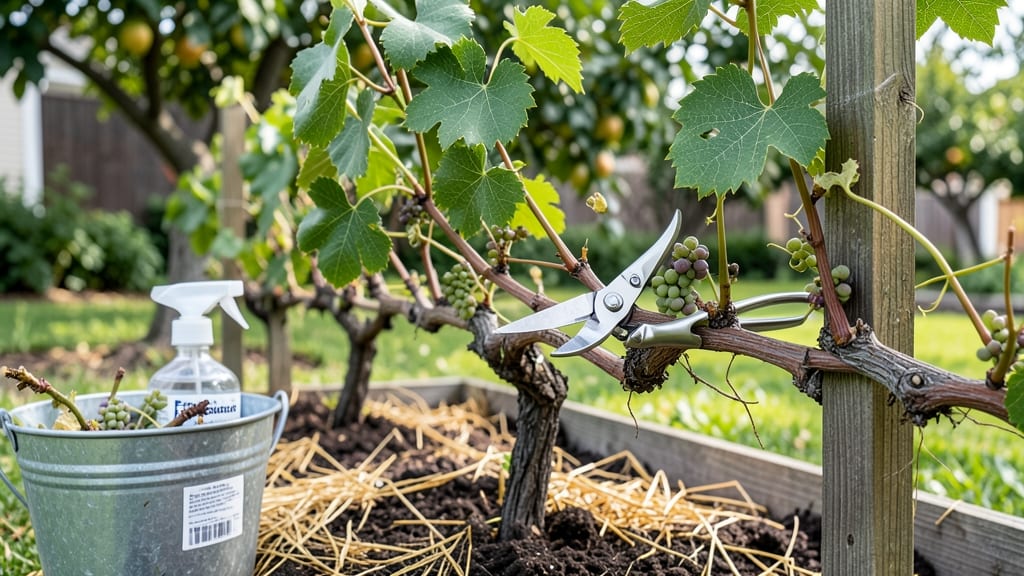
Pruning grapevines in spring strengthens vines and boosts fruit production by removing dead wood, thinning crowded canes, and shaping the plant for optimal airflow. Use sharp pruners to cut at 45-degree angles just above outward-facing buds, targeting 8-12 buds per vine for balanced growth. Timing depends on dormancy—wait until buds swell but before new shoots emerge.
Spring pruning transforms grapevines by redirecting energy toward fruit production instead of unnecessary growth. Dead or diseased canes should be cut first—they drain resources and invite pests.
I always prioritize sunlight exposure by opening the vine's center, which prevents fungal issues and improves air circulation. 8-12 buds per vine is ideal for most varieties, but younger vines may need fewer to establish strong roots first.
The 45-degree angle cut prevents water from pooling at the wound, reducing rot risk.
Timing is critical: prune too early, and you risk frost damage to new growth; too late, and the vine wastes energy on shoots before flowering. Bud swell is your visual cue—buds will look slightly plump but not yet green.
For organic growers, this is also when to apply compost around the base to replenish nutrients lost during pruning. 🌱
💡 In This Article
- How to Identify Correct Grapevine Pruning Cuts
- Spring Pruning Mistakes That Harm Grapevine Health
How to identify correct grapevine pruning cuts
The first step in effective pruning is distinguishing between productive wood and non-productive growth. Healthy canes are typically brown or dark green with a firm, flexible texture—when you bend them, they should snap cleanly rather than break into splinters.
Look for swollen buds spaced about 3-6 inches apart; these indicate last year's growth that will produce this season's fruit. Diseased wood, on the other hand, appears blackened, mushy, or covered in mold, often with a foul odor when crushed.
Bud placement is critical—always cut just above an outward-facing bud (visible as a small bump) to encourage growth away from the center of the vine. The 45-degree angle cut isn't just tradition; it creates a larger wound surface that heals faster by exposing more cambium (the vine's growth layer).
For one-year-old canes, aim for 2-4 buds per cane, while two-year-old wood can support 6-8 buds if healthy. Thinner canes (pencil-sized or less) are often more productive than thick, woody growth.
Visual cues like cane thickness and bud health determine your cuts. Healthy buds are plump and light brown, while shriveled or dark brown/black buds won't produce shoots. Remove any canes with cracks, holes, or excessive sap oozing—these are signs of pest damage or disease.
The goal is to create an open center that allows sunlight to penetrate, which reduces humidity and fungal risks like powdery mildew. 🌿
Cane maturity matters too—older wood (3+ years) is less productive and should be pruned back aggressively. Younger vines (1-2 years old) need gentler pruning to establish root systems.
For example, a one-year-old vine might only need 4-6 buds total, while a five-year-old vine can handle 20-30 buds if properly spaced. Always step back after pruning to visualize the vine's balance and symmetry—ideal pruning resembles a fishbone structure with arms radiating outward.
Seasonal variations also influence cuts. In warmer climates, where buds swell earlier, prune when 50% of buds show color but before green shoots appear. In colder regions, wait until buds are fully swollen but still dormant to avoid frost damage.
The thickness of your pruners' blades (typically 0.020-0.025 inches) ensures clean cuts that won't tear the bark, which is crucial for disease prevention.
Pro tip: Use a magnifying glass to inspect buds—healthy ones have a smooth, slightly shiny surface, while infected buds may show white fuzz or dark spots. Prune on a dry, sunny day to reduce sap flow and speed healing.
After cutting, sterilize your tools with rubbing alcohol between vines to prevent cross-contamination of diseases like Phomopsis cane and leaf spot.