
Pruning
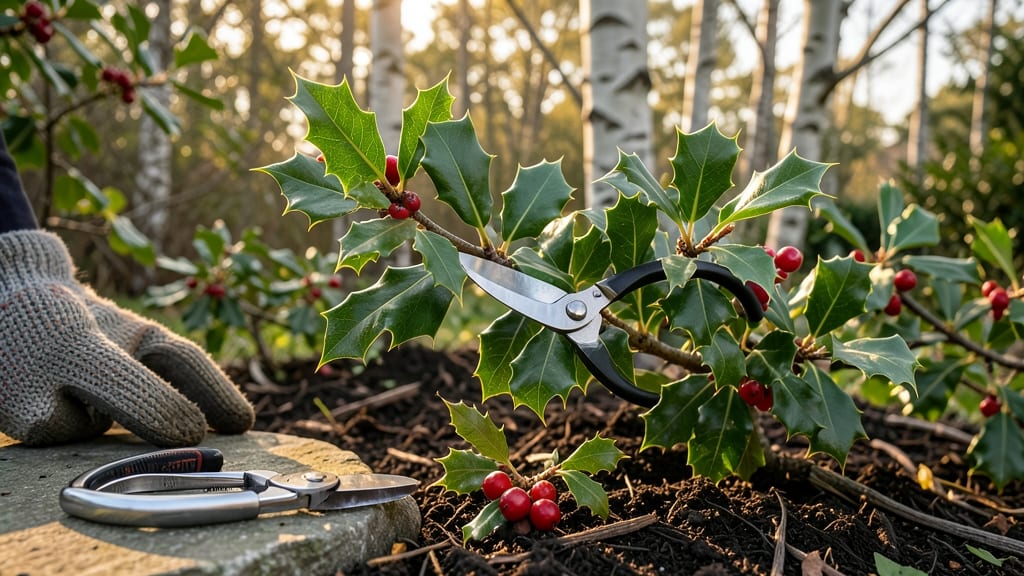
Pruning ilex holly transforms a scraggly shrub into a vibrant, dense green wall that steals the show year-round. ✂️ I’ve pruned my holly for five winters now, and the difference between a neglected bush and a showstopper comes down to timing, technique, and a sharp pair of shears.
The key is working with the plant’s natural growth habits—not against them—and avoiding the common mistakes that leave holly looking sad and sparse.
You’ll need clean, sharp pruners (sterilized with rubbing alcohol), a ladder if your holly is tall, and maybe a pair of gloves if you’re sensitive to the sharp edges.
The best time to prune is late winter or early spring, just before new growth begins—but if your holly looks ragged after berries drop, a light trim in summer won’t hurt.
The goal is to open up the center for airflow, shape the outer edges, and encourage fresh, bushy growth from the base.
Start by removing dead, crossing, or inward-growing branches first—they’re the easiest to spot and the most obvious culprits for a messy shape. Then, cut back any leggy stems by one-third to encourage branching.
For a fuller look, trim the outer edges into a gentle curve, but never take more than 25% of the foliage in one season. The reward? Thicker growth, brighter berries (if your variety produces them), and a shrub that stays lush even in cold winters.
Here’s the secret: holly prunes best when you think like a sculptor, not a hairdresser. Over-pruning leads to sparse growth, while neglect lets branches grow too long and woody.
If you’re unsure, take a photo before you start—you’ll thank yourself later. And if your holly has berries, wait until they’ve dropped before trimming, or you’ll sacrifice next year’s fruit.
📚 In This Guide
- What you need
- Instructions
- Tips and common mistakes
- Wrapping up and next steps
What you need
- ● Pruning shears – Bypass pruners (sharp, 6–8" blades) for clean cuts on small stems.
- ● Loppers – For thicker branches (10–14" handles, bypass or anvil type).
- ● Hand pruners – Anvil-style for quick cuts on woody stems (if bypass isn’t available).
- ● Gloves – Heavy-duty, cut-resistant (holly spines are no joke!).
- ○ Disposable pruning bags – 10–20 gallon capacity to collect clippings (optional but handy!).
- ● Ladder or step stool – Sturdy, 6–10 ft tall (if reaching high branches).
- ● Rag or paper towels – For cleaning tools between cuts.
- ● Hose or bucket of water – To sanitize tools and rinse off sap.
- ● Pruning saw – For very thick branches (8–12" curved blade).
- ● Rubbing alcohol (70%+) – To disinfect tools between plants (prevents disease spread).
- ● Marking spray – Non-toxic, washable to outline cuts for even shaping.
- ● Knee pads – If you’re working close to the ground for long periods.
- ● Safety glasses – To protect against debris (especially when sawing).
Step-by-Step guide to pruning Ilex holly for health and shape
Here's how I transform leggy holly bushes into dense, vibrant shrubs—no guesswork, just proven techniques.
⏰ Step 1: Prune at the Right Time for Maximum Recovery
Wait until late winter or early spring when the plant is still dormant but before new growth begins. This timing ensures you won’t accidentally remove next season’s flowers or damage tender new shoots. Ilex holly blooms on old wood, so pruning too late risks cutting off potential blooms that produce those bright red berries.
Look for bare branches or areas where growth has thinned. These are your targets. Avoid pruning in fall—it stresses the plant and leaves it vulnerable to winter dieback. If you spot any dead or broken branches now, remove them immediately regardless of season.
✂️ Step 2: Remove Dead, Diseased, or Crossing Branches First
Start with sanitation cuts—this prevents disease spread. Use clean, sharp pruners to make 45-degree cuts just outside the branch collar (the swollen area where the branch meets the trunk). Never leave stubs, as they invite rot and pests.
Next, tackle crossing branches—these rub against each other and create wounds. Remove the smaller of the two branches at its base. For dead wood, cut back to healthy green tissue. You’ll know it’s dead if the branch snaps easily when bent or has no bark.
🌿 Step 3: Thin Out Overcrowded Areas for Airflow
Step back and assess the bush’s shape. Holly thrives with open centers—this allows sunlight to penetrate and encourages dense foliage lower down. Remove 10-20% of the oldest, thickest branches at their base to rejuvenate growth.
Focus on branches growing inward or upward. These compete for sunlight and weaken the plant. Cut them back to a side bud or outward-facing branch to redirect energy. You’ll see the bush’s natural form emerge as you go—holly responds well to light shaping.
☀️ Step 4: Shape the Bush for Balance and Fullness
Now’s the time for light shaping. Holly responds best to gradual changes, so avoid drastic cuts. Use your hand as a guide—imagine the bush as a rounded dome. Trim just the tips of branches that stick out too far to maintain a natural silhouette.
For a formal hedge, make cuts at a 45-degree angle just above a leaf node. For a natural look, leave some branches uneven. Avoid cutting into old wood—new growth won’t form there. Step back often to check your progress.
💧 Step 5: Clean Up and Care for the Pruned Bush
After pruning, sterilize your tools with rubbing alcohol to prevent disease transfer. Collect and dispose of clippings—don’t leave them near the base, as they can harbor pests. Water the bush deeply to help it recover, especially if you’ve removed a lot of foliage.
Apply a balanced fertilizer in early spring to support new growth. Mulch around the base with 2-3 inches of organic mulch to retain moisture and protect roots. You’ll see fresh, vibrant growth within 4-6 weeks—that’s your reward for patience.
Tips & tricks for pruning Ilex holly
Here's what nobody tells you about transforming your holly bushes into thriving, picture-perfect shrubs—without the guesswork.
Timing is Everything: The late winter to early spring window is non-negotiable for Ilex holly. This dormant period ensures you won’t accidentally remove next year’s flower buds, which develop on old wood. I’ve made the mistake of pruning too late—once in early spring when new growth was already peeking out—and ended up with sparse berry production. Mark your calendar for late February to early March in most climates.
The Branch Collar Technique: When removing branches in Step 2, focus on making clean cuts just outside the branch collar—the swollen area where the branch meets the trunk. This is where the branch’s healing tissues are located. I used to cut too close or leave stubs, which led to unsightly wounds and pest entry points. A sharp pair of pruners and a close eye will make all the difference—think of it as giving your holly a clean surgical cut rather than a messy hack.
Visualizing the Open Center: In Step 3, when thinning out overcrowded areas, imagine looking through the center of your bush. You should see sunlight streaming through—this is your goal. Holly bushes naturally grow with an open center, but they often become dense over time. Remove those thick, oldest branches at their base to encourage new growth from the bottom up. This is where I see the most dramatic transformations—what once looked like a tangled mess becomes a lush, full shrub.
Post-Pruning Recovery Care: After you’ve finished pruning, don’t just walk away. The 4-6 week recovery period is when you’ll see the real results. Deep watering right after pruning helps the plant bounce back, and that 2-3 inches of organic mulch acts like a cozy blanket for the roots. I’ve noticed that bushes I mulched properly after pruning show new growth within weeks, while those I neglected take much longer to recover.
Pro Tips for Pruning Ilex Holly
- Here's what nobody tells you about transforming your holly bushes into thriving, picture-perfect shrubs—without the g...
- Timing is Everything: The late winter to early spring window is non-negotiable for Ilex holly. This dormant period en...
- The Branch Collar Technique: When removing branches in Step 2, focus on making clean cuts just outside the branch col...
Frequently asked questions
Got questions about pruning your Ilex holly? You’re not alone! Here are answers to the most common concerns—from timing to tools and troubleshooting—to keep your shrub thriving.
When is the best time to prune Ilex holly?
The ideal time is late winter or early spring (just before new growth starts). Avoid pruning in fall, as it can stimulate tender growth vulnerable to frost. For minor shaping, you can also prune in summer, but avoid heavy cuts during hot weather.
Do I need special tools for pruning Ilex holly?
Not necessarily! Sharp, bypass pruners work for small branches, while loppers or a pruning saw handle thicker stems. Sterilize tools with rubbing alcohol to prevent disease. A ladder may be needed for taller shrubs—safety first!
How much can I prune without harming my holly?
Never remove more than 25-30% of the plant at once. Holly responds well to light pruning but can stress if over-pruned. For dense growth, focus on thinning out crowded branches rather than shearing. Patience pays off!
Why does my holly look sparse after pruning?
If your holly appears thin, it may be under-pruned or over-pruned. Check for:
- Dead or dying branches (remove them immediately).
- Competing weeds or pests (like spider mites) stealing nutrients.
- Poor soil or drainage (amend with compost or mulch).
Can I prune Ilex holly into a specific shape?
Holly is highly adaptable to topiary, hedges, or informal shapes. Use hand pruners for detail work and hedge shears for clean edges. Prune gradually to avoid stress, and fertilize lightly after shaping for a boost.
Wrapping up and next steps
Pruning your Ilex holly is a rewarding way to keep it healthy, shaped, and thriving—while encouraging that lush, dense foliage you love! 🌿 The key is timing (late winter or early spring), the right tools, and a steady hand.
With patience and practice, your holly will reward you with vibrant growth and a polished look.
Ready to give it a try? Start small—pick a section to prune first, and soon, your holly will be the envy of the neighborhood! For extra tips, check out our FAQ section or grab your pruners and get started today.