
Pruning
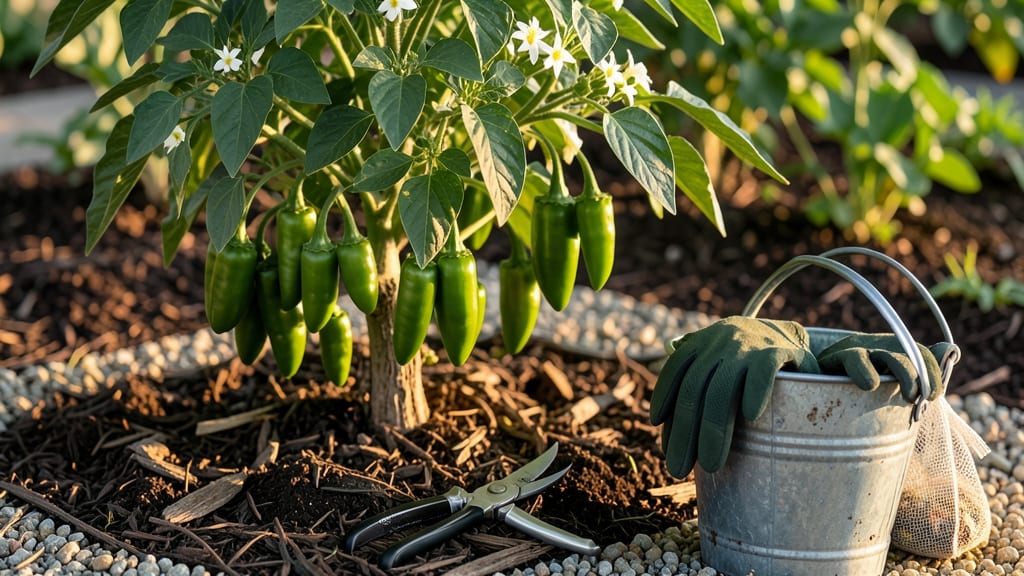
Pruning jalapeno plants doubles your harvest when done right—it’s not just trimming, it’s shaping future fruit. 🌱 I learned the hard way that skipping this step means fewer peppers and more disease.
The key is timing: prune early in the season to encourage bushier growth, then again after harvests to keep plants productive. You’ll need sharp pruning shears, a clean cutting surface, and about 15-20 minutes per plant.
Focus on removing suckers (those small shoots between stems and branches) and any yellow or diseased leaves. This improves airflow, which cuts down on pests and fungal issues—my plants stayed healthier after just one pruning session. By mid-summer, your jalapenos will be thicker, more abundant, and ready for harvest.
The plants also recover faster from heat stress, giving you a longer productive season. It’s not just about more peppers—it’s about better-quality ones too. This method works for container gardens, raised beds, or in-ground planting. The only mistake to avoid?
Over-pruning—never take more than 1/3 of the plant’s foliage at once. Now let’s get those shears out!
📚 In This Guide
- What you need
- Instructions
- Tips and common mistakes
- Wrapping up and next steps
What you need
- ● Sharp pruning shears or garden scissors – Look for bypass pruners (clean cuts) or sterilized tools to avoid disease.
- ● Clean, sharp knife or razor blade – For trimming smaller stems or suckers.
- ● Rubbing alcohol (70% or higher) or bleach solution – To sterilize tools before and after use (1 part bleach to 9 parts water).
- ○ Gloves (optional but recommended) – Nitrile or leather gloves protect against thorns and sap.
- ○ Pruning sealant (optional) – Helps prevent infection on larger cuts (e.g., tree wound pruning paste).
- ● Garden twine or plant ties – For supporting heavy branches post-pruning.
- ● Compost or mulch – To replenish soil nutrients after heavy pruning.
- ● Growth regulator (e.g., seaweed extract) – Can promote faster recovery if over-pruned.
- ● Spray bottle with water – For hydrating plants after stress.
Step-by-step guide to pruning jalapeno plants for bigger harvests
Here's how I keep my jalapenos producing all season—no guesswork, just proven techniques.
✂️ Step 1: Remove Suckers for Stronger Growth
Suckers are those little shoots that grow in the V-shaped junction between the main stem and branches. These little energy vampires drain your plant instead of letting it focus on fruit production. Use clean, sharp pruning shears to snip them off at the base—don't leave stubs, or they'll rot. I do this every 2-3 weeks during the growing season, and you'll see thicker stems and more flowers within weeks.
Watch for suckers that appear at the base of the plant too. These often go unnoticed but compete with your main plant. If you see a sucker taller than 2 inches, remove it immediately. The goal is to keep all energy flowing upward and outward toward fruit-bearing branches.
🌿 Step 2: Prune Lower Leaves to Improve Airflow
Jalapenos need good airflow to prevent diseases like powdery mildew. Start by removing any leaves that touch the soil—these can rot and spread pathogens. Use your fingers to gently pinch off smaller leaves, or your pruners for tougher ones. I focus on the lower 12-18 inches of the plant first, working my way up as the plant grows.
You'll know you've done enough when you can see light and air moving freely between branches. Avoid cutting into the stem itself—always cut just above a leaf node where new growth can sprout. This keeps your plant healthy without creating wounds that invite pests.
☀️ Step 3: Trim Back Overly Long Branches
If any branches grow longer than 24 inches without producing flowers, it's time to trim. These leggy branches waste energy that could go toward fruit production. Cut back to a point where you see a strong leaf node with at least 3-4 leaves. This encourages the plant to bush out rather than stretch upward.
Here's the trick: after pruning, the plant will often produce new growth within 7-10 days. This new growth tends to be more compact and productive. I always prune on a cloudy day or in the late afternoon to reduce stress on the plant.
⏰ Step 4: Deadhead Spent Flowers
Once a jalapeno pepper has fully ripened and turned red (or your preferred color), the plant's energy shifts to seed production. To keep the harvest going, snip off the entire flower cluster once the pepper is fully mature. Use your fingers to twist it off cleanly, or your pruners for stubborn stems.
This encourages the plant to produce new flowers at the nodes below. I do this every 1-2 weeks during peak production, and my plants keep flowering like crazy. The key is consistency—don't wait until the plant looks tired, or you'll lose that second flush of peppers.
🌱 Step 5: Winter Pruning for Year-Round Growth
When temperatures drop below 50°F at night, jalapenos slow down—but you can still keep them producing with strategic pruning. Cut back all branches by about one-third to encourage new, vigorous growth in spring. Remove any dead or diseased branches completely, and trim back any leggy growth that's stretching toward light sources.
After winter pruning, move your plants to a warmer location or under grow lights. Within 3-4 weeks, you'll see fresh new growth. I've kept my jalapenos producing lightly all winter with this method—just don't expect a full summer harvest, but you'll still get peppers when everything else is dormant.
Tips & tricks for pruning jalapeno plants
These simple adjustments will help you maximize your jalapeno harvest with minimal effort.
The Timing Secret: When removing suckers every 2-3 weeks, focus on the hottest part of the day—mid-morning to early afternoon. The plant recovers faster from pruning when temperatures are warm, and you'll see new growth within 5-7 days rather than waiting for cooler times. This also reduces stress on the plant, helping it redirect energy to fruit production instead of healing wounds.
Pruning Technique: Always make clean cuts at a 45-degree angle just above a leaf node when trimming branches. This prevents water from pooling on the cut and encourages new growth from that node. I keep my pruners sharp and dip them in rubbing alcohol between cuts to prevent spreading diseases between plants. A dull blade crushes stems instead of making clean cuts, which stresses the plant.
Seasonal Strategy: During winter pruning, don't be afraid to be aggressive—cutting back by one-third encourages bushier growth when spring arrives. I've seen plants that were nearly skeletal after winter pruning burst with new growth within 3-4 weeks when moved to warmer conditions. The key is to remove only dead or diseased branches completely, while leaving healthy stems intact to support spring regrowth.
Airflow Check: After pruning lower leaves, run your hand between branches to test airflow. You should feel a gentle breeze moving through the plant—this is your signal that airflow is adequate. Poor airflow leads to powdery mildew, which can ruin your harvest. I do this check every time I prune, and it's become my go-to way to spot problem areas before they become serious.
Pro Tips for Pruning Jalapeno Plants
- These simple adjustments will help you maximize your jalapeno harvest with minimal effort.
- The Timing Secret: When removing suckers every 2-3 weeks, focus on the hottest part of the day—mid-morning to early afternoon.
- Pruning Technique: Always make clean cuts at a 45-degree angle just above a leaf node when trimming branches.
Frequently asked questions
Got questions about pruning your jalapeño plants? You’re not alone! Here are some of the most common queries—and their answers—to help you grow a thriving, productive garden.
When is the best time to prune jalapeño plants?
Prune your jalapeños early and often—start when plants are 6–12 inches tall and continue throughout the growing season. Focus on removing suckers (side shoots) in the morning when the plant is hydrated. Avoid heavy pruning late in the season, as it can stress the plant before harvest.
How much should I prune jalapeño plants?
Remove only the suckers (the small shoots growing between the main stem and branches). Never trim more than 20–30% of the plant’s foliage at once. Over-pruning can reduce fruit production and weaken the plant. Think of it like giving your plant a haircut—not a buzz cut!
Will pruning jalapeño plants make them spicier?
Pruning doesn’t change spice levels, but it can boost overall yield by directing energy to fewer, larger peppers. If you want hotter peppers, focus on growing conditions (like sunlight and soil) rather than pruning. For extra heat, try selecting hotter varieties like ‘Lipstick’ or ‘Apache.’
What if my jalapeño plant looks sad after pruning?
Don’t panic! Yellowing leaves or wilting can happen if you’ve pruned too aggressively. Water deeply and fertilize with a balanced 10-10-10 or compost tea to help recovery. If the plant is still struggling after a week, check for pests (like aphids) or disease. Pruning is a marathon, not a sprint!
Can I prune jalapeño plants in containers?
Container-grown jalapeños benefit even more from pruning since space is limited. Just ensure your pot has drainage and use a smaller, more frequent pruning approach to avoid overcrowding. Dwarf or bush varieties (like ‘Mini Jalapeño’) are ideal for containers and need less aggressive pruning.
Wrapping up and next steps
Pruning your jalapeño plants is the secret ingredient to a bountiful, flavorful harvest—no matter the season! 🌱 By mastering the right techniques and timing, you’ll encourage healthier growth, more peppers, and plants that thrive year after year.
Whether you’re a beginner or a seasoned gardener, every snip brings you closer to a spicier, more productive garden.
Ready to put your new skills to work? Start with one plant this week—observe how it responds, adjust as needed, and watch your confidence (and harvest!) grow. Happy pruning, and may your jalapeños be plentiful! 🌶️✨