
Pruning
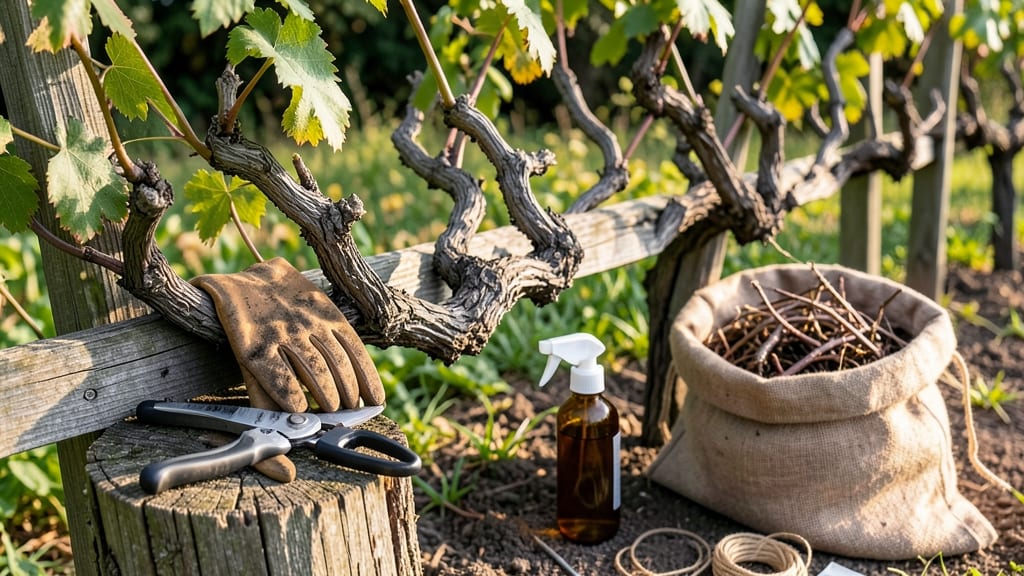
Pruning old grape vines transforms tangled messes into productive vines that burst with fruit. ✂️ I’ve watched my own neglected vines go from gnarled shadows to sunlit canopies after just one careful pruning session—here’s how to do it right.
The secret lies in timing and technique: dormant season pruning (late winter) clears dead wood while encouraging new growth. You’ll need sharp pruners, a saw for thick branches, and a clear vision of your vine’s structure—this isn’t just cutting, it’s sculpting.
By summer, you’ll see vigorous new shoots and clusters of grapes where there was once chaos. The key is patience: rejuvenation takes a year, but the payoff is worth every cut. Works for backyard vines, trellises, or even stubborn old plants. Let’s get those branches under control!
📚 In This Guide
- What you need
- Instructions
- Tips and common mistakes
- Wrapping up and next steps
What you need
- ● Pruning shears: Bypass pruners (sharp, clean, and designed for clean cuts—avoid anvil pruners). Quantity: 1 pair per 2-3 vines for efficiency.
- ● Loppers: For thicker branches (½"–1.5" diameter). Quantity: 1 pair.
- ● Pruning saw: For stubborn, thick wood (1.5"+ diameter). Quantity: 1.
- ● Gloves: Heavy-duty, cut-resistant (e.g., leather or Kevlar). Quantity: 1 pair.
- ● Disinfectant: 70% isopropyl alcohol or copper-based pruning spray to sterilize tools between cuts. Quantity: Small spray bottle or wipe.
- ● Rope or twine: ¼"–½" diameter, for tying down vines post-pruning. Quantity: 50–100 feet.
- ○ Sharpie or marker: For labeling cuts (optional but helpful for tracking growth).
- ● Hand pruners with ratcheting mechanism: Reduces hand fatigue for long sessions.
- ● Pole pruners: For high-reaching vines (extendable handle).
- ● Grafting tape or wound dressing: To seal large cuts and prevent disease entry.
- ● Work gloves with grip enhancers: For extra comfort on wet or thorny vines.
- ● Bucket or bag: For collecting pruned wood (compost or dispose of it).
Step-by-step guide to pruning old grape vines
Here's how I bring new life to neglected grapevines—clear steps that work for both winter and summer pruning.
✂️ Step 1: Assess the Vine and Identify Key Structures
Start by examining the vine closely. Look for the main trunk (the thick, woody base) and the cordons (the horizontal arms extending from the trunk). These are your primary growth zones. Remove any dead, broken, or diseased wood first—these are easy to spot as they're brown, hollow, or covered in black spots.
Next, identify the fruit-bearing spurs (short, stubby branches) and the canes (longer, flexible growth). Healthy spurs produce fruit, while canes are last year's growth that will become next year's spurs. Mark these with a piece of twine or tape if you're unsure—you'll reference them later. This step ensures you're working with the vine's natural framework, not against it.
✂️ Step 2: Prune for Light and Airflow in Winter
Winter is the best time to prune, ideally during dormancy (late winter or early spring, before buds swell). Start by thinning out crossing or rubbing branches—these create wounds where diseases can enter. Cut these back to the trunk or a strong outward-growing spur. Use clean, sharp pruners to make cuts at a 45-degree angle, about ¼ inch above a bud that faces outward.
Next, focus on balancing the vine. Remove about 20-30% of last year's growth to encourage new, vigorous shoots. Keep 3-5 main cordons if your vine has multiple arms, spacing them evenly around the trunk. This opens the center of the vine, allowing sunlight and air to circulate—critical for preventing fungal diseases like powdery mildew. You'll see new buds forming along the remaining wood in early spring, signaling you've done it right.
✂️ Step 3: Summer Pruning to Control Growth and Fruit
During the growing season, prune to shape the vine and manage fruit production. In early summer, remove any suckers (vigorous shoots growing from the base or along the trunk)—these drain energy from the fruit. Pinch off the tips of overly vigorous canes to redirect energy into fruit development. Use your fingers or small pruners for these quick cuts; no need for heavy tools.
Later in the season, thin out fruit clusters so they're spaced 6-8 inches apart. Overcrowded clusters lead to small, underripe grapes. Cut back weak or spindly growth to half its length, making the cut just above a leaf with a bud. This encourages bushier, more productive growth. You'll notice the remaining clusters plumping up and the vine looking fuller—this is your reward for summer maintenance.
⏰ Step 4: Post-Pruning Care and Monitoring
After pruning, sanitize your tools with rubbing alcohol to prevent spreading disease. Apply a thin layer of pruning sealant (like tree wound paint) only to cuts larger than ½ inch in diameter—smaller cuts heal on their own. Water the base of the vine deeply to help it recover, especially if you've made heavy cuts. Avoid fertilizing immediately; let the vine focus on healing for 4-6 weeks before adding nutrients.
Monitor the vine closely over the next 2-3 weeks. Look for signs of stress like wilting leaves or oozing sap at the cut sites—these indicate you may have pruned too aggressively. If you see new growth emerging from the buds you left behind, you're on the right track. Adjust future pruning based on what you observe; grapevines are resilient but respond best to gradual changes.
Tips & tricks for revitalizing old grape vines
These practical insights will help you transform your neglected grapevine into a thriving, fruit-bearing powerhouse—without common pruning pitfalls.
The Right Tools Make All the Difference: Invest in a good pair of bypass pruners for clean cuts and a sharp pocketknife for detailed work. Dull tools crush stems instead of cutting, creating larger wounds that invite disease. I always sanitize my tools with rubbing alcohol between cuts to prevent spreading any potential pathogens from one part of the vine to another.
Visual Cues for Perfect Cuts: When making winter pruning cuts at a 45-degree angle about ¼ inch above a bud, look for the bud to be facing outward—this ensures new growth will extend away from the center of the vine. If you're unsure which way is outward, imagine drawing a straight line from the bud to the trunk; the cut should be on the side facing away from the center. This simple trick prevents overcrowding in future seasons.
Summer Pruning Shortcuts: For summer maintenance, keep a small pair of pruners or even your fingers handy to pinch off suckers and trim vigorous canes. I find it helpful to do a quick "walk-around" inspection every 2-3 weeks during growing season—this prevents small issues from becoming major problems. Focus first on removing suckers, then address overly vigorous canes by pinching just above a leaf with a bud to encourage bushier growth.
Post-Pruning Recovery Secrets: After heavy pruning, the vine needs time to heal before you add stress like fertilization. I've learned that 4-6 weeks of focused recovery time—with just deep watering—lets the vine establish new growth without competing for resources. You'll know you're on the right track when you see fresh, green buds emerging from the remaining wood in early spring.
Pro Tips for Pruning Old Grape Vines
- These practical insights will help you transform your neglected grapevine into a thriving, fruit-bearing powerhouse—w...
- The Right Tools Make All the Difference: Invest in a good pair of bypass pruners for clean cuts and a sharp pocketkni...
- Visual Cues for Perfect Cuts: When making winter pruning cuts at a 45-degree angle about ¼ inch above a bud, look for...
Frequently asked questions
Got questions about pruning old grape vines? You’re not alone! Here are some of the most common concerns—and straightforward answers—to help you tackle the task with confidence.
When is the best time to prune old grape vines?
For most grape varieties, late winter or early spring (just before buds swell) is ideal—typically January to March in temperate climates. Never prune in fall or winter when vines are dormant, as cold temperatures can stress them. If you missed the window, prune in late spring only if you’re dealing with disease or overgrowth—but expect slower recovery.
How much should I cut back old grape vines?
Old grapevines often need 30–50% of their canes removed to revitalize growth. Focus on:
- Dead or diseased canes (cut to the base).
- Overcrowded canes (keep 2–4 strong, healthy canes per vine).
- Suckers (shoots growing below the graft union—remove these aggressively!).
What if my grapevine bleeds sap after pruning?
Sap bleeding (or “weeping”) is normal in early spring and won’t harm your vine. To minimize mess:
- Prune on a dry, cool day (not during warm, sunny weather).
- Use sharp, clean tools to avoid tearing bark.
- Avoid pruning too late in the season (after buds break).
Can I prune old grapevines in one year, or should I do it gradually?
For severely neglected vines, gradual pruning over 2–3 years is gentler. Each year, focus on:
- Year 1: Remove dead/diseased wood and thin out 30% of canes.
- Year 2: Prune back remaining overgrowth and shape the vine.
- Year 3: Refine structure and promote fruit-bearing canes.
Are there alternatives if my grapevine is too old to prune effectively?
If your vine is beyond revival (e.g., hollow trunks, no new growth), consider:
- Replacement: Propagate from healthy canes or plant a new vine nearby.
- Root pruning: Dig around the base to stimulate new shoots (best in early spring).
- Grafting: Attach a young, healthy cane to the old rootstock (advanced technique).
Wrapping up and next steps
Pruning old grape vines might seem daunting, but with the right tools, knowledge, and patience, you can revitalize your vines and enjoy a bountiful harvest for years to come! 🌱 Remember, timing, technique, and consistency are key—whether you’re shaping young canes or rejuvenating mature vines.
Ready to take the next step? Start small—pick one vine to practice, document your progress, and soon, you’ll be a pruning pro! Then, share your success (or ask questions) with fellow gardeners—community wisdom is the best resource. Here’s to healthier vines and sweeter grapes ahead! 🍇