
Pruning
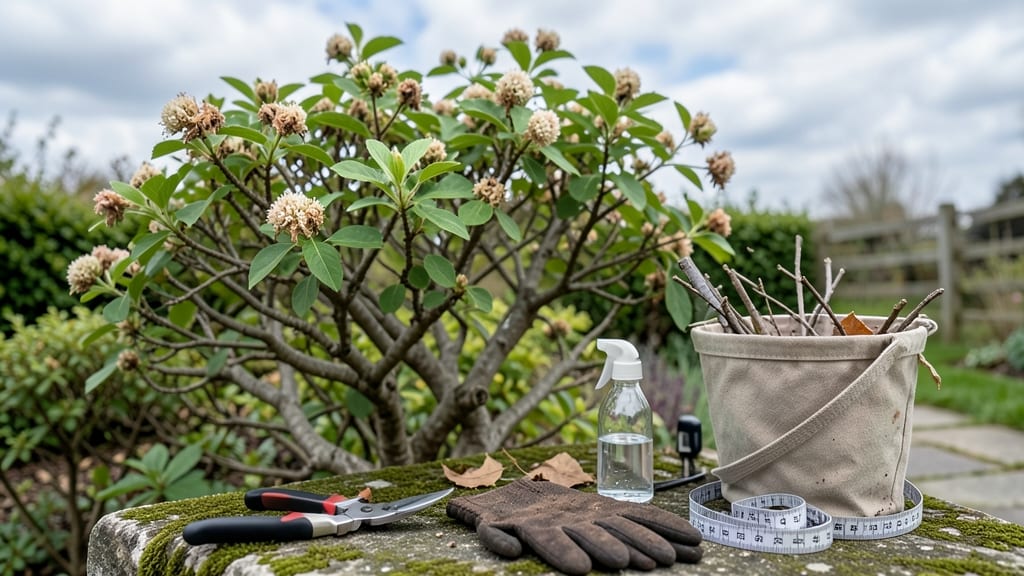
Your overgrown viburnum looks like a tangled mess, but pruning overgrown viburnum can turn it into a lush, flowering powerhouse in just a few hours. 🌿 I’ve transformed my own unruly viburnum from a wild tangle to a well-shaped, blooming beauty—here’s exactly how to do it without stress.
The best time to tackle this is late winter or early spring, before new growth starts. Grab your pruners, gloves, and a bucket for clippings—you’ll need to cut back about one-third of the oldest stems to encourage fresh, vigorous growth.
Viburnums handle pruning well, so don’t fear cutting back aggressively. After pruning, you’ll see new shoots emerging within weeks, and by next season, your bush will be fuller, healthier, and covered in those signature clusters of blooms.
The key is to shape it as you go, keeping the center open for airflow and light. This method works for any viburnum variety, from the classic Viburnum dentatum to the showy Viburnum plicatum. Just remember: cut just above a bud or branch junction, and avoid leaving stubs.
Your viburnum will thank you!
📚 In This Guide
- What you need
- Instructions
- Tips and common mistakes
- Wrapping up and next steps
What you need
- ● Pruning shears or secateurs: Sharp, bypass-style shears (for clean cuts on stems up to ½ inch thick). Quantity: 1 pair (or 2 if working alone on a large shrub).
- ● Loppers: For thicker branches (½ to 1½ inches in diameter). Quantity: 1 pair.
- ● Pruning saw: A curved-tooth saw for branches thicker than 1½ inches. Quantity: 1.
- ● Gloves: Heavy-duty, cut-resistant gloves to protect your hands from thorns and sharp edges.
- ○ Disposable pruning bags or bucket: To collect and dispose of clippings (optional but helpful for cleanup). Quantity: 1-2.
- ● Rubbing alcohol or bleach solution: (1 part bleach to 9 parts water) to sterilize tools and prevent disease spread.
- ○ Pruning sealant (optional but recommended): For larger cuts (½ inch or thicker) to prevent disease entry.
- ● Ladder or step stool: For reaching higher branches safely.
- ● Marking twine or flags: To tag branches for removal or special attention.
- ● Hand pruners with a ratchet mechanism: Reduces hand fatigue for long pruning sessions.
- ● Safety glasses: To shield your eyes from debris.
- ● Long sleeves and pants: Protects against scratches and thorns.
Step-by-step instructions for pruning overgrown viburnum
Here's my foolproof method for transforming a sprawling mess into a lush, healthy shrub—no guesswork involved.
✂️ Step 1: Assess and Plan Your Pruning Strategy
Start by examining your viburnum's structure. Look for dead, crossing, or diseased branches—these are your first targets. I always prune in late winter or early spring, just before new growth begins, because that's when the plant is dormant but ready to rebound. Grab a pair of sharp bypass pruners and a small saw for thicker branches.
Sketch a rough map of the shrub's shape if needed. Viburnums respond best to open-centered pruning, which means removing branches from the center to allow light and air circulation. This prevents future disease and encourages bushier growth. Mark branches you'll remove with a piece of twine or flagging tape to avoid confusion during cutting.
✂️ Step 2: Remove Dead, Diseased, and Problem Branches
Begin with the easy fixes: dead wood (snaps when bent, no green underneath), diseased branches (mushy or discolored bark), and crossing or rubbing branches that create wounds. Cut these back to the main stem or a healthy lateral branch, making your cuts at a 45-degree angle just above a outward-facing bud.
I always disinfect my tools between cuts using rubbing alcohol or a bleach solution to prevent spreading disease. Avoid leaving stubs—these can rot and invite pests. If a branch is thicker than 1 inch in diameter, use your saw to make a clean cut. You'll notice the plant's energy immediately shifts toward healthier growth once these problem branches are gone.
✂️ Step 3: Thin Out the Center and Shape the Outer Canopy
Now focus on the interior of the shrub. Remove 1/3 of the oldest wood from the center, cutting branches back to their origin or a strong lateral branch. This opens up the shrub and encourages new growth on the outside. I like to step back every few cuts to visualize the shape—you're aiming for a naturally balanced, vase-like form.
For the outer canopy, selectively prune branches that are growing inward or spoiling the shape. Aim to create an airy, open structure. Viburnums flower on old wood, so avoid heavy pruning of last year's growth unless absolutely necessary. If you're unsure which branches to keep, prioritize those with the most vigorous buds and growth.
✂️ Step 4: Clean Up and Monitor Recovery
After pruning, rake up and dispose of all debris to reduce disease risk. Water the base of the shrub deeply to help it recover, especially if you've made significant cuts. Over the next few weeks, you'll see new shoots emerging from the pruned areas—this is a good sign the plant is responding well.
Monitor the viburnum over the growing season. If you notice any signs of stress, like yellowing leaves or slow growth, apply a balanced fertilizer in early spring. Avoid heavy pruning for at least 1 year to allow the shrub to fully recover. With proper care, your viburnum will reward you with dense foliage, vibrant blooms, and a well-defined shape.
Tips & tricks for rejuvenating overgrown viburnum shrubs
Transforming a dense viburnum into a thriving specimen takes precision—and a few pro secrets. Here's what I've learned after years of working with these resilient shrubs.
Timing Secret: Late winter or early spring is non-negotiable for best results. The plant's dormant state means less stress and faster recovery. I've found that pruning just before buds swell (when you can still see the branch structure clearly) gives you the cleanest canvas to work with. Avoid pruning in fall, as new growth won't have time to harden off before winter.
Cutting Technique: That 45-degree angle above an outward-facing bud isn't just decorative—it's crucial. The angle prevents water from pooling on the cut, which reduces rot risk. For thicker branches over 1 inch, make your cut just outside the branch collar (that swollen area where the branch meets the trunk). I've seen too many gardeners leave stubs that become entry points for pests and disease.
Visualization Hack: Before making any cuts in Step 3, step back and mentally remove 1/3 of the oldest wood from the center. Imagine your viburnum as a vase shape—wide at the base, narrowing slightly toward the top. This mental exercise helps me avoid that "windblown" look that happens when pruners get too aggressive with the outer branches. Remember, you're sculpting, not just hacking!
Recovery Strategy: That deep watering after pruning isn't just about hydration—it's about signaling to the plant that it's safe to focus on new growth. I've had the best results when I water deeply enough that moisture reaches 6-8 inches down. Add a 2-inch layer of mulch around the base (but keep it away from the trunk) to retain moisture and regulate soil temperature during recovery. This simple step can make the difference between a struggling shrub and one that bounces back beautifully.
Pro Tips for Pruning Overgrown Viburnum
- Transforming a dense viburnum into a thriving specimen takes precision—and a few pro secrets. Here's what I've learne...
- Timing Secret: Late winter or early spring is non-negotiable for best results. The plant's dormant state means less s...
- Cutting Technique: That 45-degree angle above an outward-facing bud isn't just decorative—it's crucial. The angle pre...
Frequently asked questions
Got questions about pruning your overgrown viburnum?
You’re not alone! Here are answers to the most common concerns—from timing to troubleshooting—so you can tackle the job with confidence.
When is the best time to prune viburnum?
Prune most viburnum shrubs in late winter or early spring (before new growth starts) to avoid disturbing blooms. Exceptions like Viburnum bodnantense (winter bloomer) should be pruned right after flowering. Never prune in fall—it invites pests and weakens the plant.
Can I prune viburnum in summer?
Summer pruning is not ideal because it stresses the plant and can reduce flowering. However, if you must (e.g., for safety or severe overgrowth), lightly trim only the outer branches and avoid cutting more than 1/3 of the foliage. Water thoroughly afterward!
How much can I cut back an overgrown viburnum?
For rejuvenation, you can prune up to 1/3 of the oldest wood (usually the thickest, woody branches at the base). For hard rejuvenation, cut back 1/2 to 2/3 of the plant to the ground—just never remove more than 50% in one year. Young stems will sprout back!
What if my viburnum doesn’t bloom after pruning?
If your viburnum skips blooms, it might be due to over-pruning or nutrient deficiency. Check for:
- Timing: Did you prune after flowering (for spring bloomers) or before (for winter bloomers)?
- Fertilizer: Apply a balanced, slow-release fertilizer in early spring.
- Sunlight: Ensure it gets 6+ hours of sun—shady spots reduce blooms.
Are there alternatives to pruning if my viburnum is too big?
If pruning feels overwhelming, try these low-maintenance fixes:
- Thinning: Remove a few select branches (not just trimming) to improve airflow and light.
- Layering: Bend low branches to the ground and bury tips to encourage new roots (great for propagation!).
- Replacement: If the shrub is beyond saving, consider removing it and planting a dwarf variety (like Viburnum plicatum ‘Tomosa’).
Wrapping up and next steps
Pruning overgrown viburnum doesn’t have to feel like a daunting task—with the right tools, timing, and technique, you can transform a tangled mess into a lush, healthy shrub that thrives for years.
Remember, patience and precision are key, so take your time and celebrate each step toward a neater, more vibrant landscape. 🌿
Ready to tackle your viburnum? Grab your pruners, mark your calendar, and start planning your pruning session—your shrub (and future self) will thank you! For extra confidence, revisit our FAQs or watch a quick video tutorial before diving in.