
Pruning
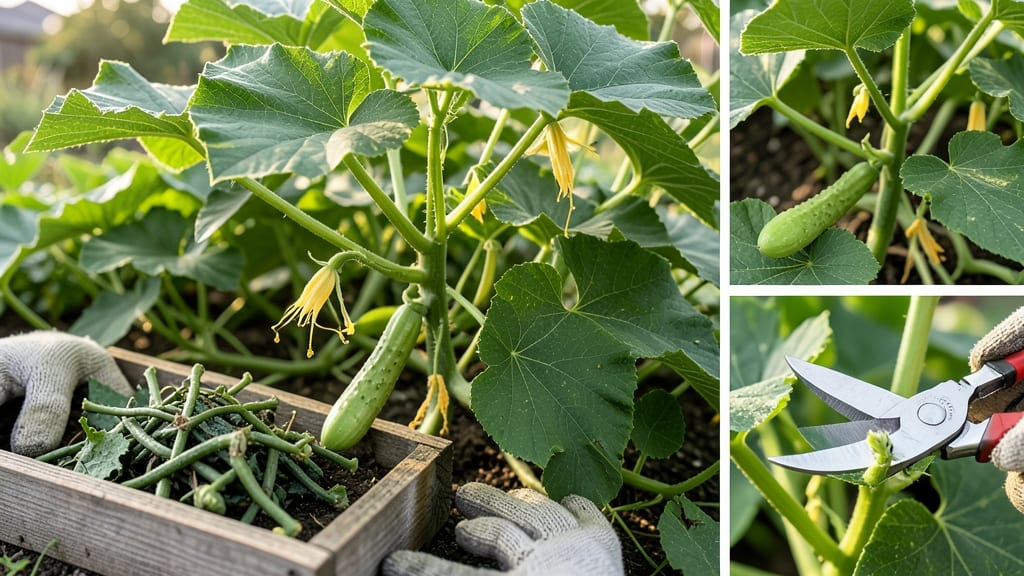
Pruning the parts of a cucumber plant isn’t about hacking away at vines—it’s about directing energy where it matters most. 🌱 I learned the hard way that cutting too much too soon means fewer cucumbers, not more.
The right cuts encourage bushier growth, better airflow, and a harvest that keeps coming all season long.
Start by removing any yellow or diseased leaves—they’re just stealing nutrients from your future harvest. Then focus on the main runners: trim the oldest vines first, leaving the newest growth to take over.
A clean pair of pruning shears and a sunny afternoon are all you need to transform a wild tangle into a productive plant.
You’ll notice cucumbers appearing faster and staying larger, with fewer bitter fruits. The plants stay healthier too, resisting common diseases like powdery mildew. It’s not just about more cucumbers—it’s about better-quality ones that taste fresh from the vine.
Works for both bush and vining varieties, and the same principles apply whether you’re growing in a garden bed or containers. The key is consistency: prune every 1-2 weeks during peak growing season, and you’ll have cucumbers from early summer until frost.
📚 In This Guide
- What you need
- Instructions
- Tips and common mistakes
- Wrapping up and next steps
What you need
- ● Pruning shears or sharp scissors – Choose bypass pruners (for clean cuts) or sterilized scissors (for small trims). Avoid dull tools that can crush stems!
- ○ Gloves (optional but recommended) – Protect your hands from thorns (if your variety has them) and dirt. Garden or work gloves work best.
- ● Disinfectant (rubbing alcohol or bleach solution) – Clean tools between cuts to prevent disease spread. Mix 1 part bleach to 9 parts water for a quick sanitizer.
- ● Compost bin or bag – Collect pruned parts for composting (avoid diseased leaves—toss those in the trash).
- ● Support structure (if needed) – For vining varieties, have trellises, stakes, or cages ready to guide growth post-pruning.
- ● Plant tie or soft twine – Secure vines to supports gently to avoid damage.
- ● Hand lens or magnifying glass – Helps spot early signs of pests or disease before pruning.
- ● Garden hose with spray nozzle – Rinse tools and plants after pruning to reduce pathogen risk.
- ● Notebook & pen – Track pruning dates and plant responses for future reference!
Step-by-Step guide to pruning cucumber plants for maximum yield
Pruning cucumbers isn't just about trimming—it's about directing energy where it matters most. Here's how to shape your plants for bigger harvests all season long.
✂️ Step 1: Identify and Remove Suckers for Stronger Growth
Suckers are the small shoots that grow in the crotch between the main stem and a lateral branch. These energy vampires divert nutrients from fruit production. Pinch them off cleanly with your thumb and forefinger when they're about 2 inches long—that's when they're easiest to remove without damaging the plant.
Start pruning suckers when the main vine reaches 4-5 feet tall. I focus on removing suckers from the lower half first, then work upward. This encourages the plant to put energy into developing fruit rather than leafy growth. If you miss a sucker, it'll grow into a weak branch that produces small, poor-quality cucumbers.
✂️ Step 2: Trim Excess Leaves Near the Base
Remove 25% of the lowest leaves when the plant hits 3 feet tall. These leaves shade the soil and trap moisture, creating conditions perfect for fungal diseases like powdery mildew. Use clean, sharp pruners to make a clean cut just above a leaf node—never tear leaves, as this invites infection.
Focus on leaves that are yellowing or touching the ground. I like to do this on a dry morning so the cuts have time to dry before evening dew sets in. This also improves airflow, which is critical for preventing disease in crowded plants. You'll see new, healthier growth emerge within 5-7 days of this pruning.
☀️ Step 3: Thin Fruit Clusters to Improve Size and Quality
When you see 3-5 cucumbers growing in the same cluster, leave only the 2-3 healthiest ones. The others will compete for nutrients, resulting in smaller, underdeveloped fruit. Gently twist the unwanted cucumbers off at the stem—don't cut, as this can damage the plant. I prioritize keeping the cucumbers that are closest to the main stem first.
This step is especially important for bush varieties, which have limited energy reserves. You'll notice the remaining cucumbers grow 30-50% larger and develop better flavor. Harvest these within 7-10 days of thinning to maintain production. If you leave too many cucumbers, the plant will produce small, bitter fruit and slow down overall growth.
✂️ Step 4: Prune Weak or Diseased Growth Immediately
Inspect your plants weekly for yellowing leaves, black spots, or wilting vines—these are signs of disease or pest damage. Remove affected areas at least 2 inches below the visible damage to ensure you get all infected tissue. Sterilize your pruners with rubbing alcohol between cuts to prevent spreading pathogens.
If a main vine shows signs of disease, prune it back to a healthy lateral branch. The plant will redirect energy through the stronger growth. I've seen plants recover completely from early blight when I caught it early and pruned aggressively. Never leave dead or diseased growth on the plant—it's like leaving a wound open for infection.
⏰ Step 5: Adjust Pruning as the Season Progresses
In late summer, when days shorten, reduce pruning to maintenance level only. The plant needs to conserve energy for fruit production. Focus on removing only diseased growth and overly crowded leaves that block sunlight from lower fruit. Stop all aggressive pruning 4-6 weeks before your first frost to let the plant harden off.
For winter greenhouse growing, continue light pruning to maintain plant health, but avoid heavy cuts. The goal shifts from maximizing yield to keeping the plant productive in lower light conditions. You'll see a noticeable difference in fruit quality if you adjust your approach as the season changes—larger cucumbers, fewer misshapen ones, and plants that stay healthy longer.
Tips & tricks for pruning cucumber plants like a pro
Took me years to figure out these game-changers—your cucumbers will thank you. The difference between a decent harvest and a jaw-dropping one often comes down to these simple but critical adjustments.
Timing is Everything: In Step 1, when removing those 2-inch suckers, I've found that doing this in the morning gives your plants the whole day to recover. The plant's natural sugars are highest in the morning, so it can heal faster and redirect energy to fruit production. Also, avoid pruning when the plants are wet—this increases disease risk. I wait until dew has dried completely, usually by mid-morning.
Precision Matters: When you're thinning fruit clusters in Step 3, focus on the cucumbers that are closest to the main stem first. These get the most direct energy flow from the plant. I've noticed that keeping just 2-3 cucumbers per cluster results in fruit that's not just larger, but also sweeter. The key is to harvest these within 7-10 days—this maintains the plant's momentum and prevents it from getting overwhelmed.
Tool Selection: Don't underestimate the importance of sharp tools. For Steps 2 and 4, I use pruners that have a bypass blade—they make clean cuts that heal faster than those made with dull tools. For suckers in Step 1, I actually prefer using my fingers because it gives me more control. Just make sure to pinch cleanly at the base to prevent tearing. A small investment in quality tools makes all the difference in plant health.
Seasonal Adjustments: In Step 5, when transitioning to late summer maintenance, I reduce my pruning by about 75%. The plant needs to conserve energy for fruit development as daylight decreases. For greenhouse growing, I continue light pruning but focus on removing only the most crowded leaves—never more than 10% at a time. This keeps the plant productive without shocking it in low-light conditions.
Pro Tips for Pruning Parts Of A Cucumber Plant
- Took me years to figure out these game-changers—your cucumbers will thank you.
- Timing is Everything: In Step 1, when removing those 2-inch suckers, I've found that doing this in the morning gives your plants the whole day to recover.
- Precision Matters: When you're thinning fruit clusters in Step 3, focus on the cucumbers that are closest to the main stem first.
Frequently asked questions
Got questions about pruning your cucumber plant? You’re not alone! Here are some of the most common queries—plus straightforward answers to keep your vines thriving.
When is the best time to prune a cucumber plant?
Prune your cucumber plant early and often—start when the plant is young (about 6–8 inches tall) and continue throughout the growing season. Focus on removing suckers (side shoots) and yellowing leaves to redirect energy to fruit production. Avoid pruning too late in the season, as it may stress the plant before harvest.
How do I tell the difference between a sucker and a fruit-bearing vine?
Suckers grow between the main stem and a leaf and are usually thinner and leafier. Fruit-bearing vines, on the other hand, have small cucumbers or flowers growing directly from them. Always leave the fruit-bearing vines intact—they’re the money-makers!
Can I prune cucumber plants in hot or humid weather?
Pruning during cool mornings or evenings is ideal, especially in hot/humid climates. Avoid midday heat, as it can stress the plant and invite pests or disease. If you must prune in warmth, do it gradually and water the plant afterward to help it recover.
Will pruning reduce my cucumber yield?
Not if done correctly! Pruning actually boosts yield by improving airflow, reducing disease risk, and focusing the plant’s energy on fewer, healthier vines. Just avoid over-pruning—leave enough leaves to support photosynthesis (about 3–4 leaves per main stem section).
What should I do with the pruned parts of the plant?
Toss healthy pruned leaves/shoots into your compost bin—they’ll break down quickly. If you spot diseased or pest-ridden parts, dispose of them in the trash (not compost) to prevent spreading issues. Never reuse pruned material for mulch near cucumbers!
Wrapping up and next steps
Pruning your cucumber plants is a simple yet powerful way to boost productivity and ensure healthier vines all year long! 🌱 By removing unwanted growth, improving airflow, and directing energy to fruit production, you’re setting the stage for a thriving harvest.
Whether you’re a seasoned gardener or just starting out, these techniques make the process easy—and the rewards delicious.
Now that you’re armed with the know-how, grab those pruners and get growing! Try experimenting with different pruning styles this season, and don’t forget to share your progress with fellow gardeners. Happy pruning—and here’s to a bountiful, vine-ripened harvest ahead! 🥒✨