
Pruning
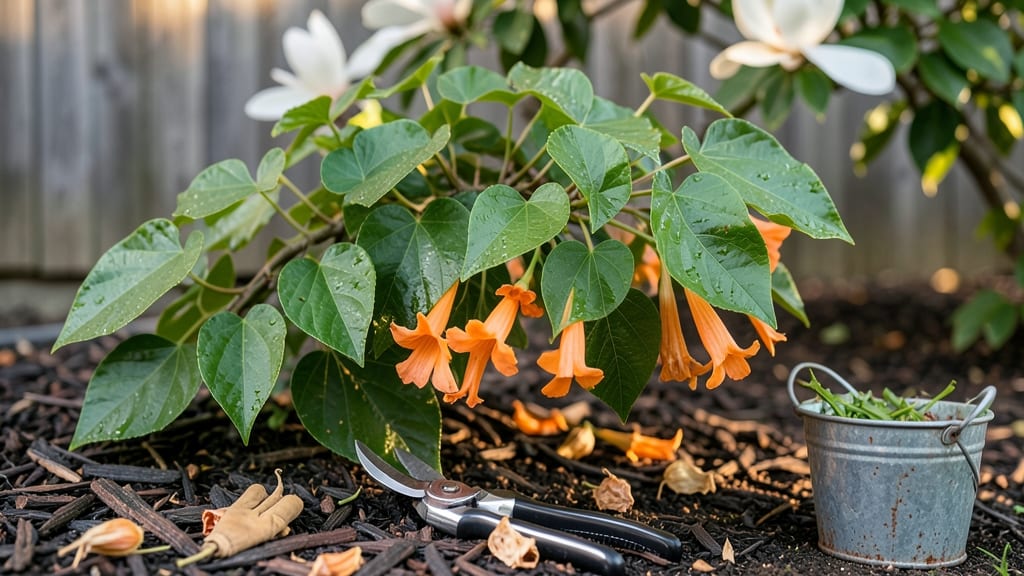
Pruning trumpet vine plants is how you turn wild, sprawling vines into a showstopping climbing star. 🌿 I’ve wrestled with this fast-growing beauty for years, and the difference between a tangled mess and a lush, blooming wall comes down to timing, technique, and a sharp pair of pruners.
The right cuts encourage thicker growth, more flowers, and better control—without sacrificing the vine’s natural vigor.
Start in late winter or early spring before new growth begins, when the plant is still dormant. You’ll need bypass pruners (for clean cuts), gloves (trumpet vines have thorns!), and a ladder if your vine is high.
The goal? Remove dead or crossing branches first, then shape the vine to encourage airflow and sunlight penetration. Every cut you make should aim to open up the plant’s structure, not just trim for looks.
After pruning, your trumpet vine will reward you with bold, trumpet-shaped blooms by summer and a denser, more manageable form. The key is patience—don’t rush to prune heavily in the first year, or you’ll stunt its growth.
Instead, focus on gradual shaping, and you’ll end up with a vine that’s both productive and easy to manage. Think of it as sculpting a living masterpiece.
This method works for trumpet vines growing on trellises, fences, or even arbors. For larger vines, break pruning into sessions over a few weeks to avoid stressing the plant. And if you’re dealing with an overgrown vine, don’t panic—even aggressive pruning in late winter can revive it.
The secret? Less is more—cut back only what’s necessary to keep the vine healthy and thriving.
📚 In This Guide
- What you need
- Instructions
- Tips and common mistakes
- Wrapping up and next steps
What you need
- ○ Pruning shears: Bypass pruners (for clean cuts on smaller stems, 4–6 inches long, sharp and stainless steel). Optional: Loppers (for thicker stems, 8–12 inches, with a ratchet mechanism for ease).
- ● Gloves: Heavy-duty, gardening gloves (nitrile-coated for grip and protection against thorns).
- ● Disinfectant: 70% isopropyl alcohol or rubbing alcohol (to sterilize tools between cuts and prevent disease).
- ● Pruning saw: Curved-tooth pruning saw (for stems thicker than 1 inch; 10–12 inches long).
- ● Marking twine or flags: Colored twine or plastic plant tags (to mark branches for removal or new growth).
- ● Hose or water spray: For rinsing sap off tools or cleaning cuts.
- ○ Sealant: Pruning sealant (for large cuts > ½ inch; optional but reduces sap bleeding).
- ● Ladder or step stool: If your vine is 6+ feet tall (ensure it’s stable and non-slip).
- ● Trash bags or bin: For disposing of pruned debris (compostable bags work if you plan to compost).
- ● Safety glasses: To protect against flying debris (especially when using a saw).
- ● Timing: Choose a cloudy day or prune early morning to reduce stress on the plant.
- ● Weather check: Avoid pruning if rain is forecasted within 24 hours (wet cuts invite fungal issues).
- ● Plant health: Wait until the vine is dormant (late fall/winter) for major pruning or right after flowering for shaping.
- ● Safety first: Wear closed-toe shoes and avoid pruning near power lines.
Step-by-Step guide to pruning trumpet vine plants
Here’s how to keep your trumpet vine lush and vigorous year-round with simple, effective pruning.
✂️ Step 1: Prune for Shape and Health in Late Winter
Start your pruning in late winter, just as new growth begins to sprout. This is the best time to remove dead, damaged, or crossing branches—cut them back to the main stem or to an outward-facing bud. I always use clean, sharp pruners to make clean cuts at a 45-degree angle just above a leaf node. This prevents water from pooling and causing rot.
Look for branches that are rubbing against each other or growing inward—they’ll compete for sunlight and weaken the plant. Remove these first. You’ll notice the plant’s natural structure more clearly now that it’s dormant, making it easier to see which branches are serving a purpose and which are just taking up space.
🌿 Step 2: Encourage Bushier Growth in Early Spring
Once the plant starts actively growing in early spring, focus on pinching back the tips of new shoots. This might sound counterintuitive, but it triggers the plant to produce more lateral branches, giving you that full, bushy look. Use your fingers or small pruners to snip just above a set of leaves where new growth is emerging.
I like to do this every 2-3 weeks during the growing season, especially if the plant starts to look leggy. You’ll see new side shoots forming within a few weeks—that’s your signal that the pruning is working. Don’t overdo it, though; removing too much at once can stress the plant.
☀️ Step 3: Trim for Airflow and Sunlight in Summer
During the summer months, keep an eye out for branches that are blocking sunlight or airflow. Trumpet vines grow fast, and crowded growth can lead to fungal issues or weaker blooms. Thin out any dense areas by cutting back the longest or most vigorous stems to about half their length, but leave at least 2-3 sets of leaves on each branch.
This is also the time to remove any spent flowers if you want to encourage more blooms later in the season. You’ll notice the plant’s energy shifting toward new growth rather than seed production, and you’ll end up with a longer flowering period. Just be sure to sterilize your pruners with rubbing alcohol between cuts to prevent spreading disease.
⏰ Step 4: Light Maintenance in Fall
In fall, as the plant begins to slow down, do a final light pruning to remove any dead or diseased branches. You don’t need to be aggressive—just tidy up the plant to make it easier to manage in winter. Cut back any weak or spindly growth that didn’t thrive during the season.
This is also a great time to assess the overall shape of your trumpet vine. If it’s growing too large for its space, you can do a bit more aggressive pruning now, but avoid heavy cuts. The goal is to keep the plant healthy and ready for next year’s growth. You’ll see how much easier it is to manage in the following seasons once you’ve established this routine.
Tips & tricks for pruning trumpet vine plants
Your trumpet vine thrives when you prune with intention—these tricks will keep it lush and productive all year.
Timing is Everything: Late winter pruning (Step 1) works best because the plant is dormant, making it easier to spot dead branches. I always check for the first signs of new growth—tiny green buds poking through—as my signal to start. This timing prevents shocking the plant while still giving you a clean slate for the growing season. If you miss late winter, don't panic—just wait until early spring when you see active growth beginning.
Precision Cutting Matters: That 45-degree angle in Step 1 isn't just for show—it creates a larger surface area for faster healing and prevents water from pooling. I use my pruners to make cuts just above a leaf node (where new growth emerges) rather than at random points. For thicker branches, I make a second cut parallel to the first to avoid tearing the bark. This technique keeps your trumpet vine looking professional and healthy.
Spring Pinching Strategy: When you're pinching back tips every 2-3 weeks (Step 2), focus on the healthiest new shoots first. I look for stems that are growing too straight upward—they're the ones that need attention. The key is to pinch just above a set of leaves where side branches naturally emerge. This encourages bushier growth without overwhelming the plant. Think of it like shaping a hedge—you want density, not just height.
Summer Pruning Secrets: During summer's vigorous growth (Step 3), I always thin from the inside out—removing the longest stems first to improve airflow. The "half their length" guideline is flexible: if a branch is particularly thick, you can cut back more aggressively. Just remember to leave those 2-3 sets of leaves as your safety net. This approach prevents fungal issues while keeping your trumpet vine's blooms abundant and healthy.
Pro Tips for Pruning Trumpet Vine Plant
- Your trumpet vine thrives when you prune with intention—these tricks will keep it lush and productive all year.
- Timing is Everything: Late winter pruning (Step 1) works best because the plant is dormant, making it easier to spot dead branches.
- Precision Cutting Matters: That 45-degree angle in Step 1 isn't just for show—it creates a larger surface area for faster healing and prevents water from pooling.
Frequently asked questions
Got questions about pruning your trumpet vine? You’re not alone!
Here are some of the most common concerns—plus expert answers to keep your vine thriving.
When is the best time to prune trumpet vine?
Prune trumpet vines in late winter or early spring (before new growth starts) to encourage strong, bushier blooms. Light trimming can also happen in summer to control size, but avoid heavy cuts then—it may stress the plant. Never prune in fall unless removing dead/diseased wood.
How much can I cut back my trumpet vine?
You can safely prune up to ⅓ of the plant’s total growth in one session. For established vines, aim to remove old, woody stems (over 3 years old) to redirect energy to newer, more vigorous shoots. Never cut more than 50%—this can harm the vine’s ability to rebound.
What if my trumpet vine doesn’t bloom after pruning?
Lack of blooms often means over-pruning or nutrient deficiency. Check for:
- Healthy stems (green, not brown/black)
- Sunlight (6+ hours daily)
- Balanced fertilizer (high in phosphorus for flowers)
Can I prune trumpet vine in containers?
Yes! Container-grown trumpet vines need regular pruning to stay manageable. Trim back overgrown stems to maintain shape and encourage airflow (prevents fungal issues). Repot every 2–3 years if roots outgrow the container—root-bound vines bloom poorly.
What if I see sap oozing after pruning?
Sap is normal but can attract pests. To minimize it:
- Use clean, sharp pruners (dull tools crush stems, causing more sap).
- Seal cuts with pruning sealant (optional for trumpet vines, but helpful in humid climates).
- Water the base after pruning to reduce stress.
Pro Tip:
Mark your pruning calendar! Trumpet vines thrive on routine—consistent light trims (every 4–6 weeks in growing season) yield healthier, more colorful vines. Happy pruning!
Wrapping up and next steps
Pruning your trumpet vine isn’t just about keeping it tidy—it’s your secret weapon for vibrant, bushier growth and healthier blooms year-round! 🌿 By mastering the right techniques (like selective trimming, deadheading, and seasonal adjustments), you’ll encourage lush foliage and stunning flowers while preventing overgrowth.
Whether you’re a pruning pro or just starting, every snip brings you closer to a thriving vine that steals the show.
Ready to transform your trumpet vine? Grab your shears and schedule your next pruning session—your plant’s future (and your garden’s curb appeal!) will thank you. Happy pruning! 🌸✂️