
Pruning
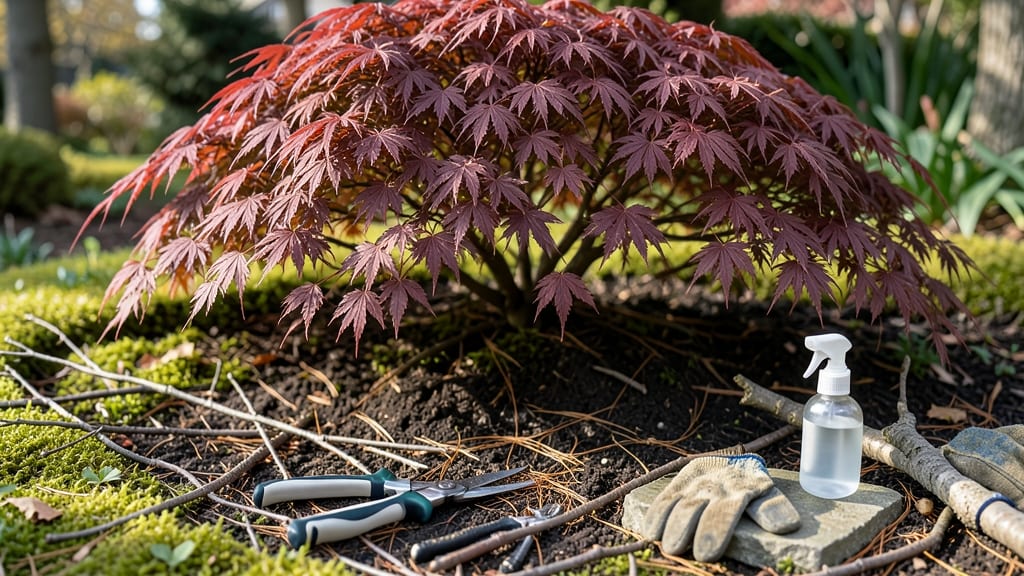
Pruning weeping Japanese maple transforms a tangled mess into a cascading masterpiece—if you do it right. ✂️ I’ve spent years studying how these delicate trees respond, and the difference between a healthy specimen and a stressed one comes down to timing, technique, and tenderness.
One wrong cut can scar the bark for years, while the right approach opens up that lacy canopy and keeps it thriving.
The key is working with the tree’s natural shape, not against it. You’ll need sharp pruners (sterilized with rubbing alcohol), a ladder for higher branches, and a clear day to avoid stressing the tree further.
Start by removing dead or crossing branches first—these are the easy wins that instantly improve airflow and structure. The real art comes in refining the outline: aim for a balanced silhouette where light can filter through evenly.
After pruning, you’ll notice new growth within weeks—tender red shoots that promise a fuller canopy by next spring. The tree’s weeping habit relies on that airy structure, so resist the urge to trim too aggressively.
A good rule is to never remove more than 25% of the foliage in one session, and always cut just above a bud or branch collar to prevent unsightly stubs.
This method works year-round, but late winter or early spring is ideal for major shaping. For minor touch-ups, summer pruning helps control growth direction. The payoff? A tree that looks like it belongs in a botanical garden, not a backyard—with minimal effort once you know the tricks.
📚 In This Guide
- What you need
- Instructions
- Tips and common mistakes
- Wrapping up and next steps
What you need
- ● Bypass pruners: Sharp, high-quality bypass pruners (5-7 inch blades) for clean cuts on small branches (0.5–1 inch in diameter). Example: Fiskars or Felco.
- ● Loppers: For thicker branches (1–2 inches). Look for ratchet-style loppers for extra leverage.
- ● Hand saw: A curved-tooth pruning saw for stubborn, larger branches (2+ inches). Avoid cheap saws—they can tear bark.
- ● Disinfectant: 70% isopropyl alcohol or a pruning sealant (like Tanglefoot) to prevent disease spread between cuts.
- ● Rubbing alcohol or bleach: For wiping down tools between cuts (1 part bleach to 10 parts water).
- ● Garden gloves: Cut-resistant gloves (e.g., Mechanix or heavy-duty leather) to protect your hands.
- ○ Pruning shears (optional):strong> For delicate trimming of fine branches (under 0.25 inches).
- ● Extension pole: A 3–6 foot telescoping pole with a pruner attachment for high branches.
- ● Ladder: A stable, lightweight ladder (e.g., aluminum step ladder) rated for your height needs.
- ○ Pruning paint: Tree wound dressing (like TreeHelp) to seal large cuts (optional; research shows mixed results).
- ● Notebook & pen: To sketch your tree’s structure before pruning—map out cuts to avoid over-pruning!
- ● Water spray bottle: For misting tools and cuts to reduce dust and stress on the tree.
Step-by-Step guide to pruning weeping Japanese maple
Here’s how I keep my weeping Japanese maples thriving with clean cuts and healthy growth all year.
✂️ Step 1: Prune in Late Winter for Structural Health
Start pruning in late winter (just before buds swell) when the tree is dormant. This prevents stress during active growth. I focus on removing dead, crossing, or weak branches first—these are easy to spot as they lack green buds or grow inward. Use clean, sharp pruners to make cuts at a 45-degree angle just outside the branch collar, where the branch meets the trunk.
The goal here is to open up the canopy for better airflow and sunlight penetration. Weeping maples naturally grow with graceful, cascading branches, so avoid over-pruning—never remove more than 25% of the foliage in one season. You’ll see fresh, vibrant green buds emerge in early spring as a sign you’ve done it right.
✂️ Step 2: Shape in Early Summer for Fullness
Once the tree is in full leaf (around June), I do a light shaping prune to encourage bushier growth. Focus on trimming back overgrown branches by about one-third of their length to maintain the weeping form. Avoid cutting into old wood—new growth is more flexible and responds better to pruning.
Look for branches that are growing too upright or spoiling the tree’s elegant silhouette. Cut just above a leaf bud or lateral branch to encourage outward growth. If a branch is too thick to cut with hand pruners, use loppers—but only if necessary. The tree should still look natural, not manicured.
✂️ Step 3: Light Maintenance in Fall and Winter
In fall and winter, I do minimal pruning—just removing any dead, diseased, or damaged branches that appear. Avoid heavy pruning now, as the tree is preparing for dormancy. If you notice suckers (shoots growing from the base or trunk), snip them off at the base with clean pruners to redirect energy to the main canopy.
This is also the time to check for pest damage or fungal issues (like black spots on leaves). If you see signs of stress, prune only what’s necessary—overdoing it now can weaken the tree before spring. A quick once-over keeps the tree healthy without unnecessary stress.
💧 Step 4: Post-Pruning Care for Fast Recovery
After pruning, I give the tree a deep watering to help it recover, especially if the weather is dry. Mulch around the base (but keep it 2-3 inches away from the trunk) to retain moisture and protect roots. Avoid heavy fertilizing right after pruning—let the tree focus on healing before pushing new growth.
Watch for new shoots emerging from pruned areas within 4-6 weeks. If any cuts bleed sap heavily, don’t worry—it’s normal and won’t harm the tree. Just keep an eye on the pruning wounds to ensure they’re sealing properly. A healthy weeping Japanese maple will bounce back beautifully with the right care.
Tips & tricks for pruning weeping Japanese maple
Real talk: Pruning these graceful trees takes patience and precision. Here's what I've learned after years of shaping my own weeping Japanese maples.
Tool Prep is Everything: Before you start, sharpen your pruners and disinfect them with rubbing alcohol. Dull tools crush branches instead of making clean cuts, which stresses the tree. I also keep a small brush nearby to clean up fallen leaves and debris—this prevents fungal spores from settling on fresh cuts. The cleaner your tools and workspace, the healthier your tree will stay after pruning.
Seasonal Timing Matters: In Step 1, when you're pruning in late winter, look for the first signs of swelling buds—that's your cue to start. If you prune too early, you risk exposing the tree to late frosts. In Step 2, wait until June when the tree is fully leafed out before shaping. This timing ensures you're cutting new growth that will respond well to pruning rather than old wood that might not regenerate properly.
Visual Cues for Perfect Cuts: When making those 45-degree angle cuts in Step 1, imagine you're slicing just outside the branch collar—the swollen area where the branch meets the trunk. You should see a slight ridge there. If you cut too close to the trunk, you'll damage the tree's healing ability. For thicker branches in Step 2, look for the first outward-facing leaf bud—cut just above it to encourage new growth in the right direction.
Recovery Watch: After your deep watering in Step 4, keep an eye on the pruning wounds for the first 4-6 weeks. Healthy wounds should slowly seal over and form a smooth layer of callus tissue. If you notice oozing sap that doesn't stop after a few days, the cut might be too large—this is normal but can attract pests. A light application of pruning sealant (optional) can help protect large wounds, though most weeping maples heal beautifully without it.
Pro Tips for Pruning Weeping Japanese Maple
- Real talk: Pruning these graceful trees takes patience and precision.
- Tool Prep is Everything: Before you start, sharpen your pruners and disinfect them with rubbing alcohol.
- Seasonal Timing Matters: In Step 1, when you're pruning in late winter, look for the first signs of swelling buds—that's your cue to start.
Frequently asked questions
Got questions about keeping your weeping Japanese maple looking its best? Here are some of the most common concerns—and their answers—to help you prune like a pro!
When is the best time to prune a weeping Japanese maple?
The ideal window is late winter or early spring (just before buds swell), but you can also prune lightly in summer after new growth appears. Avoid heavy pruning in fall or winter—it stresses the tree and invites disease. Pro tip: If you must prune in summer, do it in the early morning to reduce stress from heat.
How much can I trim without harming my weeping Japanese maple?
Never remove more than 25% of the canopy in one session—this tree thrives on gentle shaping. Focus on thinning out crowded branches rather than cutting back to stubs. For dramatic changes, spread pruning over 2–3 years to avoid shocking the tree. Warning: Over-pruning can lead to weak growth or even tree death.
What should I do if my maple bleeds sap after pruning?
Sap bleeding (or "weeping") is normal but can attract pests. To minimize mess, prune on a dry day and avoid cuts during warm, humid weather. Seal larger cuts (over ½ inch) with pruning sealant, but skip it for small cuts—fresh cuts heal faster without it. Clean up sap spills promptly to deter ants and other pests.
Can I prune a weeping Japanese maple in winter?
Light pruning (removing dead/diseased branches) is fine in dormant winter months, but avoid heavy cuts. Cold temps and dry air slow healing, increasing disease risk. If you must prune in winter, sterilize tools with rubbing alcohol and prune on a warmer, sunny day (above 40°F) to reduce stress.
What’s the difference between pruning for shape vs. rejuvenation?
| Shape Pruning | Rejuvenation Pruning |
|---|---|
| Gentle, selective cuts to maintain natural form (e.g., lifting droopy branches). | More aggressive—removing up to 30% of growth to encourage new, bushier growth (best for overgrown trees). |
| Done year-round (lightly in summer). | Only in late winter/early spring—never in summer! |
Key rule:
Weeping maples hate rejuvenation pruning—stick to shaping unless the tree is severely neglected.
Wrapping up and next steps
Pruning your weeping Japanese maple isn’t just about shaping—it’s about nurturing its natural beauty while keeping it healthy year-round. 🌿 Whether you’re trimming dead branches, refining its graceful silhouette, or encouraging lush foliage, the key lies in patience, the right tools, and timing.
With these tricks up your sleeve, you’re well on your way to cultivating a stunning, long-lived centerpiece for your garden.
Now that you’re armed with knowledge, roll up your sleeves and give your tree the care it deserves! Start by scheduling your next pruning session—spring or early summer is your best bet for optimal growth. Happy pruning! ✂️💚