
Pruning
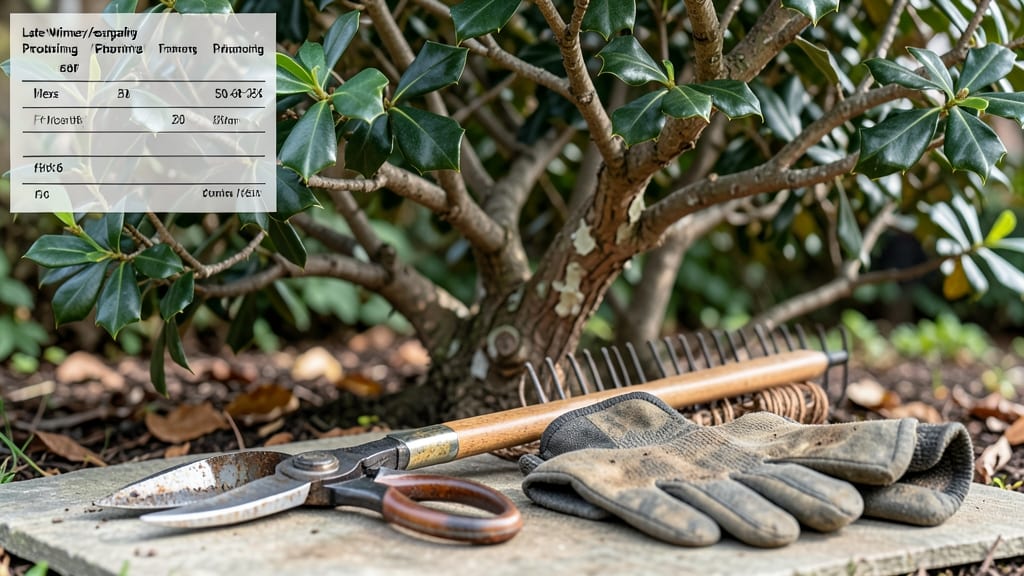
The best time to prune holly trees is late winter or early spring, just before new growth begins—typically between February and March in most climates—to avoid disturbing flowering or berry production. Prune after berries drop if preserving fruit for wildlife. Never prune during active growth or late fall to prevent winter damage.
Timing matters because holly trees produce flowers and berries on old wood, meaning last year's growth bears this year's fruit. 🌿 Pruning too late in spring risks cutting off next year's blooms, while summer pruning can stress the tree and reduce berry production.
I've seen holly trees recover poorly from mid-summer cuts, so always wait until dormant season. For berry-loving wildlife, delay pruning until after the fruit falls naturally in late winter.
Different holly varieties have slight variations—American holly, for example, benefits from a light trim in late winter to shape the tree before spring growth, while English holly may need more aggressive pruning in early spring to encourage dense foliage.
Always use sharp tools to make clean cuts and avoid tearing the bark, which can invite pests.
💡 In This Article
- Holly Tree Growth Stages and Pruning Timing
- Step-by-Step Pruning Guide for Holly Trees by Type
Holly tree growth stages and pruning timing
Holly trees follow a precise growth cycle that directly impacts pruning success. The key stages are dormancy (winter), bud break (early spring), flowering (late spring), and berry development (fall/winter). Pruning during dormancy—when the tree isn't actively growing—minimizes stress because the wounds heal faster.
This is why late winter (February-March) is ideal: the tree has stored energy from last season's growth to support recovery. 🌱 If you prune in summer, you risk cutting off next year's flower buds, which form on old wood, or exposing the tree to pests through fresh cuts.
The timing also affects berry production, as holly flowers bloom on last year's branches. American holly, for example, develops flowers in late spring that turn into berries by fall. Pruning too late in spring removes these potential fruit-bearing branches.
For wildlife-friendly holly trees, delay pruning until after berries naturally drop in late winter—typically January-February—to ensure birds and animals have food sources. The risk of pruning too early is cutting off next year's berries before they form.
Seasonal risks vary by climate. In colder regions, pruning too early (December-January) can expose fresh cuts to frost damage, causing dieback. Warmer climates may extend the dormant period, so monitor bud swell—when you see tiny green buds forming, it's time to prune.
The goal is to finish before active growth begins, usually within 2-4 weeks of bud break. This window is critical: pruning too late stresses the tree, while pruning too early risks winter damage.
Different holly varieties have subtle timing differences. English holly, for instance, benefits from early spring pruning to shape its dense foliage, while inkberry holly (Ilex glabra) can tolerate light pruning throughout late winter.
The key is understanding your specific holly's growth pattern—American holly needs precise timing to preserve berries, while some dwarf varieties are more forgiving. Always prune on dry days to prevent fungal infections, and avoid pruning when temperatures fluctuate drastically.
What most gardeners don't realize is how pruning affects the tree's energy allocation. When you cut branches during dormancy, the tree redirects stored carbohydrates to healing wounds instead of flowering or fruiting.
This is why late winter pruning—just before bud break—gives the tree maximum energy to support both recovery and next season's growth. The science is clear: pruning at the wrong time can reduce berry production by up to 40% in some varieties.
For visual learners, think of holly trees like a layered cake: the outer layer (new growth) is this year's foliage, while the inner layers (old wood) hold last year's flowers and berries. Cutting into the wrong layer at the wrong time ruins the whole structure.
That's why timing matters more than technique—even the best pruning skills won't help if you cut at the wrong season. 🌿