
Trees
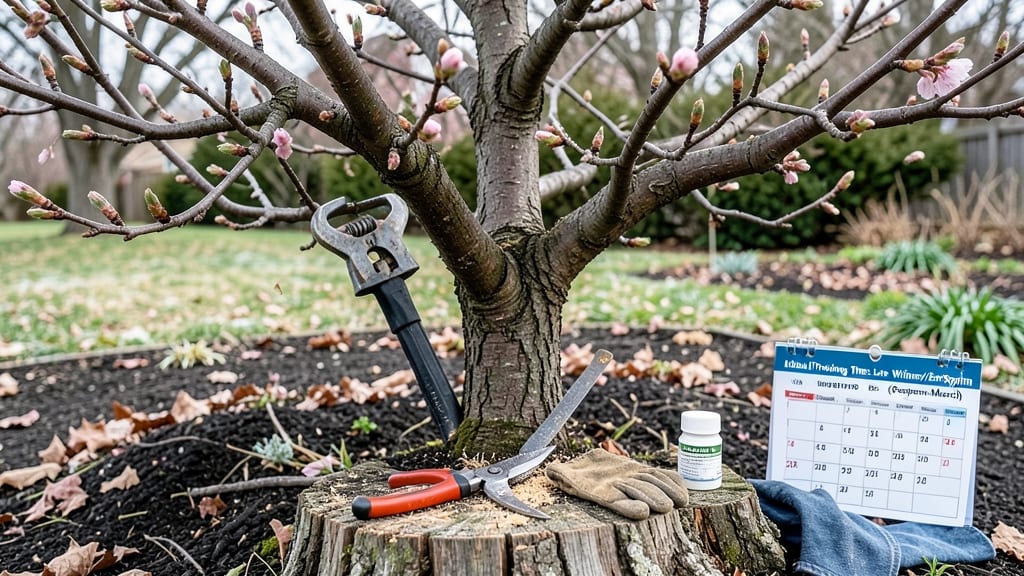
To prune cherry trees in Washington State at the perfect time means avoiding fungal infections and maximizing fruit production—both critical for your 🍒 harvest.
Pruning cherry trees at the wrong time in Washington State can spread disease and reduce fruit production—but timing it perfectly ensures healthier trees and bountiful harvests.
Washington’s wet winters and variable climate demand precise timing to avoid fungal infections like brown rot, which thrives in late spring. The key is pruning during dormancy, when trees are least vulnerable.
In this guide, I’ll break down the exact dormant-season windows for sweet, tart, and ornamental cherries, plus how to prepare your tools and recognize the best pruning cues before buds swell.
Optimal pruning windows for washington cherry trees: dormant season calendar
Washington State’s variable climate and wet winters make pruning cherry trees a critical seasonal task. Timing is everything—prune too early, and you risk winter damage from frost; prune too late, and disease spores infect fresh cuts.
The key is dormant-season pruning, when trees are stress-free and resistant to infections. Below, I’ll break down the exact windows for sweet, tart, and ornamental cherries, adjusted for Western vs. Eastern WA.
Understanding your local frost dates and bud break cues is essential. In Western WA (e.g., Seattle, Olympia), milder winters mean earlier pruning—often by February—while Eastern WA (e.g., Spokane, Wenatchee) waits until late February or March due to colder soils.
The goal? Finish pruning 2-3 weeks before buds swell to avoid brown rot and peach leaf curl.
Sweet cherries (like Bing and Rainier) are the most disease-prone, so their pruning window is narrower than tart varieties. Tart cherries (e.g., Montmorency) can handle slightly later pruning because their canopy structure is more open and airy. Ornamental cherries, prized for spring blooms, also follow a distinct timeline—prune too late, and you risk reduced flowering the next season.
| Cherry Type | Best Pruning Window (Western WA) | Best Pruning Window (Eastern WA) | Critical Avoidance Period | Key Climate Trigger |
|---|---|---|---|---|
| Sweet Cherries (e.g., Bing, Rainier) | Mid-February to early March | Late February to mid-March | After buds swell (March 15-April 1) | Daytime temps >45°F consistently |
| Tart Cherries (e.g., Montmorency) | Late January to mid-February | Early February to late February | After pink bud stage (March 1-April 1) | Soil thaws (pruning wounds heal faster) |
| Ornamental Cherries (e.g., Yoshino) | Early February to late February | Mid-February to early March | After 20% leaf-out (April 1-15) | Forsythia blooms (signals bud break) |
For Western WA gardeners, mark your calendar for mid-February—this is when sweet cherries like Bing should be pruned. If you’re in Eastern WA, wait until late February to account for colder soils.
The critical deadline is before buds swell: in Western WA, this is around March 15, while Eastern WA has until April 1 due to later frost dates.
Use local frost data as your guide. For example, in Seattle (Zone 8a), prune by early March to avoid late-winter frosts. In Spokane (Zone 6b), extend your window to mid-March.
A simple trick? Watch for forsythia blooms—when these yellow flowers appear, bud break is imminent, and it’s time to stop pruning.
If you’re unsure about bud stages, grab a magnifying glass and inspect your tree’s dormant buds. Look for swollen buds (a sign to halt pruning immediately) or pink buds (a hard stop).
In tart cherries, pink buds signal high disease risk, so prune at least 2 weeks before you see them.
Don’t forget that Eastern WA’s drier climate allows for slightly later pruning than Western WA’s wetter conditions. In areas like Wenatchee, where brown rot is rampant, prioritize disease-resistant varieties like Montmorency tart cherries and prune earlier to minimize fungal exposure.
Pro tip: Prune on a dry, sunny day to help wounds dry faster and reduce bacterial growth. Avoid pruning after rain showers, as moisture prolongs healing time and increases infection risks. If you must prune after rain, sterilize tools and seal cuts immediately with pruning seal
How to prune cherry trees without spreading disease: step-by-step dormant season guide
Washington State’s high-humidity winters and fungal-prone climate make pruning cherry trees a delicate task. Cutting at the wrong time or with dirty tools can turn your dormant-season pruning into a disease disaster.
The key is timing—pruning when trees are asleep but before buds swell—to avoid inviting brown rot and other fungal infections that thrive in WA’s wet springs.
I’ve pruned Bing sweet cherries and Montmorency tart cherries for years in the Pacific Northwest, and I’ve learned the hard way that rushing the process leads to cankers and weak growth.
Here’s my step-by-step guide to prune safely, including how to sterilize tools, make clean cuts, and shape your tree for maximum airflow—all while keeping diseases at bay.
⚠️ Critical Warning: When NOT to Prune in Washington
Pruning after buds swell is the #1 mistake in WA’s climate. Here’s why:
- Risk: Exposes fresh wounds to brown rot spores in damp air, causing canker infections that kill branches.
- Solution: Stop pruning 2 weeks before pink bud stage—use a magnifying glass to check buds for swelling.
- WA-Specific Tip: In Western WA, this usually means finishing by March 1; in Eastern WA, aim for March 15.
Start by sterilizing your pruners—this is non-negotiable in WA’s fungal-heavy air. Mix 1 part bleach with 9 parts water, soak pruners for 5 minutes, or use 70% rubbing alcohol on a cloth.
Contaminated tools spread peach leaf curl and other pathogens faster than you can say “rainy spring.” I keep a small spray bottle of alcohol in my tool bag for quick cleanups between cuts.
Next, focus on removing dead, diseased, or crossing branches first. These are the high-risk entry points for fungi. Make cuts just outside the branch collar (the swollen area where the branch meets the trunk) at a 45-degree angle.
Avoid leaving stubs—these trap moisture and invite rot. For larger branches over 2 inches thick, seal cuts with pruning paint (though research shows this is controversial, it’s a good precaution in WA’s wet climate).
Thin the canopy to 15-20% of the total branches—never more—to maintain the tree’s energy. Prioritize suckers (shoots growing from the base) and water sprouts (vertical shoots). These compete with fruit production and block airflow, creating ideal fungal conditions.
Step back often to visualize the tree’s open-center shape, which improves sunlight penetration and reduces humidity buildup in the center.
After pruning, clean up all debris and dispose of it in the trash—not the compost bin. Fungal spores hitchhike on fallen leaves and twigs. Rake the area under the tree and mulch with 3-4 inches of wood chips to suppress weeds and retain moisture.
In WA’s variable spring rains, this mulch layer also helps regulate soil temperature, giving your tree a smoother transition into active growth.
Finally, monitor for early signs of stress like oozing sap or unusual wilting. If you see blackened cankers or leaf curl within weeks of pruning, act fast with a copper fungicide spray.
Prevention is easier than cure in WA’s climate—so prune early, prune clean, and keep those tools sterile! 🌱