
Pruning
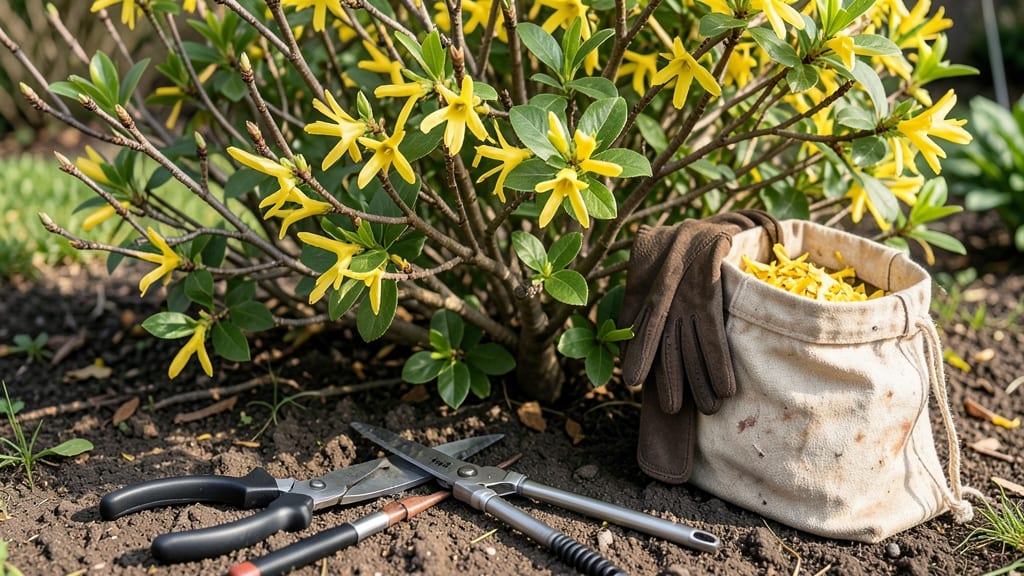
To prune forsythia shrubs, wait until immediately after their spring flowering—typically between late April and early June—to preserve next year's blooms. Avoid pruning in fall or winter, as this cuts off flower buds that develop over summer.
Timing is everything with forsythia because these shrubs set their flower buds after blooming, not before. 🌸 If you prune too late, you risk removing next year's blossoms entirely. The ideal window is right after the vibrant yellow flowers fade, giving you a clear visual cue.
I've seen many gardeners mistakenly prune in early spring, only to be disappointed by sparse or no flowers the following year.
What's interesting is how forsythia responds to proper timing. When pruned correctly, they reward you with denser growth and even more abundant blooms. The key is to shape the shrub while it's actively growing—this encourages new branches to form, which will bear next year's flowers.
Think of it like giving your forsythia a haircut after it's shown off its spring fashion show!
💡 In This Article
- Why Timing Matters for Forsythia Flowering
- Step-by-Step Forsythia Pruning Guide by Season
Why timing matters for forsythia flowering
Forsythia shrubs produce their showy yellow blooms on old wood—meaning the flowers grow on last year's growth, not new branches. The flower buds actually form in late summer and early fall, but they remain dormant until spring.
When you prune at the wrong time, you risk cutting off these buds before they can bloom. This is why late spring pruning (after flowering) is critical: it allows the buds to fully develop on last year's branches while giving you time to shape the shrub before summer growth begins.
The biological process is fascinating: forsythia's flower buds develop along the stems of the previous year's growth, typically in August and September. If you prune in fall or winter, you're essentially removing next year's potential blooms before they even have a chance to open.
The shrub may still produce new growth, but it won't flower until those buds are established. 🌸 What's more, forsythia's growth pattern means that if you prune too early (before flowering), you encourage leggy, unbalanced growth that can look untidy by summer.
Here's what happens when you miss the window: if you prune in late summer or fall, you'll notice sparse or no flowers the following spring because the flower buds were cut away. The shrub may still grow, but it won't have the same vibrant display.
Even if you prune lightly, you risk weakening the shrub's structure. The ideal timing—right after flowering—gives the plant enough time to recover and set new buds for next year while allowing you to control its shape.
Consider this comparison: pruning forsythia after flowering is like giving it a haircut after a big event. You've already enjoyed the show (the flowers), and now you can trim back any overgrowth or unruly branches without affecting next year's performance.
The shrub will respond by producing new growth from the base and along the stems, which will bear next year's flowers. This is why many gardeners swear by the "wait until after the yellow parade" rule—it's not just a saying, it's a biological necessity!
There's also a practical reason for this timing: early summer growth is vigorous, and pruning after flowering lets you take advantage of this energy. The shrub will quickly fill in any gaps and produce new branches that will flower in subsequent years.
If you prune too late, you're cutting into next year's potential, which is why forsythia is often called a "one-and-done" bloomer—get the timing wrong, and you might not see another show for years.
For those who love data, here's a key measurement: forsythia's flower buds typically form within 4-6 weeks after the main flowering period. This means if you prune in early May, you're cutting off buds that won't develop until late June or July—leaving you with no flowers the following spring.
The window for safe pruning is narrow but precise, which is why gardeners often mark their calendars for late April to early June.