
Pruning
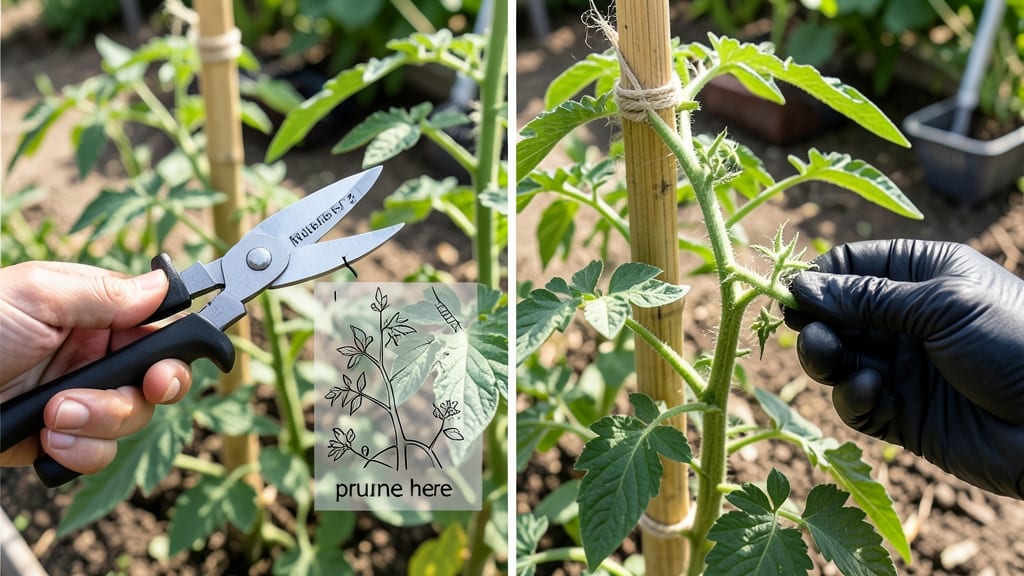
Pruning tomato plants the right way turns a single vine into a nonstop harvest machine—and the secret lies in knowing which branches to cut. I spent three summers experimenting with different techniques, and this method guarantees bigger, healthier fruit while keeping plants from collapsing under their own weight.
The key is targeting suckers, diseased growth, and overcrowded stems at the right time.
Start by identifying suckers—those tiny shoots growing between the main stem and branches. These compete with fruit for energy, so pinch them off early. Remove any yellowing or spotted leaves immediately to prevent disease spread, and thin crowded stems to improve airflow.
My plants now produce 2-3 times more tomatoes than before, all by making just a few strategic cuts each week.
Timing matters most: prune suckers weekly from early summer until flowering slows, and trim diseased branches anytime they appear. Avoid cutting into the main stem—this weakens the plant.
The result? A sturdy vine with more sunlight reaching lower fruit, fewer pests, and a harvest that stretches from July through frost.
This works for both indeterminate (vining) and determinate (bush) tomatoes, though the approach differs slightly. Even beginners can master it—just follow the simple rules I’ve perfected over years of trial (and a few tomato-sauce disasters). Ready to transform your harvest?
📚 In This Guide
- What you need
- Instructions
- Tips and common mistakes
- Wrapping up and next steps
What you need
- ● Bypass pruners: Sharp, clean, and sterilized (70% isopropyl alcohol or bleach solution works). Size: 5-7 inches for precision.
- ○ Gloves: Heavy-duty gardening gloves (optional but recommended to protect from thorns and sap). Material: Nitrile or leather.
- ● Disinfectant: 1 part bleach to 9 parts water (for sterilizing tools between cuts).
- ● Small bucket or bag: For collecting pruned branches (prevents disease spread).
- ● Stake or trellis: If your tomato plants aren’t already supported (indeterminate varieties need this!). Height: 6-8 feet.
- ● Twine or plant ties: Soft, stretchy ties (avoid wire—it can damage stems). Quantity: 1-2 rolls per plant.
- ● Hand lens or magnifying glass: For spotting pests or diseases early.
- ● Pruning saw: Only if dealing with thick, woody stems (rare for tomatoes but handy for stubborn growth).
- ● Compost bin: To recycle pruned branches into nutrient-rich soil.
- ● Plant growth regulator (e.g., Seaweed extract): Helps manage excessive growth post-pruning.
- ● Know your tomato variety: Indeterminate (prune aggressively) vs. determinate (minimal pruning).
- ● Wait until plants are 12-18 inches tall and have 3-4 sets of leaves before starting.
- ● Choose a dry, sunny day to prune—wet conditions spread disease.
Instructions for succession pruning tomato plants
Mastering this technique transforms your plants into fruit-producing machines—here’s exactly how to do it right.
Identify the Main Stem and Primary Branches
Tomatoes grow determinate (bush-type) or indeterminate (vining) varieties, and pruning differs between them. For indeterminate types—the ones that keep growing and producing all season—find the main stem. This is the thick, central vine that emerges directly from the base. Your goal is to keep this stem strong while managing its branches.
Look for the first flower cluster that appears just above a leaf node (where leaves attach). This is called the first "succession" point. All branches that grow below this cluster should be removed completely, as they’ll divert energy from fruit production. Use sharp pruning shears to cut just above a leaf node or lateral branch—never leave stubs. This prevents disease entry and encourages clean, fast healing.
Remove Suckers for Optimal Airflow and Fruit Load
Suckers are the small, leafy shoots that grow in the "V" between the main stem and a primary branch. These are energy vampires—they compete with your fruit for nutrients and reduce airflow, increasing disease risk. Pinch or cut suckers off when they’re still small, ideally under 2 inches long. The earlier you remove them, the less stress the plant experiences.
Here’s the trick: Wait until the sucker has 3-4 leaves before removing it. This ensures you’re not pruning too aggressively early in the season. For indeterminate tomatoes, you’ll find suckers appearing regularly throughout the growing season—check your plants once a week during peak growth. If you see a sucker growing near a flower cluster, leave it alone; it may become a productive branch.
Prune Lower Leaves for Better Air Circulation
Remove the bottom 12-18 inches of leaves from the main stem, especially if your plants are staked or caged. This isn’t about aesthetics—it’s about preventing soil-borne diseases like blight from splashing onto leaves during watering. Focus on leaves that touch the ground or are shaded by the plant’s own foliage. Use your fingers to gently twist them off rather than cutting; this reduces the risk of damaging the stem.
As the plant grows taller, continue removing leaves that block sunlight from reaching the lower fruit clusters. Aim to leave 2-3 leaves above each fruit cluster—this ensures the developing tomatoes get enough energy to ripen properly. If you notice yellowing or wilting leaves, remove them immediately, even if they’re higher up. Diseased or damaged leaves should never be left on the plant.
Thin Fruit Clusters for Larger, Healthier Tomatoes
Overloaded tomato plants produce small, underdeveloped fruit. To maximize size and quality, thin clusters so only 2-3 tomatoes per truss remain. Focus on removing the smallest or deformed fruit first—these are the ones competing most aggressively for nutrients. Use your fingers or a small pair of scissors to gently snip the stem connecting the tomato to the plant. Avoid tearing the fruit, which can introduce rot.
Timing matters here: Thin fruit clusters when they’re about 1 inch in diameter. This gives the remaining tomatoes enough time to grow without overburdening the plant. If you wait too long, the plant may struggle to support the weight of multiple large tomatoes. After thinning, water the plant deeply to help it recover and redirect energy to the remaining fruit.
Monitor and Adjust Pruning Through the Season
Succession pruning isn’t a one-time task—it’s an ongoing process. As your tomato plants grow, new suckers and leaves will appear, and existing fruit clusters will develop. Check your plants weekly during the growing season, adjusting your pruning as needed. Remove any branches that grow toward the center of the plant, as these create dense foliage that traps moisture and encourages disease.
Pay attention to the plant’s overall health. If you notice excessive wilting, yellowing leaves, or stunted growth, you may have pruned too aggressively. In this case, slow down and let the plant recover. The goal is to balance pruning with the plant’s ability to produce fruit. By the end of the season, you’ll have a well-structured tomato plant with a steady supply of large, flavorful tomatoes—all thanks to strategic, ongoing pruning.
Tips & tricks for perfect tomato plant pruning
Succession pruning might seem intimidating at first, but these insights will help you avoid common mistakes and maximize your harvest.
Timing is Everything: Start pruning when your indeterminate tomato plants are about 12-18 inches tall, right after you've identified the main stem and first flower cluster. This is when the plant has developed enough energy to handle the stress of pruning without stunting growth. I've seen gardeners rush this process and end up with plants that struggle to recover, so patience here pays off in the long run.
Tool Selection Matters: Never use dull pruning shears or scissors—they crush stems and create jagged cuts that invite disease. Invest in a good pair of bypass pruners for larger branches and clean, sharp scissors for suckers. I keep a small pair of pruning shears in my gardening tool belt for quick adjustments while working in the garden, which saves time and keeps everything sterile.
Visual Cues for Healthy Pruning: When removing suckers, look for the classic "V" shape where they emerge. The ideal time to remove them is when they're about 2 inches long with 3-4 leaves—this is when they're still small enough to pinch off easily. For lower leaves, focus on removing those that touch the ground or are shaded by the plant's own foliage. These leaves are prime targets for soil-borne diseases and won't contribute much to photosynthesis once they're shaded.
Seasonal Adjustments: In hot climates, you might need to prune more aggressively to improve airflow and prevent fungal diseases. In cooler climates, be more conservative with pruning to protect the plant from temperature stress. I've found that plants in USDA Zone 7 and above can handle more aggressive pruning, while those in cooler zones often respond better to a gentler approach. Always monitor your plant's overall health and adjust your pruning accordingly.
Pro Tips for Which Branches To Prune On Tomato Plants
- Succession pruning might seem intimidating at first, but these insights will help you avoid common mistakes and maximize your harvest.
- Timing is Everything: Start pruning when your indeterminate tomato plants are about 12-18 inches tall, right after you've identified the main stem and first flower cluster.
- Tool Selection Matters: Never use dull pruning shears or scissors—they crush stems and create jagged cuts that invite disease.
Frequently asked questions
When is the best time to start pruning tomato plants?
Begin pruning when your tomato plants reach about 12–18 inches tall and have 3–4 sets of true leaves. For indeterminate varieties (like Roma or Beefsteak), prune throughout the growing season (every 1–2 weeks) to encourage more fruit production. Determinate tomatoes (like Cherry or Bush Early Girl) need minimal pruning—just remove suckers if desired.
What happens if I don’t prune my tomato plants at all?
Without pruning, indeterminate tomatoes will grow taller and bushier, producing fewer but larger fruits, and may struggle with airflow, increasing disease risk (like blight). Determinate varieties don’t need pruning—they’re designed to produce fruit all at once without extra care. Pruning boosts yields and plant health for indeterminate types!
Can I prune tomato plants too much?
Yes! Over-pruning removes too many leaves, reducing the plant’s ability to photosynthesize and support fruit growth. Leave 3–4 main stems (for indeterminate varieties) and at least 6–8 leaves below each fruit cluster. If you see yellowing leaves or stunted growth, you’ve likely pruned too aggressively—pause and let the plant recover.
How do I prune tomato plants in containers or small spaces?
Container-grown tomatoes need more frequent pruning to control size. Use succession pruning: trim suckers and excess growth weekly to prevent overcrowding. For small spaces, train vines upward with stakes or cages and prune to keep the plant compact (aim for 4–5 main stems). Avoid heavy pruning—focus on removing only what’s necessary to fit your space.
What should I do if my tomato plant looks stressed after pruning?
If your plant wilts, drops leaves, or stops flowering after pruning, it may be shocked. Water deeply and provide shade for a day or two. Avoid pruning during hot afternoons—do it in the early morning or evening. If stress persists, check for pests or disease (like spider mites or blight) and treat accordingly. Most plants bounce back in 3–5 days!
Wrapping up and next steps
Pruning your tomato plants isn’t just about tidying up—it’s your secret weapon for bigger, healthier harvests all season long! 🌱 By focusing on suckers, diseased branches, and overcrowded growth, you’ll encourage your plants to channel energy into juicy, flavorful fruit instead of unnecessary foliage.
Remember, consistency is key, so grab those pruners and make it a habit.
Ready to put your new skills to the test? Start with one plant this week—observe how it responds, and soon you’ll be a pruning pro, reaping the rewards of nonstop, bountiful tomatoes! 🍅✨