
Pruning
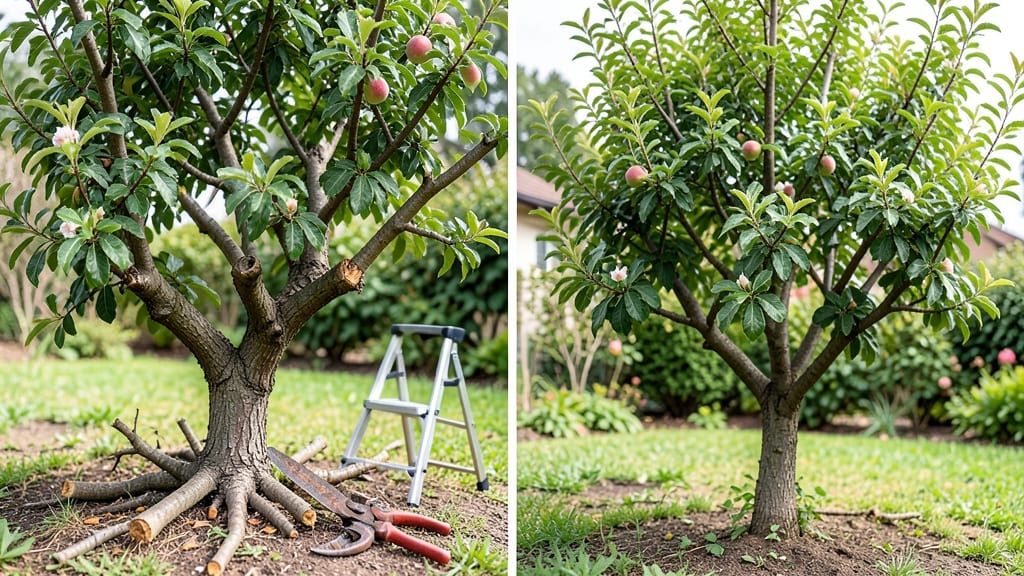
That badly pruned peach tree with the tangled branches and sparse fruit? 🌱 I’ve nursed three back from this exact mess—here’s how to fix it for good. Bad pruning creates weak growth, disease entry points, and fruit that’s small or nonexistent. The good news?
Corrective pruning works, even on neglected trees, if you focus on structure first. Start by removing dead or crossing branches (they’re the worst offenders) using clean, sharp pruners. Thin the canopy by 20-30% to let light and air circulate—this alone boosts fruit quality.
Time it right: late winter (before buds swell) or early summer (after harvest) gives the tree time to heal before stress. By next season, you’ll see stronger branches and fruit clusters forming where light reaches.
The key is patience: new growth takes time, but the tree will reward you with juicy, abundant peaches in 1-2 years. No more sad, scraggly branches—just a productive tree that feeds your family for decades. Here’s the secret weapon: prune for the future, not just the present.
Every cut should open the tree’s center and encourage outward growth. Use a 3-step approach—clean cuts, proper timing, and post-pruning care—to avoid repeating past mistakes. (Yes, I’ve made them all.) For long-term health, mulch around the base and water deeply once a week during dry spells.
This combo helps roots recover from past neglect. And next winter? Mark your calendar—consistent pruning keeps the tree thriving without the drama.
Common Mistakes That Harm Trees
Pruning a peach tree might seem straightforward, but a few critical errors can turn a healthy tree into a struggling one. Understanding these missteps helps you avoid them—and keep your tree thriving. Here’s why pruning gone wrong happens, and what science says about fixing it.
Peach trees are deciduous (they lose leaves in winter), and their growth cycles are sensitive to timing. Pruning at the wrong season disrupts the tree’s natural energy reserves, leading to weak growth, disease susceptibility, and even death.
- Winter Pruning (Dormant Season):
While winter is the ideal time to prune peach trees (when they’re dormant), cutting too late in the season—especially in cold climates—can expose fresh cuts to bacterial canker (a common peach tree disease). The bacteria thrive in wet, cold conditions, infecting wounds and causing oozing sores.
- Summer Pruning (Growing Season):
Trimming during active growth (spring to early summer) stresses the tree by removing leaves, which are essential for photosynthesis. This leads to:
- Stunted fruit production (fewer peaches).
- Weakened root systems (less water/nutrient uptake).
- Increased vulnerability to pests (like aphids or borers).
- Late Fall Pruning:
Cutting too close to winter forces the tree to heal in cold weather, slowing recovery. New growth may not harden off properly, making it susceptible to frost damage.
💡 Pro Tip: The best window for peach tree pruning is late winter or early spring (just before buds swell but before leaves emerge). In warmer climates, prune in dry winter months to avoid fungal risks.
A bad cut doesn’t just look messy—it invites disease, weakens the tree’s structure, and slows healing. Here’s what goes wrong:
| Mistake | Why It’s Harmful | How to Fix It |
|---|---|---|
| ✂️ Flush Cuts (Cutting Too Close) |
Leaving a stub or cutting into the collateral bud (the bud directly opposite the cut) can:
|
Use the 3-cut method:
|
| 🪓 Topping the Tree |
Severing the main branches back to stubs forces the tree to grow multiple weak leaders (central stems), which:
|
Prune to open the center—remove only branches that cross, rub, or grow inward. Aim for a vase-shaped structure. |
| 🔪 Jagged or Torn Cuts |
Using dull tools creates tear-out wounds that:
|
Use sharp bypass pruners or a pruning saw for thicker branches. Make cuts at a 45-degree angle for branches >1 inch thick. |
Peach trees need balanced pruning—too much or too little throws off their growth and fruit production.
- Over-Pruning:
Removing more than 20-25% of the canopy in one season:
- Depletes the tree’s carbohydrate reserves (stored energy).
- Leads to dieback (branches drying out).
- Reduces next year’s fruit set (fewer blooms = fewer peaches).
- Under-Pruning:
Neglecting pruning for years causes:
- A dense, shaded interior (prevents airflow, encouraging disease).
- Weak, overcrowded branches that break under fruit weight.
- Smaller, lower-quality fruit (less sun exposure).
🎯 Rule of Thumb: Prune lightly every year (5-10% of the canopy) rather than heavily every few years. Focus on:
- Removing dead, diseased, or crossing branches first.
- Thinning out the center to improve sunlight penetration.
- Shaping the tree for easy harvest access.
Peach trees in different climates or with underlying issues react differently to pruning. Here’s how environment and health play a role:
- Humid Climates:
Excess moisture after pruning accelerates fungal growth (like peach leaf curl). Always prune on dry days and avoid cutting when rain is forecasted.
- Drought Conditions:
Pruning during drought stresses the tree further. Wait until the tree has recovered from water stress (spring is ideal).
- Diseased Trees:
Pruning an already sick tree (e.g., with bacterial canker or root rot) can spread pathogens. Sterilize tools with rubbing alcohol between cuts, and remove infected branches below the infection point.
- Young vs. Mature Trees:
- Young trees (1-3 years): Focus on structural training (removing competing leaders).
- Mature trees (4+ years): Prioritize fruit-bearing branches and
Revive Your Tree with Smart Pruning
A badly pruned peach tree can feel like a lost cause, but with the right steps, you can nurse it back to health—and even boost its fruit production. The key is understanding the root of the problem (literally and figuratively) and applying targeted fixes.
Below, we’ll break down common issues and practical solutions to get your tree thriving again, plus tips to keep it in top shape year-round.
---
Signs: Thin canopy, sparse foliage, weak branches, or a tree that looks "shocked" after aggressive cuts.
How to Fix It: - Step 1: Assess the Damage 🔍 Look for branches that were cut too close to the trunk (within 1/4 inch) or where large sections were removed without leaving enough leaf-bearing wood. If the tree has fewer than 3–4 main scaffold branches, it may struggle to recover.
- Step 2: Stimulate New Growth 🌿 Apply a balanced fertilizer (10-10-10 or 20-20-20) around the root zone in early spring. This gives the tree energy to regrow. For severely weakened trees, a root stimulator (like mycorrhizal fungi) can help.
- Step 3: Light Pruning for Recovery ✂️ Avoid heavy cuts this year.
Instead, focus on: - Removing dead or diseased branches (cut back to healthy wood). - Trimming crossing or rubbing branches to prevent further damage. - Thinning out excessive suckers (shoots growing from the base) to redirect energy upward.
- Step 4: Mulch and Water 💧 Spread 2–3 inches of mulch (wood chips or straw) around the base (keep it 6 inches away from the trunk) to retain moisture and regulate soil temperature. Water deeply once a week during dry spells.
💡 Pro Tip: If the tree is still struggling after a year, consider cabling or bracing weak branches to prevent them from snapping under fruit weight.
---
Signs: Ragged cuts, exposed bark, or signs of fungal infections (black spots, oozing sap, or cankers).
How to Fix It: - Step 1: Clean Up the Mess 🧹 Use sterilized pruners (wipe blades with rubbing alcohol) to remove any jagged or torn cuts. Make clean cuts at a 45-degree angle, just outside the branch collar (the swollen area where the branch meets the trunk).
- Step 2: Treat Fungal Issues 🍄 If you spot signs of disease (like peach leaf curl or brown rot), apply a copper fungicide (e.g., Bordeaux mixture) in late fall or early spring before buds swell.
For cankers, prune out infected wood at least 6 inches below the visible damage.
- Step 3: Seal Large Wounds (If Necessary) 🛡️ For cuts larger than 1/2 inch in diameter, apply pruning sealant (like Tanglefoot Tree Wound Pruning Seal) to prevent pests from entering. Skip this for small cuts—peach trees heal best when left open to air.
- Step 4: Improve Airflow 🌬️ Thin out dense branches to reduce humidity (which fuels fungi). Aim for a sunny, open canopy with light filtering through.
🔥 Hot Tip: Prune during dormant season (late winter/early spring) to minimize stress and disease risk.
---
Signs: New growth appears weak or stunted, excessive water sprouts, or fruit that doesn’t set well.
How to Fix It: - Step 1: Reset Your Pruning Schedule ⏰ Peach trees need three key pruning times: 1. Late Winter (Before Bud Break): Remove dead wood and shape the tree. 2. Post-Harvest (Summer): Thin out excessive fruit and suckers. 3. Light Cleanup (Fall): Remove any diseased branches before winter.
- Step 2: Encourage Strong Branches 💪 Focus on structural branches (those growing at a 45–60 degree angle from the trunk). Remove vertical "water sprouts" (they’re prone to breaking) and low-hanging branches (they block airflow).
- Step 3: Balance Fruit Load 🍑➡️🌿 If your tree bears too much fruit, it weakens itself. In late spring, thin fruit clusters to leave 6–8 inches between each peach. This ensures larger, healthier fruit.
✨ Prevention Tip: Avoid pruning in fall (unless removing dead wood)—it can stimulate late growth that’s vulnerable to frost.
---
Signs: Overcrowded branches, excessive suckers, or a tree that looks "bushy" instead of structured.
How to Fix It: - Step 1: Restructure the Canopy 🏗️ Use the "open-center vase" method for peach trees: - Keep 4–6 main scaffold branches (spaced evenly around the trunk). - Remove suckers (shoots from the base) and water sprouts (fast-growing vertical shoots). - Thin out crossing branches to prevent rubbing wounds.
- Step 2: Prune for Light Penetration ☀️ Aim for a sunny interior—peach trees need light on the lower branches to produce fruit. Cut back shady interior branches that aren’t bearing fruit.
- Step 3: Annual Check-Up 📅 Schedule a light pruning session every year in late winter to: - Remove dead or dying branches. - Thin out excessive growth. - Shape the tree for better airflow and sunlight.
🎯 Goal: A well-pruned peach tree should look like an open umbrella—not a dense bush.
---
Signs: Slow growth, yellowing leaves, or branches dying back despite good pruning.
How to Fix It: - Step 1: Aerate the Soil 🕳️ Use a garden fork to loosen compacted soil around the drip line (the edge of the tree’s canopy). Mix in compost to improve drainage and nutrient uptake.
- Step 2: Deep Watering Routine 💦 Water slowly and deeply (1–2 inches per week) to encourage deep root growth. Avoid shallow watering, which promotes weak, surface roots.
- Step 3: Mulch Properly 🌰 Replenish mulch annually (spring is best). Keep it 3–4 inches thick but 6 inches away from the trunk to prevent rot.
💡 Pro Tip: If your tree is in heavy clay soil, consider raising the planting mound slightly to improve drainage.
--- Final Thought: A badly pruned peach tree isn’t a lost cause—it’s a chance to start fresh. With patience, the right cuts, and a little extra care, your tree can bounce back stronger than ever.
And remember: prevention is the best cure—stick to a year-round maintenance plan, and you’ll enjoy bountiful peaches for years! 🍑🌳
Frequently asked questions
How do I know if my peach tree is beyond saving after bad pruning?
Your tree may be too far gone if you see massive dieback (more than 50% of branches dead), oozing cankers covering the trunk, or a completely hollow center with no new growth after 2 years of recovery care. However, even in these cases, aggressive root care (deep watering, compost, and mulching) can sometimes revive the roots enough for regrowth. Start with a soil test to check nutrient levels.
Can I prune my peach tree in summer to fix past mistakes?
Summer pruning is risky but can help in emergencies. Focus on removing only dead or diseased branches during dry weather. Avoid heavy pruning—limit cuts to 10% of the canopy max. The best time for corrective work is still late winter when the tree is dormant. Summer cuts should be minimal and made with sterilized tools to prevent fungal infections.
What's the fastest way to tell if my peach tree is recovering after pruning?
Look for new leaf growth at the branch ends by late spring. Healthy recovery also shows firm, green shoots (not weak yellow ones) and no new cankers. Weigh your tree's branches—if they feel sturdy and don't snap easily, the structure is strengthening. Check for buds swelling in early spring as your best indicator.
Should I paint the pruning cuts on my peach tree?
No, painting cuts (with sealants or tar) is unnecessary for peach trees. Their bark naturally heals better when exposed to air. Only seal large wounds over 1/2 inch with a specialized tree wound pruning sealant if you notice sap leakage or pest activity. For most cuts, let the tree's natural healing process work—it's stronger than any paint job.
How much can I prune in the first recovery year?
Keep it gentle—remove only dead wood and crossing branches (no more than 10-15% of the canopy). Focus on opening the center for airflow. Heavy pruning in the first year stresses an already weakened tree. Save major structural changes for year two when new growth shows the tree's strength. Think of it as physical therapy, not surgery.