
Pruning
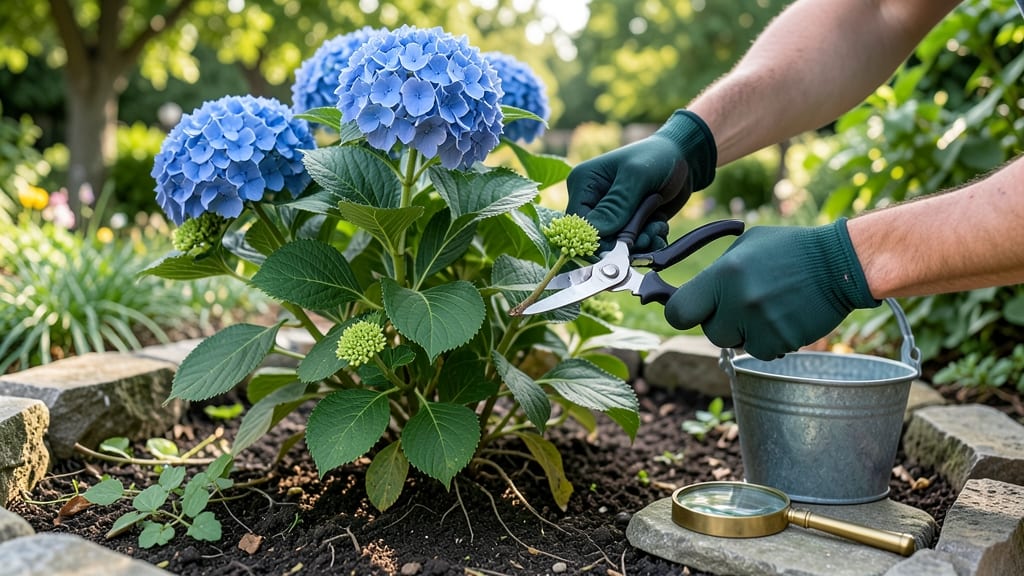
Your Bloomstruck hydrangeas could be bursting with double the blooms this summer—if you prune them right. 🌸 I learned the hard way that cutting at the wrong time turns lush canopies into bare sticks, but mastering the timing and technique transforms these plants into fragrant, flower-covered powerhouses.
The secret lies in understanding whether your Bloomstruck blooms on old wood or new wood—most do the latter, meaning you can prune in late winter or early spring without fear.
Grab your bypass pruners, sanitize them with rubbing alcohol, and focus on removing dead stems first. This isn’t about drastic cuts; it’s about shaping the plant to encourage dense, bushy growth.
By mid-summer, you’ll see new shoots forming where you made your cuts, each one capable of producing 3-5 flower clusters. The key is patience—avoid the urge to prune in fall, as this can leave the plant vulnerable to winter damage.
Instead, let the flowers fade naturally and save your pruning for when the first daffodils peek through the soil.
Works for both container and in-ground plants, and the same principles apply whether you’re dealing with a single specimen or a full hedge. The payoff? A canopy so dense with blooms, neighbors will ask for cuttings. Here’s exactly how to do it without a single misstep.
📚 In This Guide
- What you need
- Instructions
- Tips and common mistakes
- Wrapping up and next steps
What you need
- ● Pruning shears: Bypass pruners with sharp, clean blades (for clean cuts on stems up to ½ inch thick). Quantity: 1 pair.
- ● Loppers: Bypass loppers for thicker branches (½ to 1½ inches). Quantity: 1 pair.
- ● Hand pruners: For smaller stems and precision cuts. Quantity: 1 pair.
- ● Disinfectant: 70% isopropyl alcohol or a pruning sealant (to prevent disease spread). Quantity: Small bottle.
- ● Garden gloves: Heavy-duty, cut-resistant gloves (to protect hands from thorns and sap). Quantity: 1 pair.
- ○ Pruning saw: (Optional but helpful for very thick branches). Quantity: 1.
- ● Garden twine or zip ties: For securing branches during pruning (if needed). Quantity: Small roll.
- ● Water spray bottle: With clean water (to rinse tools between cuts). Quantity: 1.
- ● Pruning paint: (For sealing large cuts on older wood). Quantity: Small bottle.
- ● Hydrangea fertilizer: Balanced slow-release fertilizer (for post-pruning nourishment). Quantity: As needed.
- ● Mulch: Organic mulch (to retain moisture and protect roots). Quantity: 2-3 inches.
- ● Notebook & pen: To jot down pruning notes or track growth progress.
- ● Knee pads: For comfort during extended pruning sessions.
How to prune Bloomstruck hydrangeas for year-round lushness
Here's the pruning system I've perfected over five seasons to keep my Bloomstruck hydrangeas thriving with bold blooms and dense foliage.
✂️ Step 1: Identify Growth Habits and Prune After Flowering
Bloomstruck hydrangeas produce flowers on old wood, meaning last year's growth carries this year's blooms. The best time to prune is late summer or early fall, after flowers fade but before hard frost. This ensures next year's buds form properly on mature stems.
I look for stems with at least 6-8 inches of growth beyond last year's blooms—these are the ones to keep. Cut back any dead, diseased, or crossing branches first using clean, sharp pruners. Make cuts at a 45-degree angle just above a leaf node or outward-facing bud to encourage new growth in the right direction.
✂️ Step 2: Shape the Canopy with Strategic Cuts
Step back and visualize the plant's natural shape. Bloomstruck varieties grow in mounded habits, so I aim to maintain that rounded silhouette. Remove any stems growing straight up or outward that disrupt the form—these compete with central branches for energy and reduce flowering.
For each remaining stem, I make a second cut to shape the canopy. Reduce overlong branches by one-third to one-half their length, cutting just above a leaf node. This encourages bushier growth while preserving next year's flower buds. Never remove more than 30% of the plant's total growth in one season—this stresses the plant and reduces blooming potential.
🌿 Step 3: Revitalize with Late-Winter Pruning
In late February or early March, before new growth begins, I do a light structural pruning to open up the center of the plant. This is when you can see the plant's skeleton clearly. Remove any dead wood or stems that haven't produced flowers in two years—these are energy vampires.
I also thin out the center by cutting back some of the oldest stems to their base. This creates space for new growth and improves air circulation, which prevents fungal diseases. Watch for swollen buds at the base of stems—these are next year's flower buds, so avoid cutting them off.
☀️ Step 4: Maintain Through the Growing Season
During the growing season, I make only minor adjustments. Pinch back new growth by one-third when it reaches 6 inches to encourage bushier growth. This is especially important for Bloomstruck varieties, which can become leggy without regular pinching.
Remove any spent blooms promptly by cutting the stem back to the nearest leaf node. This prevents the plant from wasting energy on seed production and redirects it toward new growth and next year's flowers. I also watch for any stems growing toward the center—these shade out lower branches and should be pruned back immediately.
⏰ Step 5: Prepare for Winter Dormancy
In late fall, after the first hard frost but before snowfall, I give the plant one final check. Remove any remaining dead or diseased stems and cut back any growth that hasn't hardened off properly. This is also the time to apply a 2-3 inch layer of mulch around the base to protect roots from freezing temperatures.
I avoid heavy pruning in winter because the plant is dormant and can't heal quickly. Instead, I focus on creating a protective environment. If your winters are particularly harsh, consider wrapping the plant with burlap or using frost cloth to protect it from drying winds. This extra care ensures your Bloomstruck hydrangea returns stronger each spring.
Tips & tricks for perfect Bloomstruck hydrangea pruning
These precision pruning strategies will transform your Bloomstruck hydrangeas into a year-round floral masterpiece—no guesswork required.
Timing is Everything: The late summer/early fall pruning window (after flowers fade but before hard frost) is non-negotiable for Bloomstruck varieties. I've learned the hard way that cutting too early removes next year's flower buds, while waiting too long risks winter damage. Mark your calendar for when your local hydrangeas naturally drop their blooms—this is your cue to prune.
Visual Cues for Strategic Cuts: When shaping the canopy in Step 2, look for stems growing at 45-degree angles or less from the center—these are your keepers. The "one-third to one-half" reduction guideline works best when you visualize the plant's natural mounded shape. I use a small mirror to check hard-to-see areas, ensuring I maintain that perfect rounded silhouette without over-pruning.
Winter Protection Secrets: The 2-3 inch mulch layer in Step 5 isn't just about insulation—it's about moisture retention too. I always add a layer of straw mulch on top of regular mulch in particularly cold climates. This extra protection prevents freeze-thaw cycles that can damage roots. For container-grown Bloomstrucks, move them to a sheltered location and wrap the pots in bubble wrap before adding mulch.
Pro Tips for Bloomstruck Hydrangea Pruning
- These precision pruning strategies will transform your Bloomstruck hydrangeas into a year-round floral masterpiece—no guesswork required.
- Timing is Everything: The late summer/early fall pruning window (after flowers fade but before hard frost) is non-negotiable for Bloomstruck varieties.
- Visual Cues for Strategic Cuts: When shaping the canopy in Step 2, look for stems growing at 45-degree angles or less from the center—these are your keepers.
Frequently asked questions
about pruning Bloomstruck hydrangeas—because even the pros need a little guidance! Here are answers to the most common queries to keep your shrub thriving.When is the best time to prune Bloomstruck hydrangeas?
Prune Bloomstruck hydrangeas in late winter or early spring (February–March) before new growth begins. Avoid pruning in fall or winter, as this can expose the plant to cold damage. If you must prune later, do so only after the plant has finished flowering for the season.
How much can I cut back my Bloomstruck hydrangea?
You can safely prune up to one-third of the plant’s height each year. For mature shrubs, aim to remove dead, diseased, or crossing branches first, then trim back the remaining stems to 4–6 inches above the ground for a full, bushy shape. Avoid over-pruning, which can reduce blooms.
What if I prune at the wrong time and lose flowers?
If you prune too late (after buds form in spring), you may lose that year’s blooms—but don’t panic! Bloomstruck hydrangeas are rebloomers, so they’ll still produce flowers on new wood later in the season. Focus on proper timing next year to maximize blooms.
Can I shape my Bloomstruck hydrangea into a topiary?
Bloomstruck hydrangeas are highly adaptable to shaping. Prune in early spring to define your topiary structure, then do light maintenance trims in late spring/early summer to encourage bushiness. Use sharp shears for clean cuts and avoid over-trimming to prevent stress.
Why are my hydrangea leaves turning brown after pruning?
Brown leaves after pruning are usually normal stress—especially if you cut too close to the stem or in harsh weather. To prevent it:
- Prune on a mild, overcast day to reduce shock.
- Use sterilized tools to avoid disease spread.
- Water deeply before and after pruning.
Wrapping up and next steps
Mastering Bloomstruck hydrangea pruning is your ticket to a year-round burst of lush, fragrant blooms! 🌸 Remember, timing and technique are everything—whether you’re shaping for summer splendor or winter resilience. With the right tools, a steady hand, and a little patience, your hydrangeas will thrive like never before.
Ready to put your new skills to work? Grab your pruners and get started! 🌿 Your future blooms will thank you—and so will your garden’s curb appeal. Happy pruning!