
Pruning
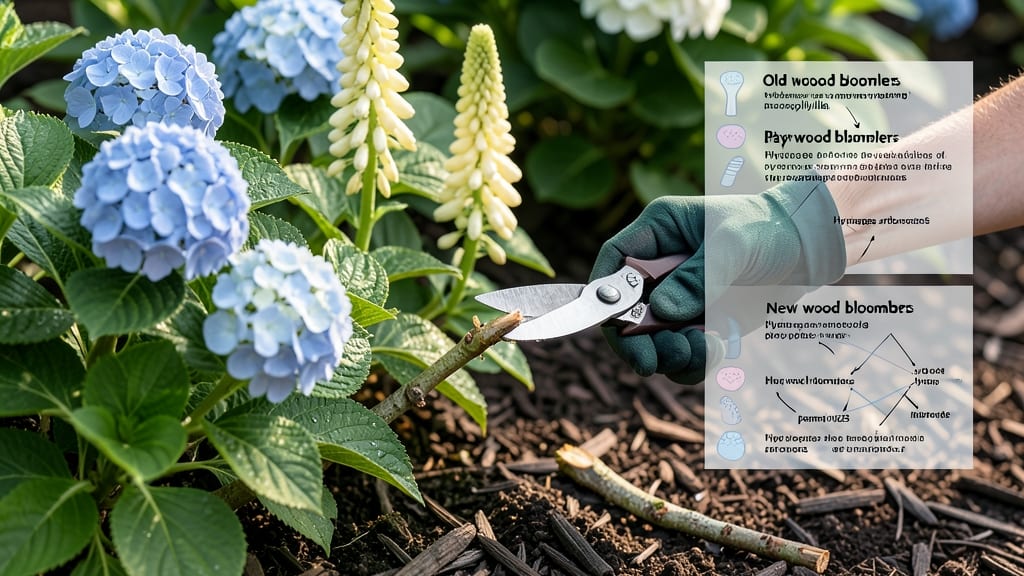
You can prune hydrangeas now only if they bloom on new wood—like Hydrangea paniculata—but wait for late winter/early spring if yours are spring-flowering types (e.g., mopheads). Cutting too early risks removing next year’s buds. Always sterilize tools and remove dead wood first.
Timing matters because hydrangeas fall into two main categories: those that set buds on old wood (like bigleaf varieties) and those on new wood (such as panicle types). Pruning at the wrong time can mean sacrificing next year’s blooms entirely.
For example, I once pruned my mophead hydrangea too early in fall, and it barely flowered the following summer. 🌿 The key is understanding your plant’s growth cycle—late-summer bloomers can handle fall trims, while spring bloomers need patience until after their flowers fade.
Beyond timing, the tools you use make a difference. Always sanitize your pruners with rubbing alcohol between cuts to prevent disease spread. I also recommend thinning out crowded stems to improve airflow—this reduces fungal risks while encouraging stronger growth.
For varieties like Hydrangea arborescens, you can even shape them lightly now if they’re late bloomers, but avoid heavy pruning until after their flowers have finished.
💡 In This Article
- Hydrangea Pruning by Variety and Bloom Time
- Step-by-Step Guide to Pruning Hydrangeas Safely
Hydrangea pruning by variety and bloom time
The science behind hydrangea blooming lies in their wood production habits. Plants like Hydrangea paniculata (panicle hydrangeas) produce flowers on new wood—growth that emerges in spring from the current year’s stems.
This means you can safely prune them in early fall (now) without risking next year’s blooms, as the flower buds haven’t formed yet. In contrast, Hydrangea macrophylla (mopheads) rely on old wood—buds set on last year’s stems during late summer or early fall.
Cutting these stems now removes next year’s flowers entirely. 🌸
Temperature and daylight cues trigger bud formation. For new-wood producers like paniculata, buds form after the first frost but before winter dormancy. Pruning in fall (after blooms fade) gives the plant time to establish new growth before winter.
Old-wood producers, however, set buds in late summer/early fall—pruning now would mean no flowers until the following year. The critical difference is in their photoperiod sensitivity: new-wood types respond to shorter days later in the season, while old-wood types need the summer heat to develop buds.
Here’s what happens if you prune at the wrong time: For mopheads, cutting stems now removes the axillary buds that would have bloomed next summer. These buds form in clusters along last year’s stems, and once pruned, they’re gone.
For panicle types, fall pruning encourages basal sprouting—new shoots emerge from the plant’s base, producing more flowers. The key is matching your pruning timing to the plant’s natural cycle. 🌿
Consider the visual difference: A properly pruned paniculata in fall will have a clean, open structure, while an over-pruned mophead might look bare but won’t flower until the following year.
Even experienced gardeners sometimes mix up varieties—always check your plant’s tags or research its bloom time before reaching for the pruners. For example, Hydrangea arborescens (smooth hydrangea) blooms on new wood but sets buds slightly earlier than panicle types, so timing matters even within new-wood producers.
Seasonal cues like leaf color and stem hardness also help. New wood is green and flexible, while old wood is brown and woody.
Cutting a stem that’s still green means you’re pruning new growth safely, but if you see brown, woody stems on a mophead, those are the ones holding next year’s buds.
The rule of thumb: If your hydrangea bloomed this summer, it’s likely an old-wood producer and needs to wait until late winter.
What most gardeners don’t realize is how light exposure affects bud formation. Old-wood producers need full sun to develop buds, while new-wood types can tolerate partial shade. If your mophead is in too much shade, it might not set enough buds even if you prune at the right time.
This is why some gardeners see poor flowering despite following pruning guidelines—environmental factors play a huge role. 💡
For a quick reference, here’s how to identify your hydrangea type by bloom time:
- Spring bloomers (old wood): Hydrangea macrophylla (mopheads), H. quercifolia (oakleaf). Prune after flowering (late winter/early spring).
- Summer/fall bloomers (new wood): H. paniculata (panicle), H. arborescens (smooth). Prune in late winter or early fall.
- Reblooming types: Some hybrids (like Endless Summer) produce flowers on both old and new wood, offering more flexibility.