
Pruning
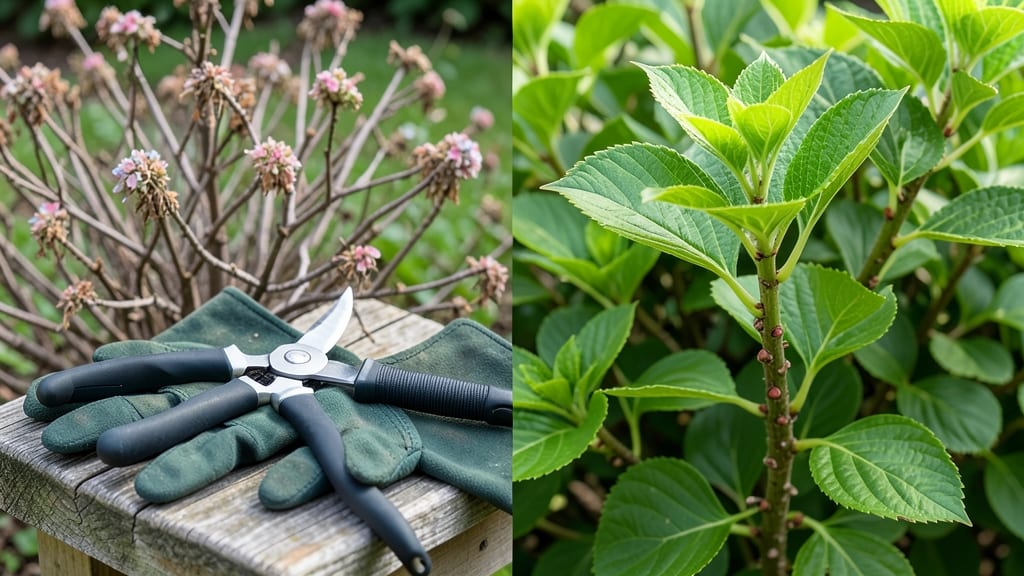
You absolutely need to prune hydrangeas to maintain their health and maximize blooms, but the approach varies by type: trim faded flowers in summer for mopheads and lacecaps, while bigleaf varieties should be pruned in late winter to encourage fresh growth and avoid woody stems.
Pruning isn't just about shaping—it's about giving your hydrangeas the best chance to thrive. Different varieties bloom on old wood (last year's growth) or new wood (current season), which completely changes when and how you should trim.
For example, mophead and lacecap hydrangeas produce buds on old wood, so cutting back too early can mean fewer flowers next season.
Meanwhile, bigleaf hydrangeas respond well to a late-winter haircut that removes up to one-third of the plant to stimulate vigorous new growth. 🌸 The key is understanding your plant's natural cycle and working with it, not against it.
Even experienced gardeners sometimes hesitate because pruning can feel risky—what if you cut too much or at the wrong time? The good news is that hydrangeas are remarkably resilient. With the right technique, you'll encourage fuller, healthier plants that reward you with abundant blooms year after year.
Start by identifying your specific variety, then follow the timing guidelines tailored to its growth habits.
💡 In This Article
- How Pruning Hydrangeas Boosts Bloom Production
- Step-by-Step Hydrangea Pruning Guide by Type
How pruning hydrangeas boosts bloom production
Pruning hydrangeas isn't just about aesthetics—it's a biological trigger that directly impacts flower production. These plants grow on two types of stems: old wood (last year's growth) and new wood (current season's shoots).
For varieties like mophead and lacecap hydrangeas, flower buds form on old wood in late summer or fall, meaning aggressive pruning in winter could remove next year's blooms.
The plant's growth hormones, specifically auxins, regulate where new buds develop, and pruning at the right time redirects energy toward either new stems or existing buds, depending on the variety.
The science gets even more interesting when you consider how light exposure affects growth. When you prune back a hydrangea by one-third to one-half in late winter (for bigleaf types), you're creating an open canopy that allows sunlight to penetrate deeper.
This triggers the production of cytokinins, plant hormones that stimulate cell division and new shoot growth. Without proper pruning, bigleaf hydrangeas develop thick, woody stems that produce fewer, smaller blooms. The result?
A plant that's not just bushier but also more productive, with flowers that can reach 8-12 inches in diameter when properly maintained.
Pruning also plays a crucial role in disease prevention. Dead or diseased branches harbor pathogens that can spread to healthy tissue. When you remove these stems at the base (cutting back to a healthy bud or node), you're eliminating the source of infection.
This is especially important for oakleaf hydrangeas, which are prone to powdery mildew. Regular pruning improves air circulation, reducing humidity levels around the plant and creating an environment less favorable to fungal growth.
The visual difference is striking: a well-pruned hydrangea stands tall with vibrant green foliage, while an unpruned one often appears leggy and sparse.
Let's talk about the panicle hydrangeas, which are the outliers in the hydrangea world. These varieties bloom on new wood, meaning they can handle more aggressive pruning in late winter or early spring without sacrificing next year's flowers.
When you cut back these types by one-third to one-half, you're encouraging the plant to produce more lateral branches, each capable of bearing a cluster of 20-30 small flowers.
The contrast between the old-wood and new-wood bloomers is fascinating—where one requires gentle summer deadheading, the other thrives with a dramatic winter makeover.
What most gardeners don't realize is how pruning affects the plant's root system. When you remove excess growth, the plant redirects its energy from maintaining large stems to developing a stronger root network.
This underground growth supports the plant's ability to uptake water and nutrients more efficiently, leading to larger, more vibrant blooms. Think of it like giving your hydrangea a spa day—less above-ground maintenance means more resources for what really matters: those show-stopping flowers.
Here's a quick comparison to help visualize the impact: An unpruned bigleaf hydrangea might produce 50-100 flowers per stem, but with proper winter pruning, that number can double or triple. The flowers themselves become more substantial, with petals that remain vibrant longer.
The secret lies in understanding your plant's growth cycle and working with it, not against it. For example, lacecap hydrangeas develop their buds in late summer, so any pruning after late August risks removing next year's blooms. 🌸