
Pruning
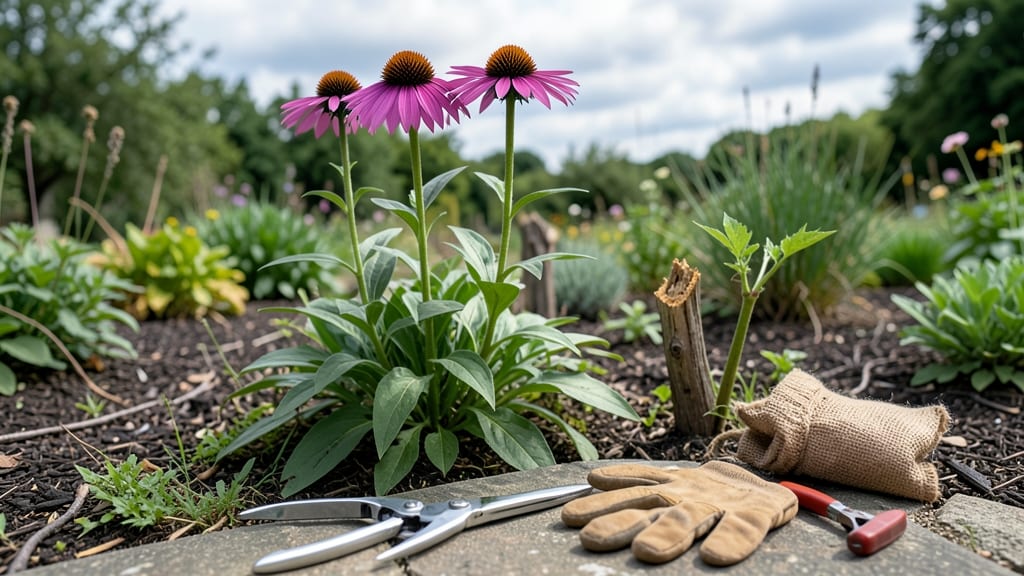
Pruning coneflowers isn't just about tidying up—it's the secret to longer blooms and sturdier stems all season. 🌻 I’ve spent three summers watching my coneflowers flop over by August, until I learned the right timing and cuts.
The difference? Plants that stay upright, bloom until frost, and bounce back stronger every year.
You only need sharp pruners, a pair of gloves, and a clear day—no fancy tools required. The key is cutting back spent blooms to the first set of healthy leaves (about 2-3 inches below the flower head) to encourage new growth.
Skip this step, and you’ll end up with leggy stems that collapse under heavy blooms.
By late fall, give your coneflowers a light trim to remove any dead or diseased stems—this prevents winter rot and keeps pests at bay. The result? A neat, compact plant that pushes out fresh foliage in spring and blooms 2-3 weeks earlier than neglected ones.
Works for both purple and white varieties, and adapts to containers or garden beds. Here’s how to do it without killing your plants—or your enthusiasm.
📚 In This Guide
- What you need
- Instructions
- Tips and common mistakes
- Wrapping up and next steps
What you need
- ● Pruning shears or bypass pruners: Choose sharp, bypass-style shears (not anvil-type) to make clean cuts without crushing stems. Opt for 4- to 6-inch blades for precision.
- ● Garden gloves: A pair of cut-resistant gloves (e.g., nitrile-coated) to protect your hands from thorns and rough stems.
- ○ Disinfectant (optional but recommended): A small bottle of rubbing alcohol (70%+) or a garden disinfectant spray to sterilize tools between cuts and prevent disease spread.
- ○ Garden twine or plant ties (optional): If your coneflowers are leggy or flopping, soft twine or Velcro plant ties can help support stems temporarily.
- ● Compost bin or bag: A 5-gallon bucket or compostable bags to collect pruned debris for easy disposal or composting.
- ● Timing knowledge: Prune at the right time—early morning or late afternoon—to avoid stressing the plant in peak sun.
- ● Weather check: Wait for dry, calm conditions (no rain forecasted for 24 hours) to prevent fungal issues.
- ● Plant health assessment: Scan your coneflowers for pests (aphids, Japanese beetles) or diseases (powdery mildew) before pruning. Treat if needed!
Step-by-Step guide for pruning coneflowers
Here’s how to keep your coneflowers thriving year-round with precise cuts that boost blooms and stem strength.
✂️ Step 1: Deadhead Spent Blooms in Late Summer
After the first flush of flowers fades—usually in late July or August—start deadheading by cutting back the brown, papery seed heads to the nearest set of healthy leaves. Use clean, sharp pruners to avoid tearing stems, which weakens the plant. I like to do this on a dry morning when the stems are firm; you’ll see fresh side buds forming within 2-3 weeks as the plant redirects energy toward new growth.
Don’t cut into green tissue—always leave at least ½ inch of stem above the leaf node. This ensures the plant retains enough energy to support the next bloom cycle. If you wait too long, the seed heads will scatter and self-seed, potentially creating unwanted volunteers next year.
✂️ Step 2: Cut Back Faded Stems to the Ground in Fall
Once the growing season winds down—typically after the first hard frost—cut back all remaining stems to 1-2 inches above the soil line. This prevents disease from overwintering in dead foliage and encourages a stronger root system for next spring. I use sterilized pruners dipped in rubbing alcohol between cuts to prevent cross-contamination.
Leave the basal rosette of leaves intact; these store energy for early spring regrowth. If your coneflowers are in a windy location, consider staking them in late fall to prevent stems from snapping under ice or snow. Mulch lightly with 2-3 inches of organic mulch (like shredded leaves) to insulate roots during winter.
☀️ Step 3: Trim New Growth in Early Spring
As soon as new shoots emerge in early April or May—when soil temperatures reach 50°F—trim back any weak, leggy stems to encourage bushier growth. Focus on cutting just above a healthy leaf node, which will spur lateral branching. You’ll notice the plant fills out more densely within 4-6 weeks, producing more blooms later in the season.
Remove any yellowed or mushy leaves at the base, as these signal fungal issues or winter damage. A light application of balanced fertilizer (10-10-10) at this stage gives the plant a nutrient boost for vigorous growth. Avoid over-fertilizing, though—coneflowers thrive in poor soil and can scorch if overfed.
✂️ Step 4: Light Pruning Mid-Season for Airflow
During peak bloom—around June or July—trim back overcrowded stems to improve airflow and reduce disease risk. Look for stems growing inward or crossing others; these compete for sunlight and weaken the plant. Cut these back to the nearest outward-facing leaf node, which encourages stronger, more upright growth.
This is also the time to divide mature clumps if they’ve outgrown their space. Dig up the plant, separate the roots into 3-4 inch sections, and replant immediately. Water deeply after transplanting to reduce shock. Dividing every 3-4 years rejuvenates the plant and prevents bloom decline.
Tips & tricks for perfect coneflower pruning
These year-round strategies will transform your coneflowers from average to showstopping—without sacrificing their hardy nature.
Timing is Everything: Late July or August is your prime window for Step 1 deadheading, but don't wait until the seed heads turn completely brown and brittle. Aim for when they're just starting to dry out—this ensures you catch the plant redirecting energy before it commits to seed production. I've seen plants that waited too long produce only 30% of their usual blooms the following season because the energy was already allocated to seeds.
Tool Precision Matters: Your pruners are your most important tool—don't skimp on quality. I use bypass pruners with a 4-inch blade for their clean cuts that don't crush stems. Sterilize them between cuts (especially in Step 2) by wiping with rubbing alcohol or a 10% bleach solution. The ½-inch stem rule in Step 1 is critical: any shorter, and you risk damaging the leaf node where new growth emerges. I mark my pruners with tape at the ½-inch point to make this easier.
Seasonal Energy Management: The basal rosette of leaves you protect in Step 2 stores carbohydrates that fuel next year's blooms. Think of it like a plant savings account—every leaf you preserve means more energy for flowers. In my coldest winters, I add an extra 1-2 inches of mulch around established plants to protect these energy reserves. The 50°F soil temperature in Step 3 is your cue that roots are active enough to support new growth without risking frost damage.
Dividing Strategy: When you divide mature clumps in Step 4, aim for sections with at least 3-4 inches of root and 2-3 healthy stems each. Larger divisions establish faster but may take longer to bloom the first season. I've found that dividing every 3-4 years prevents the center from becoming woody and bare—this is when coneflowers start looking "old" and produce fewer blooms. The deep watering after transplanting is crucial; it encourages roots to spread quickly in their new location.
Pro Tips for Prune Coneflowers
- These year-round strategies will transform your coneflowers from average to showstopping—without sacrificing their hardy nature.
- Timing is Everything: Late July or August is your prime window for Step 1 deadheading, but don't wait until the seed heads turn completely brown and brittle.
- Tool Precision Matters: Your pruners are your most important tool—don't skimp on quality.
Frequently asked questions
Got questions about pruning coneflowers?
You’re not alone! Here are answers to the most common concerns—so you can keep your plants thriving with confidence.
When is the best time to prune coneflowers?
Prune coneflowers in early spring (just as new growth appears) or late fall (after the first frost). Avoid pruning in summer—this is when they’re actively blooming! For deadheading spent blooms, do it throughout the growing season to encourage more flowers.
How much should I cut back coneflowers in the fall?
Cut back 1/3 to 1/2 of the plant’s height—about 6 to 12 inches from the base. This removes dead foliage while leaving enough energy for next year’s growth. Never cut into woody stems; focus on the top third for a clean, tidy look.
What if my coneflowers look leggy or sparse after pruning?
Leggy growth often means they need more sunlight or fertilizer (use a balanced 10-10-10 formula in early spring). Prune back too aggressively? Give them time—they’ll bounce back! If soil is poor, amend with compost to boost vitality.
Can I prune coneflowers in containers the same way?
Yes! Container-grown coneflowers follow the same rules: prune in early spring or fall, deadhead spent blooms, and cut back by 1/3. Just ensure pots have drainage holes to prevent root rot—overwatering is a bigger risk in containers.
What if I skip pruning entirely?
Coneflowers are tough and can survive without pruning, but you’ll likely see fewer blooms and more self-seeding (which can get messy). Pruning keeps plants neat, healthy, and blooming longer—worth the 10 minutes!
Wrapping up and next steps
Pruning coneflowers is your secret weapon for vibrant blooms and healthier plants—and as you’ve seen, it’s easier than you think! 🌸 Whether you’re trimming back spent blooms in summer, cutting back stems in fall, or shaping in spring, a little effort now means stunning flowers and strong stems all season long.
Don’t let hesitation hold you back—grab those shears and give your coneflowers the care they deserve!
Ready to take it further? Experiment with deadheading more frequently or try dividing mature plants in early spring for even more impact. Happy gardening!