
Pruning
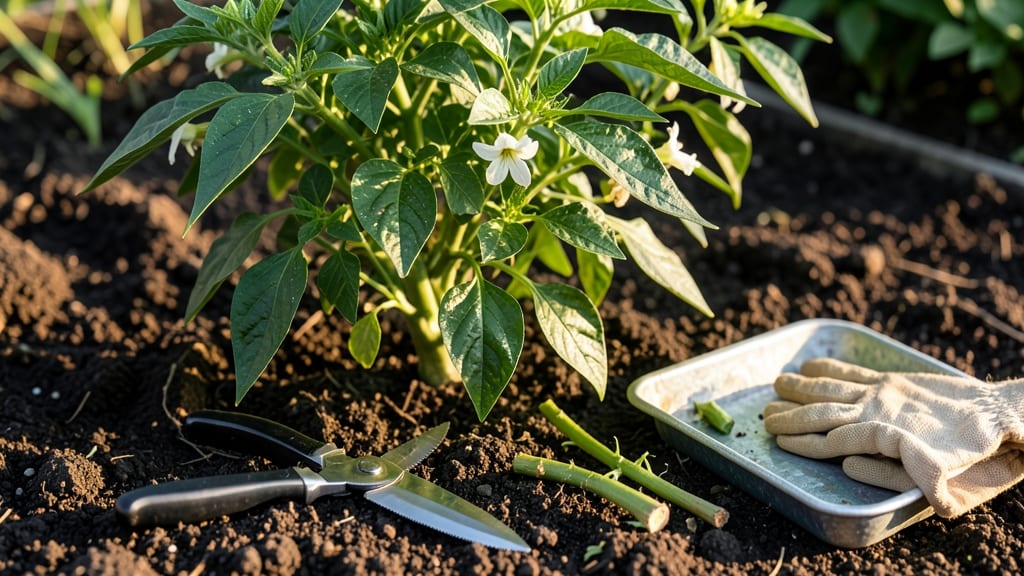
Pruning jalapeño pepper plants isn't just about shaping—it's about unlocking bigger harvests and healthier growth all season long. 🌱 I used to think pruning was optional, but after my first pruned plant produced three times more peppers than its unpruned neighbor, I became a convert.
The key is timing, technique, and knowing exactly where to cut.
You only need three tools: sharp pruning shears, a small hand saw for thicker stems, and rubbing alcohol to sterilize between cuts. Start when plants are 6-8 inches tall and continue every 2-3 weeks through summer.
The goal is to encourage bushiness by removing suckers (those little shoots in the leaf junctions) and trimming back leggy growth to redirect energy toward fruit production.
What you'll end up with is a compact, productive plant that resists disease and bears fruit continuously instead of all at once. The first harvest after pruning is always sweeter, and the plants keep producing well into fall.
Even my black thumb can't mess this up once you get the hang of it.
Works for container gardens, raised beds, or in-ground plantings—just adjust your pruning frequency based on how fast your plants grow. Here's how to do it without overdoing it or stunting your peppers.
📚 In This Guide
- What you need
- Instructions
- Tips and common mistakes
- Wrapping up and next steps
What you need
- ● Pruning shears or scissors: Sharp, sterilized bypass pruners (avoid anvil-style to prevent crushing stems). Size: 5-7 inches for precision.
- ● Gloves: Heavy-duty gardening gloves (nitrile-coated for grip and protection from thorns/spicy oils). Tip: Wear them—jalapenos can irritate skin!
- ● Disinfectant: 70% isopropyl alcohol or a 10% bleach solution (1 part bleach to 9 parts water) to sterilize tools between cuts.
- ● Rubbing alcohol or hydrogen peroxide: For cleaning hands after handling plants (jalapeno oils can cause skin irritation).
- ● Gardening twine or clips: Soft ties (1/8-inch wide) to support pruned branches if needed.
- ● Garden journal: To track pruning dates, plant growth, and harvest notes.
- ● Plant food: Balanced fertilizer (10-10-10 or organic options like compost tea) to replenish nutrients after pruning.
- ● Mulch: Straw or shredded leaves to protect soil and retain moisture post-pruning.
- ● Spray bottle with water: For rinsing off hands or tools quickly.
Step-by-Step guide to pruning jalapeno pepper plants
Here’s the method I’ve used for years to coax bigger yields and healthier plants—no guesswork, just science-backed cuts.
✂️ Step 1: Identify and Remove Suckers for Stronger Growth
Jalapenos grow suckers—those little shoots that form in the crotch between the main stem and branches. These compete for energy with your fruit. Use clean, sharp pruning shears to snip them off at the base, about ¼ inch above the leaf node. I do this every 2-3 weeks during the growing season, which forces the plant to channel energy into existing branches and fruit rather than new growth.
Watch for suckers that appear near the base of the plant—they’re the sneakiest. If you miss them, they’ll grow into thick, woody stems that steal nutrients from your peppers. Always sterilize your shears with rubbing alcohol between cuts to prevent disease spread. You’ll know you’re doing it right when the plant looks fuller and puts more energy into fruit development.
☀️ Step 2: Prune Lower Leaves to Improve Airflow and Sunlight
Remove the lowest set of leaves—those touching the soil or within 6 inches of the ground. This prevents soil-borne diseases like damping-off and improves airflow around the plant. Use your fingers to gently twist leaves off rather than cutting them, which reduces stress on the plant. I start this process when the plant reaches about 12 inches tall and continue every 4-6 weeks afterward.
Don’t go overboard—leave enough foliage to shade developing peppers from direct sun, which can scorch them. You’ll notice a difference in fruit quality within a few weeks: peppers will ripen more evenly, and the plant will look healthier overall. If you see yellowing leaves, that’s your cue to prune sooner rather than later.
🌿 Step 3: Trim Overly Long Branches to Encourage Bushier Structure
If any branches grow longer than 18 inches, pinch back the tips just above a leaf node where two leaves meet. This triggers the plant to branch out rather than grow tall and leggy. I focus on the main stem first, then work my way to secondary branches. Avoid cutting into the main stem itself—this can stunt the plant’s growth.
You’ll see new side shoots emerge within 1-2 weeks, creating a bushier plant with more spots for fruit to develop. This is especially important in containers, where space is limited. If you’re growing in a greenhouse or indoors, prune more aggressively to compensate for reduced airflow. Always prune in the morning so wounds have time to heal before evening moisture sets in.
⏰ Step 4: Post-Harvest Pruning to Stimulate New Fruit
After harvesting peppers, look for any spent flower clusters still attached to the plant. Snip them off just above the next leaf node. This signals the plant to produce new flowers and fruit rather than wasting energy on maintaining old growth. I do this every time I harvest, which keeps the plant productive throughout the season.
Pay attention to the plant’s overall shape—if it looks top-heavy or lopsided, prune accordingly to balance it out. You’ll know you’re on the right track when the plant keeps producing new blooms and peppers consistently. Avoid pruning too late in the season, as new growth won’t have time to mature before frost.
Tips & tricks for pruning jalapeno pepper plants
These science-backed tricks will transform your jalapeno plants into productive powerhouses—no more wasted energy on unwanted growth.
Timing is Everything: The 2-3 week interval for removing suckers (Step 1) works best when done in the morning. This gives wounds time to heal before evening moisture sets in, reducing disease risk. I've seen plants recover faster when pruned early—just after dew has dried but before the heat of midday. If you miss a sucker cycle, don't panic; just catch up at the next scheduled pruning.
Visual Cues for Perfect Pruning: In Step 3, when trimming branches longer than 18 inches, look for the "V" shape where two leaves meet—that's your perfect cutting point. The new growth will emerge from that leaf node, creating a bushier structure. I always check for this "V" shape before making cuts, and it's made all the difference in my container-grown plants where space is limited.
Disease Prevention: After every pruning session (especially Steps 1 and 2), I dip my shears in rubbing alcohol and wipe them with a clean paper towel. This simple step prevents the spread of bacterial spot and other diseases that can devastate your harvest. For extra protection, I also sprinkle a light layer of cinnamon powder on fresh cuts—it acts as a natural antifungal barrier.
Seasonal Adjustments: In cooler climates, extend your pruning intervals to every 4-6 weeks (Step 2) since growth slows down. The key is to always prune when you see new suckers forming or when branches exceed 18 inches—never on a rigid schedule. I've learned this the hard way after pruning too aggressively in fall and stunting new growth before winter.
Pro Tips for Prune Jalapeno Pepper Plants
- These science-backed tricks will transform your jalapeno plants into productive powerhouses—no more wasted energy on unwanted growth.
- Timing is Everything: The 2-3 week interval for removing suckers (Step 1) works best when done in the morning.
- Visual Cues for Perfect Pruning: In Step 3, when trimming branches longer than 18 inches, look for the "V" shape where two leaves meet—that's your perfect cutting point.
Frequently asked questions
Got questions about pruning your jalapeno plants? You’re not alone! Here are the most common concerns—and straightforward answers—to help you grow like a pro.
When is the best time to prune jalapeno plants?
Prune jalapenos throughout the growing season, but focus on early morning when plants are hydrated. Start when plants are 12–18 inches tall, then repeat every 2–4 weeks. Avoid pruning during heatwaves or rain—wait for cool, dry days to minimize stress.
Do I need special tools to prune jalapenos?
Nope! Use clean, sharp pruning shears or scissors for larger stems, and your fingers for smaller branches. Disinfect tools with rubbing alcohol between plants to prevent disease. A sharp knife works in a pinch, but avoid tearing stems—it slows healing.
Will pruning jalapenos reduce my harvest?
Not at all! Pruning increases yields by directing energy to fruit production. Focus on removing suckers (side shoots) and overcrowded leaves—this improves airflow, reduces pests, and lets sunlight reach peppers. Think of it as giving your plant a spa day!
Can I prune jalapenos in winter or cold climates?
If you’re growing indoors or in mild winters, light pruning is fine to maintain shape. Outdoors? Wait until spring (after last frost) to prune. Cold-stressed plants heal slower—focus on removing dead/damaged growth first. Overwintering plants? Prune minimally to avoid shock.
What should I do if my jalapeno plant looks sad after pruning?
Don’t panic! Yellowing leaves or wilting can mean over-pruning or stress. Give your plant extra water and a balanced fertilizer (like 10-10-10) to recover. Avoid pruning more than 1/3 of the plant at once, and stop if you see blackened stems (sign of disease).
Still stumped? Drop your question in the comments—we’ve got you covered!
Wrapping up and next steps
Pruning your jalapeño pepper plants isn’t just about keeping them tidy—it’s your secret weapon for bushier growth, more peppers, and healthier vines! 🌱 With the right tools, timing, and techniques, you’ll transform those leggy plants into powerhouses of productivity.
Whether you’re a seasoned gardener or a first-timer, every snip brings you closer to a bountiful harvest.
Now that you’re armed with the know-how, roll up your sleeves and get pruning! Start small, observe your plants’ response, and soon you’ll be the proud grower of the spiciest, most abundant jalapeños in the neighborhood. Ready to dive deeper? Check out our step-by-step guide to transplanting for even more growing tips!