
Pruning
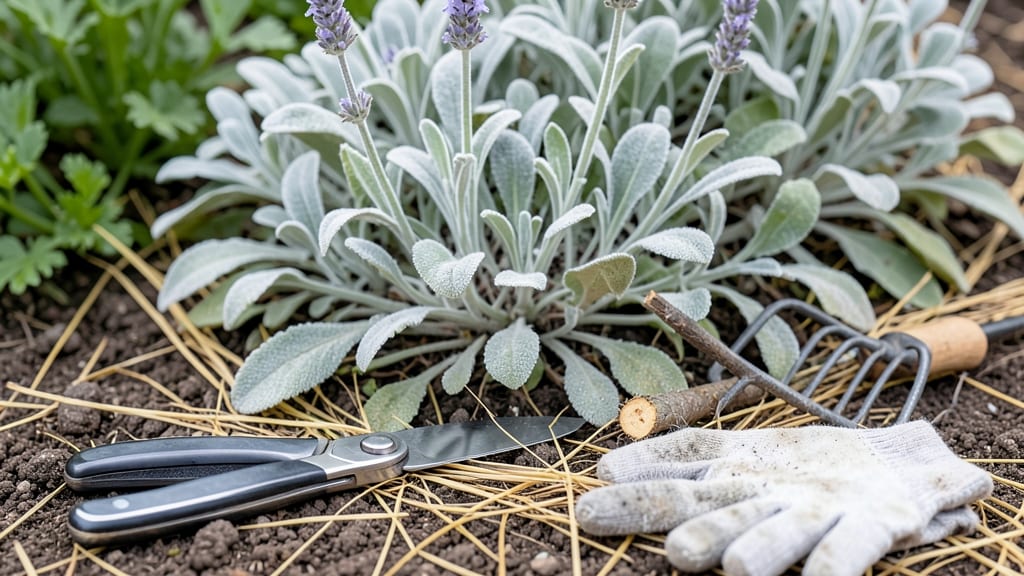
Pruning lamb’s ear for winter isn’t just about tidying up—it’s the secret to keeping those velvety leaves lusher and healthier all season. ✂️ I’ve learned that cutting back at the right time (after the first frost) prevents disease and gives your plant a fresh start in spring.
The key is timing, tools, and a few simple techniques that make all the difference.
You’ll need sharp pruners, gloves (those fuzzy leaves can be itchy!), and a clear day when the plant’s dormant. Start by removing any dead or yellowed leaves—this is your chance to clear out last year’s mess before it turns into a problem.
Then, trim back the stems by about one-third, cutting just above a set of healthy leaves or buds to encourage new growth.
After pruning, your lamb’s ear will look almost bare, but don’t worry—this is normal. The real magic happens in spring when fresh, silvery-green foliage shoots up faster and fuller than ever. A light layer of mulch afterward helps protect the roots from winter’s chill and keeps weeds at bay.
Here’s the trick I’ve perfected: avoid pruning too early in fall, or you’ll encourage tender new growth that won’t survive frost. And never skip the sharp tools—dull blades tear stems, leaving wounds that invite disease.
With this method, your lamb’s ear will bounce back stronger every year, ready to wow neighbors with its buttery-soft texture come spring.
📚 In This Guide
- What you need
- Instructions
- Tips and common mistakes
- Wrapping up and next steps
What you need
- ● Pruning shears: Bypass pruners (sharp, clean, and sterilized with rubbing alcohol or a 10% bleach solution). Quantity: 1 pair.
- ● Gloves: Garden gloves (nitrile or leather) to protect hands from prickly stems and potential skin irritation. Quantity: 1 pair.
- ○ Pruning saw (optional but helpful): For thicker stems (over ½ inch). Quantity: 1 (if needed).
- ● Garden twine or plant ties: To secure large clumps if needed. Quantity: Small roll.
- ● Compost bin or bag: For collecting pruned foliage. Quantity: As needed.
- ● Disinfectant spray: (e.g., hydrogen peroxide or copper fungicide) to prevent disease spread between cuts. Quantity: Small bottle.
- ● Plant-based fertilizer: (e.g., balanced 10-10-10) to replenish nutrients post-pruning. Quantity: As directed.
- ● Mulch: (e.g., straw or shredded bark) to insulate roots in colder climates. Quantity: 2–3 inches.
- ● Knee pad or stool: For comfort during longer pruning sessions.
Step-by-step guide to pruning lamb's ear for winter
Keep your lamb's ear looking lush and healthy through winter with these simple pruning steps.
✂️ Step 1: Assess and Remove Dead or Diseased Foliage
Start by inspecting your lamb's ear plants for any leaves that have turned brown, yellowed, or appear mushy. These are clear signs of dead or diseased foliage that should be removed immediately. Grab your pruning shears and snip just above the base of the affected leaves, making clean cuts to avoid tearing the plant.
I like to do this in the late afternoon when the plant is less active, which helps minimize stress. If you find any stems that look hollow or blackened, cut those back completely—they won’t recover and could spread disease. Don’t worry about being too aggressive here; lamb's ear is tough and will bounce back quickly.
✂️ Step 2: Thin Out Crowded Growth for Better Airflow
Next, focus on the overall shape of your lamb's ear. If the plant looks too dense, gently pull out or trim back any stems that are growing too close together. Lamb's ear thrives when it has good airflow, which helps prevent fungal issues like powdery mildew—a common problem in winter.
Look for stems that are rubbing against each other or growing in awkward directions. Snip them back to about 2-3 inches from the base. This not only improves airflow but also encourages new, fresh growth in the spring. You’ll notice the plant will look fuller and more vibrant after this step.
✂️ Step 3: Cut Back Leggy or Overgrown Stems
If your lamb's ear has grown leggy—those long, sparse stems reaching outward—it’s time to give it a little trim. Leggy growth often happens when the plant isn’t getting enough light, but you can still fix it before winter sets in. Use your pruning shears to cut back these stems by about one-third of their length.
This might seem drastic, but lamb's ear is incredibly resilient. Cutting back leggy stems encourages the plant to produce shorter, bushier growth, which is more compact and easier to maintain. Plus, it helps the plant store energy more efficiently over the winter months.
🪴 Step 4: Lightly Shape the Plant for Winter Dormancy
Now it’s time to give your lamb's ear a final shape-up to prepare it for winter. Use your pruning shears to trim any stems that are growing in directions you don’t like—maybe some that are flopping over or growing too tall. Aim to create a neat, rounded shape that allows light and air to reach all parts of the plant.
This step is more about aesthetics than survival, but a well-shaped lamb's ear will look tidy and inviting even in the colder months. Avoid cutting back more than 25-30% of the plant at once, as this can stress it unnecessarily. Once you’re done, give the plant a light watering to help it recover from the pruning.
⏰ Step 5: Mulch and Protect for Winter
After pruning, the final step is to protect your lamb's ear from the cold. Spread a 2-3 inch layer of mulch around the base of the plant, leaving a small gap around the stem to prevent rot. I like to use shredded bark or straw, as these materials break down slowly and provide insulation.
This mulch layer helps regulate soil temperature, keeping roots warm in winter and cool in summer. It also retains moisture, which is crucial if winter brings little rain. Once you’ve mulched, give the plant one last check to ensure no leaves are touching the ground—this can lead to rot or fungal issues.
Tips & tricks for pruning lamb's ear for winter
Here's what nobody tells you about keeping your lamb's ear thriving through the coldest months.
The Timing Factor: Late afternoon is your best time to prune—between 3 PM and 5 PM. This gives the plant several hours of daylight to recover before nightfall, reducing stress. I've found that pruning in the morning can leave plants more vulnerable to afternoon heat stress, especially if temperatures rise unexpectedly.
Tool Selection: Use clean, sharp pruning shears every time. Dull blades crush stems instead of making clean cuts, which can invite disease. I keep a small bottle of rubbing alcohol handy to wipe down my shears between cuts—this prevents cross-contamination of any potential pathogens from diseased foliage.
Visual Cues for Pruning: Look for these three signs when assessing foliage: first, the velvety texture should be uniform—any leaves that feel rough or papery are candidates for removal. Second, check for color variations—healthy lamb's ear should be a consistent silver-gray, not spotted or discolored. Finally, gently press a leaf—if it doesn't spring back immediately, it's past its prime.
Mulch Depth Matters: That 2-3 inch layer of mulch isn't just a suggestion—it's crucial for winter survival. Too little (under 2 inches) won't provide enough insulation, while too much (over 3 inches) can suffocate the roots. I've seen lamb's ear plants thrive with shredded cedar mulch, which adds that extra benefit of natural pest deterrence.
Pro Tips for Prune Lambs Ear For Winter
- Here's what nobody tells you about keeping your lamb's ear thriving through the coldest months.
- The Timing Factor: Late afternoon is your best time to prune—between 3 PM and 5 PM.
- Tool Selection: Use clean, sharp pruning shears every time.
Frequently asked questions
about pruning Lamb’s Ear for winter—because even the fluffiest plants need a little TLC! Here are answers to the most common queries to keep your fuzzy friends thriving.When is the exact best time to prune Lamb’s Ear for winter?
Prune Lamb’s Ear after the first hard frost (typically late fall to early winter) when the plant has gone dormant. This prevents new growth from sprouting, which could get damaged by cold. A light trim in early spring (before new shoots appear) helps too—just avoid cutting back too aggressively, as the plant stores energy in its roots!
Should I cut Lamb’s Ear back to the ground in winter?
Nope! Over-pruning can stress the plant. Instead, trim back only dead or yellowed leaves—about 1/3 of the plant’s height. Lamb’s Ear stores nutrients in its basal rosette (the fuzzy center), so leaving some foliage protects it from winter dieback. Think of it like tucking the plant in with a cozy blanket!
Can I use hedge clippers or should I hand-prune Lamb’s Ear?
For neat, precise cuts, hand pruners or sharp shears work best—especially for smaller plants or detailed shaping. Hedge clippers can work for larger patches, but they might crush the fuzzy leaves. Always cut at a 45-degree angle just above a leaf node to encourage healthy regrowth.
What if my Lamb’s Ear looks ragged after winter? Can I fix it?
Don’t worry—Lamb’s Ear is resilient! If it looks scruffy in spring, give it a light haircut to tidy up. Focus on removing brown, crispy edges or leggy stems. Fertilize lightly with a balanced 10-10-10 mix to encourage fresh, velvety growth. Over time, your plant will bounce back like a fuzzy champion!
Is there a way to prune Lamb’s Ear without sacrificing next year’s blooms?
Lamb’s Ear blooms on new growth, so avoid heavy pruning in late summer or fall. Instead, prune strategically in early spring to shape the plant before it sends up flower stalks. If you do cut back, leave at least 2-3 healthy leaves per stem to fuel next year’s blooms.
Wrapping up and next steps
Pruning your Stachys byzantina (lamb’s ear) for winter isn’t just about tidying up—it’s your secret to velvety, lush foliage year-round! By following these steps, you’ll encourage healthy regrowth, prevent disease, and keep your plant thriving even in colder months. 🌿
Now that you’re armed with the know-how, grab those shears and give your lamb’s ear the TLC it deserves. Next up: Share your pruned plant’s progress with fellow gardeners or experiment with propagation—those fuzzy cuttings make great gifts! Happy gardening! ✨