
Pruning
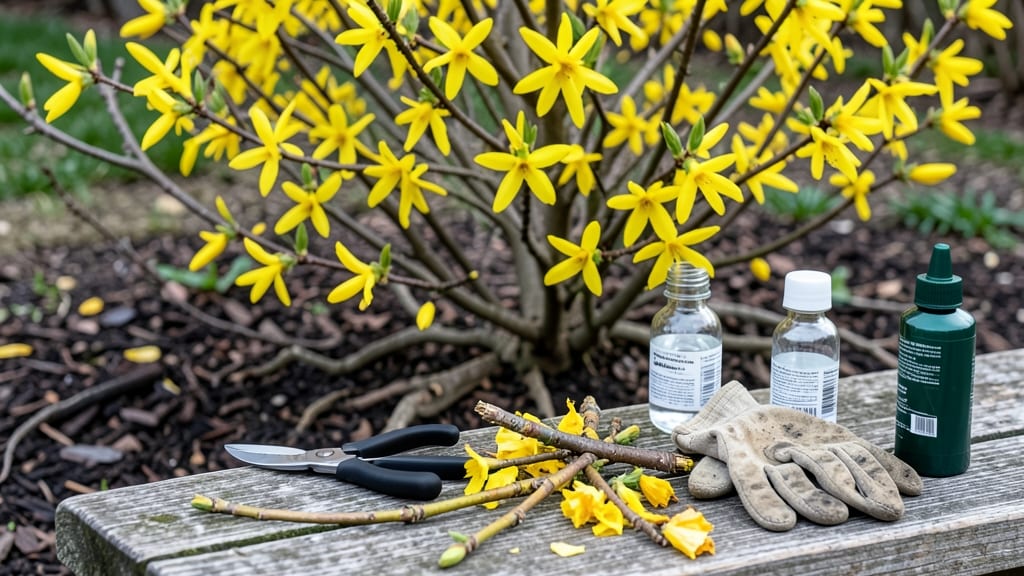
Your forsythia’s golden blooms could be back in full force by next spring. ✨ Pruning an overgrown forsythia isn’t just about trimming—it’s about reviving its energy and encouraging those vibrant yellow flowers to return year after year.
The key is knowing when and how to cut, because timing and technique make all the difference between a bushy, blooming beauty and a sad, leggy shadow of its former self.
First, grab your pruners and gloves—you’ll need sharp bypass pruners for clean cuts and a pair of loppers if the branches are thick.
The best time to prune is right after the flowers fade, usually in late spring or early summer, so the plant has time to recover before winter. Avoid cutting back too late in the season, or you risk stunted growth for next year’s blooms.
I’ve learned the hard way that patience pays off: a little waiting means a lot more flowers.
Start by removing any dead, diseased, or crossing branches—these take up energy the plant could use for blooms. Then, cut back up to one-third of the oldest wood to encourage new growth and a fuller shape.
The goal is to open up the center so sunlight reaches all parts of the bush, which is where those bright yellow clusters love to grow. After pruning, your forsythia should look like it’s breathing again, with room to grow strong and healthy for next spring.
Here’s the secret: prune lightly each year instead of doing a drastic overhaul. A little maintenance keeps the plant thriving, and you’ll see more blooms with less effort.
If you’ve let your forsythia get really wild, don’t worry—just take it step by step, and you’ll have a bush that’s both beautiful and full of life again. Ready to get started?
📚 In This Guide
- What you need
- Instructions
- Tips and common mistakes
- Wrapping up and next steps
What you need
- ● Pruning shears or loppers – Choose bypass pruners (for clean cuts) or loppers with 6–8" handles for thicker branches. Sharpness is key!
- ● Hand pruners – For smaller stems (½" or less in diameter). Bypass-style is ideal to avoid crushing.
- ● Gloves – Leather or heavy-duty work gloves to protect against thorns and scrapes.
- ● Pruning saw – Only if branches exceed 1–2 inches in diameter (a bow saw or folding pruning saw works best).
- ● Ladder or step stool – If your forsythia is 6+ feet tall (ensure it’s stable and rated for your weight).
- ○ Disinfectant (optional but recommended) – 70% isopropyl alcohol or a pruning sealant to prevent disease spread between cuts.
- ● Heavy-duty trash bags or bucket – For collecting pruned branches (aim for 10–20 gallons capacity).
- ○ Sharpie or permanent marker – To label branches if you’re grafting or layering (optional for advanced pruning).
- ● Safety glasses – Protects eyes from debris, especially when using a saw.
- ● Knee pads – For comfort if you’re working on the ground.
- ● Extension pole pruners – For high branches without a ladder (8–12 feet reach).
- ● Hose with nozzle – To clean tools post-pruning and rinse off sap.
- ● Pruning guide or ruler – Helps measure branch thickness for precise cuts.
Instructions for pruning overgrown forsythia
Here's how I revive even the most tangled forsythia—blooms return stronger than ever.
✂️ Step 1: Gather Tools and Assess the Shrub
Start with clean, sharp bypass pruners for small branches and a pruning saw for anything thicker than ½ inch. I always disinfect my tools with rubbing alcohol first—this prevents spreading disease between cuts. Grab some gloves too; forsythia thorns are no joke.
Step back and scan the shrub. Look for dead or crossing branches—these are your first targets. You'll also spot old wood (more than 3 years) that no longer blooms well. Forsythia blooms on last year's growth, so we're removing what won't contribute to next spring's show.
✂️ Step 2: Remove Dead and Problem Branches First
Cut out any dead, diseased, or broken branches completely down to the base. These branches won't bloom and can harbor pests. Make your cuts at a 45-degree angle just outside the branch collar—the raised area where the branch meets the trunk—to promote faster healing.
Next, tackle crossing branches. Where two branches rub together, one must go—choose the healthier, more vigorous branch to keep. Remove the other entirely. This opens up the center of the shrub, letting light and air circulate. You'll see new growth fill in those gaps within weeks.
✂️ Step 3: Thin and Shape for Next Year's Blooms
Now focus on thinning the shrub to one-third of its current size. Start at the bottom and work upward, cutting back branches to just above a healthy bud facing outward. This ensures next year's blooms will be visible from the ground up. Avoid cutting flush with the trunk—leave ¼ inch of stub to prevent dieback.
Shape the shrub into a natural, open form. Aim for an airy, rounded silhouette that lets sunlight reach the center. You'll know you've done it right when you can see light filtering through the branches. Water deeply after pruning to help the shrub recover—it'll reward you with vibrant blooms next spring.
✂️ Step 4: Clean Up and Monitor Recovery
Rake up all the debris and dispose of it in the trash—not the compost—since diseased branches could spread pathogens. Give the shrub a final drink of water to settle the roots. Over the next few weeks, you'll see fresh green growth emerging from the pruned areas.
Here's the thing—forsythia responds fast. By late summer, you'll notice new stems forming along the cuts. These will carry next year's flowers. Avoid heavy pruning again for at least a year to let the shrub rebuild its energy stores. With this method, even the most overgrown forsythia comes back stronger than ever.
Tips & tricks for pruning overgrown forsythia
Even the most tangled forsythia can be transformed—here's how to avoid common mistakes and ensure those spring blooms come back bigger and brighter.
Tool Prep: Don't skip disinfecting your tools! I learned this the hard way after pruning a healthy shrub that later developed mildew. Rubbing alcohol on your bypass pruners and pruning saw kills bacteria and fungi between cuts. For stubborn thorns, I've found heavy-duty gardening gloves with extra padding save my hands from painful pricks—trust me, you'll thank me later.
Branch Selection: When choosing which crossing branches to remove, look for the one with smoother bark and more vibrant green leaves—the healthier branch always wins. I've made the mistake of keeping the thicker branch only to discover it was actually the weaker one. Always cut the one that's rubbing against its neighbor, even if it looks slightly less robust. This opens up the center beautifully for airflow.
Bud Identification: That ¼-inch stub you leave when cutting back branches isn't just random—it should be just above a healthy outward-facing bud. These buds are the future blooms! If you can't find a bud, cut back to the nearest lateral branch. I mark my cuts with a small piece of masking tape before making the final snip to ensure I'm in the right spot. This simple trick prevents accidental over-pruning.
Recovery Care: After pruning, don't just walk away—give your forsythia a deep drink of water right after finishing. The roots need hydration to recover from the shock of losing so many branches. I've seen shrubs wilt dramatically after pruning only to bounce back perfectly when given this extra care. Over the next few weeks, watch for new growth emerging from the cuts—this is your sign that the pruning worked!
Pro Tips for Prune Overgrown Forsythia
- Even the most tangled forsythia can be transformed—here's how to avoid common mistakes and ensure those spring blooms come back bigger and brighter.
- Tool Prep: Don't skip disinfecting your tools!
- Branch Selection: When choosing which crossing branches to remove, look for the one with smoother bark and more vibrant green leaves—the healthier branch always wins.
Frequently asked questions
Got questions about pruning your overgrown forsythia? Here are some of the most common concerns—and their answers—to help you tackle the job with confidence!
When is the best time to prune forsythia?
The ideal time is right after it finishes blooming in late spring (May–June). This ensures you don’t cut off next year’s flowers, which form on old wood. If you miss this window, wait until late summer or early fall—just avoid pruning in winter, as it’s dormant and more vulnerable to damage.
How much can I cut back my forsythia?
You can safely prune up to ⅓ of the plant’s height without harming it. For severely overgrown bushes, cut back old, leggy stems to just 6–12 inches above the ground. Younger stems can be trimmed to 12–18 inches to encourage bushier growth. Avoid over-pruning—forsythia is resilient but not indestructible!
What if my forsythia doesn’t bloom after pruning?
If your forsythia skips blooming, it’s likely because you pruned too late (after June) or cut back all the old wood. Next spring, focus on selective pruning: trim only the oldest, thickest stems (3–4 years old) to 12 inches tall, leaving younger stems intact. Patience helps—it may take a year or two to rebound!
Can I prune forsythia in fall or winter?
While you can prune in fall or winter, it’s not ideal. Forsythia blooms on old wood, so late pruning risks removing next year’s flower buds. If you must prune in these seasons, do a light trim to shape the bush, but avoid heavy cuts. Spring is always the best choice!
What’s the difference between pruning forsythia and other shrubs?
Unlike many shrubs that bloom on new wood (like hydrangeas), forsythia blooms on last year’s growthmust prune after flowering—never in early spring. Also, forsythia handles hard pruning better than delicate shrubs, so don’t fear aggressive cuts (within reason!).
What if my forsythia looks dead after pruning?
Don’t panic! Forsythia can look shocked after heavy pruning, but it often rebounds quickly. Water deeply after pruning, and avoid fertilizing until new growth appears (usually in 2–4 weeks). If no new buds form by late spring, check for disease or pests—or test a small branch for moisture to confirm it’s alive.
Wrapping up and next steps
Pruning overgrown forsythia might seem daunting, but with the right tools and technique, you can restore its vibrancy and encourage stunning spring blooms! 🌸 Remember, timing, precision, and patience are key—your efforts will pay off in a burst of cheerful yellow flowers next season.
Ready to transform your forsythia? Start by marking your calendar for late winter or early spring—just before new growth emerges—and tackle one section at a time. Before you know it, your shrub will be thriving, and you’ll be the proud gardener behind a showstopping spring display!