
Pruning
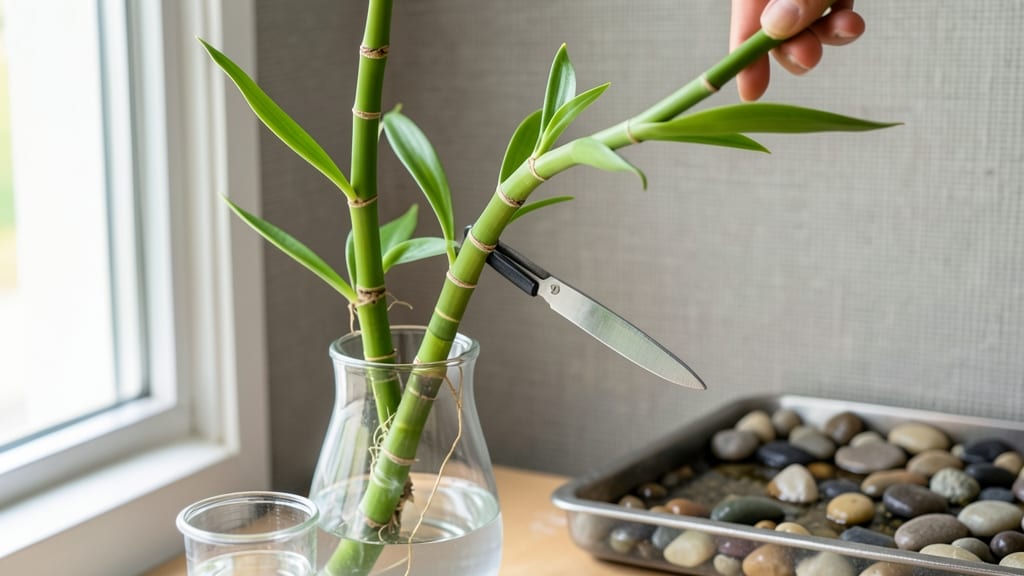
Pruning bamboo plants keeps them from turning your yard into a jungle. 🌿 I learned the hard way when my running bamboo spread into my neighbor's lawn—until I mastered the right timing and cuts.
The key is understanding whether you're dealing with clumping or running types, because each needs a different approach to stay contained.
Start with the right tools: sharp pruners for clean cuts, gloves for those razor-sharp edges, and a sturdy saw for thick stalks. Late winter or early spring is prime time to prune before new growth begins.
For running bamboo, dig up and remove rhizomes at the edges to prevent spreading, while clumping types just need occasional thinning to open up air circulation. The goal is to shape without stressing the plant.
After pruning, you'll notice fresh green shoots emerging within weeks, and the plant will put energy into thicker, healthier growth instead of wild spreading. Just avoid cutting into old wood—always prune at a 45-degree angle just above a node.
The results? A well-behaved bamboo that stays where you want it and thrives year after year.
This method works for both ornamental and edible bamboo varieties, whether you're growing it as a screen, privacy hedge, or even in containers. The secret is consistency—just 10 minutes of maintenance every few months keeps it under control. Let's get those shears ready!
📚 In This Guide
- What you need
- Instructions
- Tips and common mistakes
- Wrapping up and next steps
What you need
- ● Sharp bypass pruners – Choose high-quality, bypass-style pruners (e.g., Felco or Fiskars) for clean cuts. 1 pair is all you need.
- ● Loppers – For thicker stems (½ inch or larger). Opt for anvil-style loppers with a 6–8-inch blade. 1 pair recommended.
- ● Pruning saw – For extremely thick bamboo (1+ inch). A curved-tooth saw prevents tear-out. 1 unit if needed.
- ● Gloves – Heavy-duty gardening gloves (e.g., Mechanix or leather) to protect against sharp edges and sap. 1 pair.
- ● Disinfectant (70% isopropyl alcohol or bleach solution) – 1 small bottle to sterilize tools between cuts and prevent disease spread.
- ○ Pruning sealant (optional but helpful) – Wound dressing (e.g., Tree Seal Tape) for large cuts to reduce sap leakage. 1 roll.
- ● Safety glasses – Protect your eyes from debris. 1 pair.
- ● Long sleeves/pants – Bamboo sap can irritate skin. Wear protective clothing.
- ● Trash bags or compost bin – For pruned debris. 2–3 large bags (or direct access to compost).
- ● Ladder or step stool – For tall bamboo (6+ feet). Ensure it’s stable and rated for your weight.
- ● Choose the right season – Prune dormant bamboo in late winter/early spring (before new growth) or after flowering (if applicable).
- ● Check local regulations – Some areas restrict invasive bamboo species (e.g., Phyllostachys). Verify before pruning.
- ● Assess the plant’s health – Remove only dead, diseased, or crossing stems unless doing a structural shape-up.
Step-by-step guide to pruning bamboo plants
Here's how I keep bamboo lush, contained, and healthy year after year.
✂️ Step 1: Identify the Right Time for Pruning
Late winter or early spring—just as new shoots begin to emerge—is the ideal time to prune bamboo. This timing ensures you remove old growth before the plant focuses its energy on new shoots. Look for dormant canes (they’ll appear brown and dry) versus green, plump buds that signal new growth. Avoid pruning in fall or summer; cutting back then stresses the plant and invites disease.
If you're pruning to control spread, do it in late winter when the plant is still dormant but before the first flush of new shoots. For flowering bamboo (which is rare), prune immediately after blooming to redirect energy back to growth. I always mark my calendar for February or March—just as the days start lengthening.
✂️ Step 2: Remove Dead or Damaged Canes
Start by cutting out any dead, broken, or diseased canes at the base with clean, sharp pruners. Dead canes are hollow, brittle, and won’t snap when bent. Diseased canes often have black spots, mold, or oozing sap. Cut 1-2 inches below the damage to ensure you remove all infected tissue. Sterilize your pruners between cuts with rubbing alcohol to prevent spreading pathogens.
I like to bundle the removed canes and dispose of them in the trash—not the compost—since diseased material can contaminate compost piles. If you’re unsure whether a cane is dead, scratch the outer layer with your fingernail. No green underneath? It’s dead and ready to go.
✂️ Step 3: Thin Out Crowded Canes for Airflow
Bamboo thrives with good airflow, so thin out canes that are growing too close together. Aim to leave 3-5 inches of space between canes for clumping varieties, or 6-12 inches for running bamboo. Start at the outer edges and work inward, removing the thinnest or weakest canes first. These are often the ones growing toward the center or leaning awkwardly.
Use your pruners to cut at a 45-degree angle just above a node (the bump where leaves attach). This encourages healthier regrowth. If you’re pruning running bamboo, focus on removing canes that are spreading beyond your desired boundary. I always step back and visually check the shape—it’s easier to see what to remove from a distance.
✂️ Step 4: Trim Back Overgrowth to Control Spread
For running bamboo, dig up and remove any rhizomes (underground stems) that have spread beyond your containment barrier. Use a spade to expose them, then pull them out completely—even small fragments can regrow. For clumping bamboo, you can simply cut back canes that are growing too tall or leggy. Aim to trim back to 1/3 of the plant’s height to maintain balance.
If you’re pruning for height control, focus on the tallest canes first. Cut just above a leaf node to encourage bushier growth. Avoid cutting back more than 1/3 of the plant’s height in one season—this can shock the bamboo and reduce flowering (if it’s a flowering variety). I usually do a little pruning every 2-3 years to keep the plant in check without overstressing it.
⏰ Step 5: Post-Pruning Care for Healthy Regrowth
After pruning, water the bamboo deeply to help it recover. The soil should be moist to a depth of 6-8 inches. Avoid fertilizing immediately—wait 4-6 weeks to give the plant time to establish new growth. If you notice yellowing leaves after pruning, it’s usually a sign of stress, but new shoots should emerge within 2-3 weeks if conditions are right.
Keep an eye out for new shoots emerging from the base—these are a good sign the plant is recovering. If you’ve pruned heavily, you might see fewer leaves at first, but the plant will rebound. I always add a 1-inch layer of mulch around the base after pruning to retain moisture and protect the roots. Avoid heavy mulch piles against the stems, as this can trap moisture and cause rot.
Tips & tricks for pruning bamboo plants
Took me years to figure out these tricks—here’s how to keep your bamboo thriving after pruning.
Timing is Everything: Late winter or early spring is non-negotiable for pruning bamboo. I’ve learned the hard way that cutting in summer or fall stresses the plant and invites disease. The key is to prune just as new shoots begin to emerge—look for those green, plump buds signaling fresh growth. For flowering bamboo (rare but possible), prune immediately after blooming to redirect energy back to growth. Mark your calendar for February or March to stay on track.
Tool Prep Matters: Sterilize your pruners between cuts with rubbing alcohol—this prevents spreading pathogens from diseased canes. I also keep a small spray bottle of diluted bleach solution (1 part bleach to 10 parts water) handy for quick disinfection. Sharp tools make cleaner cuts, which heal faster. If you’re dealing with thick canes, a small handsaw can be a game-changer for Step 2.
Visual Cues for Pruning: When thinning crowded canes in Step 3, step back and visually check the shape—it’s easier to see what to remove from a distance. For height control in Step 4, focus on the tallest canes first. Cut just above a leaf node at a 45-degree angle to encourage bushier regrowth. I always count the spaces between canes to ensure I’m leaving 3-5 inches for clumping varieties or 6-12 inches for running bamboo—this keeps airflow optimal.
Post-Pruning Recovery: After pruning, water deeply to moisten the soil to a depth of 6-8 inches. Wait 4-6 weeks before fertilizing to let the plant recover. I’ve noticed that new shoots often emerge within 2-3 weeks if conditions are right. Add a 1-inch layer of mulch around the base to retain moisture, but avoid piling it against the stems—this can trap moisture and cause rot. Yellowing leaves are normal stress signs, but they’ll rebound as new growth takes over.
Pro Tips for Pruning Bamboo Plant
- Took me years to figure out these tricks—here’s how to keep your bamboo thriving after pruning.
- Timing is Everything: Late winter or early spring is non-negotiable for pruning bamboo.
- Tool Prep Matters: Sterilize your pruners between cuts with rubbing alcohol—this prevents spreading pathogens from diseased canes.
Frequently asked questions
Got questions about pruning bamboo? You’re not alone—this fast-growing plant can be tricky! Here are some of the most common concerns and straightforward answers to help you tackle the job like a pro.
When is the best time to prune bamboo?
The ideal time is late winter or early spring, just before new growth begins. This gives your bamboo a fresh start for the season. Avoid pruning in fall or winter, as it can stress the plant before dormancy. Pro tip: If you must prune outside this window, do it on a mild day to minimize shock.
How much of my bamboo can I safely cut back?
You can remove up to one-third of the plant’s height in a single pruning session without causing harm. For clumping bamboo, focus on thinning out dense canes to improve airflow. Running bamboo may need more aggressive cuts to contain its spread—just avoid over-pruning, which can weaken the plant.
What if my bamboo keeps spreading even after pruning?
If your bamboo (especially running types like Phyllostachys) continues to invade, it’s likely spreading via rhizomes. Dig up and remove any stray shoots or install underground barriers (like HDPE root barriers) to block their path. For stubborn cases, consider chemical treatments like triclopyr, but use with caution.
Can I prune bamboo in hot or cold weather?
Avoid pruning during extreme heat or frost. Hot weather stresses the plant, while cold can stunt recovery. Stick to mild temperatures (50–70°F) for the best results. If you must prune in summer, do it in the early morning or late evening to reduce stress.
Are there alternatives to pruning for controlling bamboo?
Yes! For running bamboo, rhizome barriers (buried 2–3 feet deep) are a long-term solution. Clumping bamboo may benefit from regular mowing to keep it tidy. If pruning feels overwhelming, consider container-grown bamboo—it’s easier to manage and won’t spread aggressively.
Still unsure? Drop your specific bamboo type or concern below—we’re happy to help!
Wrapping up and next steps
Pruning bamboo isn’t just about keeping your plants in check—it’s an art that boosts health, encourages lush growth, and saves your landscape from overrun runners. 🌱 Whether you’re tackling running bamboo or clumping varieties, the right timing and technique make all the difference.
With the tools, tips, and seasonal guide you’ve got now, you’re ready to transform your bamboo into a thriving, manageable feature of your garden.
Ready to roll up your sleeves? Start with a single section—maybe that stubborn patch near the fence or the overgrown clump in the corner—and watch your confidence (and your bamboo!) grow. Happy pruning! 🌿✂️