
Pruning
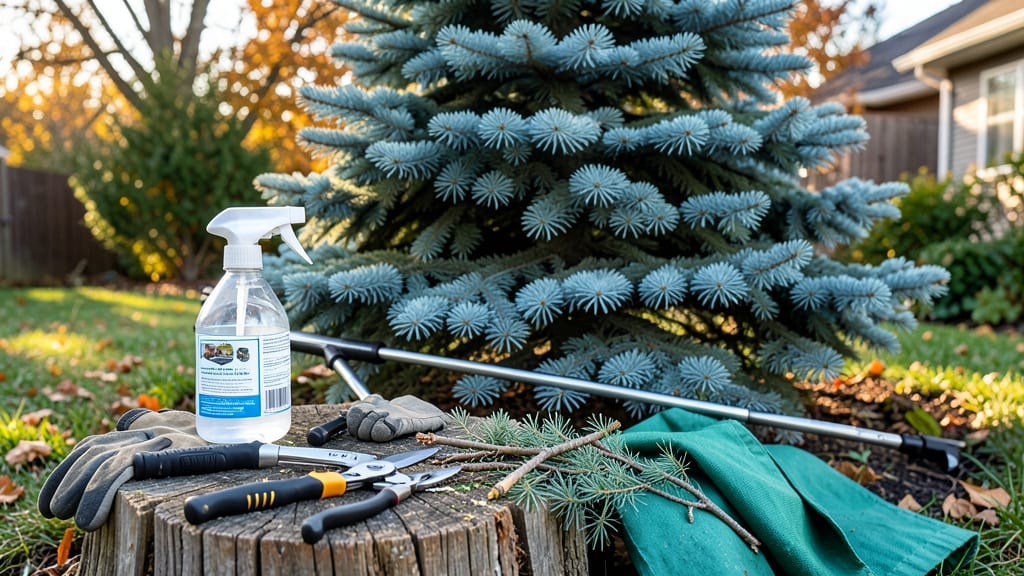
Pruning blue spruce trees keeps them stunningly symmetrical and healthy for decades—if you do it right. ✂️ I’ve watched my 15-year-old tree go from lopsided to a perfect cone shape just by following a few key rules. The secret isn’t cutting wildly; it’s strategic trimming to encourage natural growth patterns.
Timing matters most: prune in late winter or early spring before new growth starts. Use sharp, clean shears to avoid tearing branches, and never remove more than 25% of the foliage at once.
Blue spruces heal slowly, so patience prevents stress. I learned this the hard way after over-pruning and watching my tree struggle for years.
You’ll end up with a tree that stays dense, vibrant, and disease-resistant—no bare spots or weak limbs. The key is light shaping cuts to maintain the natural pyramid shape, focusing on the outer third of the tree. This keeps the interior healthy while giving it that classic, polished look.
Works for both young saplings and mature trees, but adjust your approach based on size. For small trees, a ladder and careful hand-pruning work best; larger ones may need a pole pruner for high branches. Always clean tools with rubbing alcohol between cuts to prevent spreading disease.
📚 In This Guide
- What you need
- Instructions
- Tips and common mistakes
- Wrapping up and next steps
What you need
- ● Pruning shears or lopers – Choose bypass pruners (for small branches, ¼"–¾" thick) or lopers (for branches ¾"–2" thick). Look for sharp, stainless-steel blades to avoid crushing.
- ● Pruning saw – A bow saw or pruning saw (with a curved or straight blade) for branches thicker than 2". Opt for a 7–10" blade for versatility.
- ● Ladder (or extension pole) – A stable, aluminum ladder (8–12 ft tall) or a telehandler for tall trees (20+ ft). Never use a step stool!
- ● Gloves – Heavy-duty, cut-resistant gloves (e.g., Mechanix or leather) to protect hands from sap and sharp branches.
- ● Safety glasses – ANSI-rated goggles to shield eyes from debris and sap.
- ○ Disinfectant (optional but recommended) – 70% isopropyl alcohol or a 10% bleach solution to sterilize tools between cuts (prevents disease spread).
- ● Rope or harness – For very tall trees, use a tree climber’s harness or secure a 3/8" nylon rope around the trunk for stability.
- ● Branch bag or tarp – A heavy-duty mesh bag or canvas tarp to collect debris and make cleanup easier.
- ● Hand saw or pole pruner – For hard-to-reach branches on mature trees.
- ● Pole saw (for large limbs) – A 12–16" pole saw with a curved blade for high branches without a ladder.
- ● Tree wound dressing (controversial but available) – Some gardeners use pruning sealant, though most arborists skip it—blue spruces heal naturally.
Step-by-step guide to pruning blue spruce trees
Here's the method I've used for years to keep blue spruce trees dense, healthy, and stunning year-round.
✂️ Step 1: Time Your Pruning for Optimal Growth
Prune blue spruce trees during their dormant season—late fall or early spring before new growth begins. This timing minimizes stress and prevents disease entry points. I always schedule my cuts in February or March when temperatures stay above 40°F but before buds swell. Avoid pruning in summer—you'll encourage tender new growth that's vulnerable to heat stress or winter dieback.
Watch for the first signs of bud swelling along the branches. When you see these tiny green bumps forming, it's your cue to finish pruning. This ensures you're not cutting back growth that's already committed for the season. If you must prune in summer, do it early in the morning to reduce water loss through fresh cuts.
🌿 Step 2: Assess the Tree's Structure Before Making Cuts
Step back and examine your blue spruce from all angles. Look for dead, crossing, or rubbing branches—these are your first targets. Dead branches will snap when bent; crossing branches create wounds where disease can enter. Use your fingers to gently probe the bark—healthy bark feels firm, while dead wood crumbles easily. Mark these branches with a small piece of twine before you begin cutting.
Next, identify the tree's natural shape. Blue spruce have a conical form, so aim to maintain that silhouette. Remove any branches growing straight upward—they'll never fill in and create gaps. Focus on branches that grow outward at 45-degree angles or less; these will contribute to a fuller appearance. Never remove more than 25% of the tree's foliage in one season—this can shock the tree and reduce its winter hardiness.
✂️ Step 3: Use Proper Tools and Techniques for Clean Cuts
Sharp, clean tools are non-negotiable. Use bypass pruners for branches up to ½ inch thick and a pruning saw for anything thicker. Dull tools crush branches, creating jagged wounds that invite disease. Before you begin, sterilize your tools with a 10% bleach solution or rubbing alcohol to prevent spreading pathogens. I like to wipe down blades between cuts on larger branches to maintain sterility.
Make cuts just outside the branch collar—the swollen area where the branch meets the trunk. The collar contains protective tissues that help the wound heal. Cut at a 45-degree angle if you're removing a branch larger than ¼ inch. For smaller branches, a straight cut is fine. Avoid leaving stubs—these die back and create entry points for pests. If you accidentally leave a stub, make a second cut to remove it entirely.
🌱 Step 4: Shape Gradually and Monitor for Stress Signs
Prune in stages over 2-3 years if your tree needs significant shaping. Removing too much foliage at once stresses the tree and can lead to yellowing needles or stunted growth. After each cut, step back to assess the tree's balance. Focus on the lower branches first—they provide density and help support the tree's structure. Avoid "lollipoping," which is cutting all the lower branches off, as this creates an unstable tree.
Watch for signs of stress in the weeks following pruning. If needles turn yellow or brown, the tree may be reacting to the cuts. This is normal for a few weeks, but if it persists beyond 6-8 weeks, you may have pruned too aggressively. Keep the tree well-watered during the growing season after pruning to help it recover. Mulch around the base with 2-3 inches of organic mulch to retain moisture and regulate soil temperature.
⏰ Step 5: Maintain Year-Round with Seasonal Checks
Perform a quick inspection of your blue spruce twice a year—once in late winter and again in early summer. Remove any new dead branches or broken limbs immediately. Summer is also a good time to lightly trim any branches that have grown too long or out of shape. Use your fingers to gently bend branches—if they snap easily, they're already dead and should be removed.
In late fall, rake up any fallen needles around the base of the tree. While they'll decompose naturally, thick layers can smother the roots and attract pests. This is also the time to check for signs of disease, like needle cast or canker. If you spot any issues, address them immediately with the appropriate treatment. A healthy blue spruce should have vibrant blue-green needles and a strong, upright growth habit—keep pruning consistent, and your tree will reward you with decades of beauty.
Tips & tricks for pruning blue spruce trees
These essential tips will help you maintain your blue spruce's health and beauty without causing unnecessary stress.
Seasonal Timing Matters: The February-March window is ideal because temperatures above 40°F prevent shock while avoiding bud swelling. If you must prune outside this period, summer cuts should happen early morning to minimize water loss through fresh cuts. I've seen trees recover faster when pruned during this optimal window—it's all about working with nature's schedule.
Tool Sterilization is Non-Negotiable: Always sterilize your tools between cuts, especially on larger branches. A 10% bleach solution or rubbing alcohol works perfectly. I learned this the hard way after seeing a tree develop canker disease from unsterilized tools—now I keep a small spray bottle of alcohol handy for quick clean-ups between cuts.
Branch Angle Strategy: Focus on branches growing at 45-degree angles or less to maintain the tree's natural conical shape. Straight-up branches will never fill in properly, creating unsightly gaps. This is where most home gardeners go wrong—they remove too many of these upward-growing branches, thinking they're "thinning out."
Stress Monitoring System: After pruning, watch for needle discoloration that lasts beyond 6-8 weeks. This is your warning sign that you've removed too much foliage. I keep a simple chart to track needle color changes—it's helped me adjust my pruning approach over the years. The key is gradual shaping over 2-3 years rather than aggressive cuts all at once.
Pro Tips for Pruning Blue Spruce Trees
- These essential tips will help you maintain your blue spruce's health and beauty without causing unnecessary stress.
- Seasonal Timing Matters: The February-March window is ideal because temperatures above 40°F prevent shock while avoiding bud swelling.
- Tool Sterilization is Non-Negotiable: Always sterilize your tools between cuts, especially on larger branches.
Frequently asked questions
Got questions about keeping your blue spruce trees looking their best? You’re not alone! Here are answers to the most common concerns—from timing to troubleshooting—so you can prune with confidence.
When is the best time to prune blue spruce trees?
Late winter or early spring (just before new growth starts) is ideal for major pruning. For light shaping or dead branch removal, you can prune anytime except during extreme heat or drought. Avoid heavy pruning in fall—it stresses the tree before winter.
How much can I prune without harming my blue spruce?
Stick to the 10% rule: Never remove more than 10% of the tree’s foliage in a single session. Over-pruning weakens the tree, exposes it to pests, and can stunt growth. Blue spruces are slow to recover, so patience is key!
Why are my blue spruce branches turning brown after pruning?
Brown needles after pruning are usually normal—especially if you cut into old wood. However, if browning spreads rapidly or appears unhealthy (mushy, discolored, or accompanied by sap), you may have fungal disease or pest damage. Sterilize tools and prune at the right time to minimize risks.
Can I shape my blue spruce like a topiary or hedge?
While blue spruces can be shaped, they’re not ideal for formal topiary. Their flat, layered branches grow best with natural shaping. If you want a hedge, opt for columnar cultivars like ‘Conica’ (dwarf) or ‘Glauca Globosa’. Heavy shearing can damage the tree’s signature blue hue.
Should I prune blue spruce in winter?
Light pruning (removing dead or broken branches) is fine in winter, but avoid heavy cuts. Cold stress can slow healing. If you must prune in winter, do it on warmer days (above freezing) and avoid pruning during frost or snow.
What’s the difference between pruning and thinning blue spruce?
Pruning
removes entire branches or shapes the tree, while thinning selectively removes inner branches to improve airflow and light penetration. For blue spruces, focus on thinning to prevent disease and pest buildup in dense foliage.
Wrapping up and next steps
Pruning your blue spruce trees is a rewarding way to keep them looking stunning while promoting long-term health.
By following the right techniques—like timing, tool selection, and proper cuts—you’ll encourage strong growth and a beautiful shape year after year. Now’s the time to grab those shears and give your trees the care they deserve!
Ready to take action? Mark your calendar for late winter or early spring, gather your tools, and start pruning with confidence. Your blue spruces will thank you with vibrant foliage and a well-manicured look that turns heads!