
Pruning
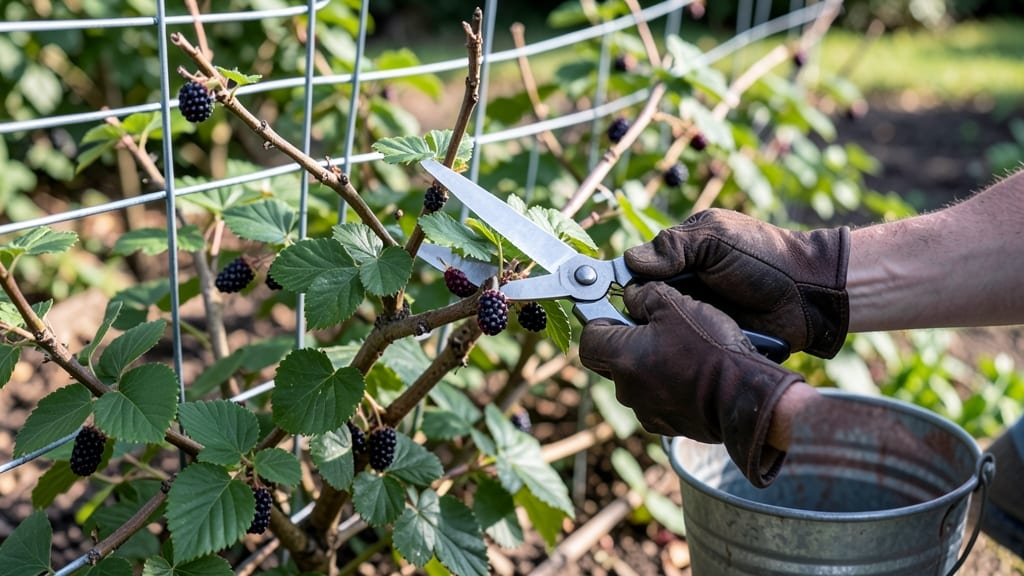
Pruning thornless blackberries isn't just about keeping your bushes tidy—it's the secret to double the berries and canes that last for years. 🌱 I learned this the hard way after my first harvest petered out, only to discover neglected canes had crowded out fresh growth.
The right cuts at the right time transform a scraggly mess into a productive powerhouse, and you can start as soon as you're ready.
You'll need just three tools: sharp pruning shears, loppers for thicker canes, and a bucket for clippings. The timing matters most—dormant season pruning (late winter/early spring) removes old wood, while summer pruning shapes new growth.
My 30-minute sessions in February and July keep the plant balanced, and the results? Berries so abundant my neighbors ask where I buy them.
What you'll achieve is a blackberry patch that produces consistently from early summer through fall, with fewer diseases and stronger canes year after year. The key is removing canes that fruited last season (they won't produce again) and thinning crowded growth to let sunlight reach the center.
You'll see new shoots emerge within weeks, and the berries? Sweeter, bigger, and easier to harvest.
This works for any thornless variety, whether you're growing in a backyard patch, along a fence, or even in containers. The same principles apply—just scale the tools. Here's exactly how to get started without overcomplicating it.
📚 In This Guide
- What you need
- Instructions
- Tips and common mistakes
- Wrapping up and next steps
What you need
- ● Pruning shears: Bypass pruners (sharp, clean, and rated for 2–4 inch cuts)
- ● Loppers: Heavy-duty (for thicker canes, 6–8 inch reach)
- ● Disinfectant: Rubbing alcohol (70%+) or bleach solution (1 part bleach to 9 parts water) (to sterilize tools between cuts)
- ● Gloves: Garden gloves (thick, cut-resistant for thornless—but still protective!)
- ● Trash bags or bucket: For collecting pruned canes (aim for 20–30 gallon capacity)
- ○ Stakes or labels (optional but helpful): Plastic flags or wooden stakes (to mark canes if needed)
- ● Pruning saw: For extra-thick canes (if your loppers struggle)
- ● Garden hose or spray bottle: To rinse tools or wipe down sticky sap
- ● Compost bin: If you plan to reuse pruned canes as mulch
- ● Sunscreen & hat: For long pruning sessions in the sun ☀️
Step-by-Step guide to pruning thornless blackberries
Here’s the method I’ve used for years to keep my thornless blackberry bushes thriving and producing fruit consistently.
✂️ Step 1: Prune in Late Winter or Early Spring
Start by cutting out any dead, diseased, or weak canes at the base with clean, sharp pruners. These canes won’t produce fruit and can spread disease to healthy growth. I always prune in late winter or early spring—right before new growth begins—when the plant is still dormant but the ground isn’t frozen. This timing ensures you’re not removing canes that might still have potential.
Next, identify the strongest, most vigorous canes—these are the ones that will bear the most fruit. Keep 4-6 of the thickest, healthiest canes per plant. Thin out the rest at the base. If you’re unsure which canes to keep, look for ones with thick stems and plenty of buds. You’ll see new growth emerging from these buds in just a few weeks.
✂️ Step 2: Cut Back Last Year’s Fruit Canes
Thornless blackberries produce fruit on second-year canes, meaning the canes that fruited last year won’t produce again. In late winter or early spring, cut these old canes back to the ground. You’ll recognize them by their brown, woody appearance and the absence of new buds. These canes are now spent and will only take energy from the plant.
Don’t worry about missing a few—blackberries are forgiving. Just focus on removing the majority of last year’s canes. This step is crucial because it redirects the plant’s energy into new growth, which will produce this year’s fruit. You’ll notice fresh, green shoots emerging within 2-3 weeks after pruning.
✂️ Step 3: Thin New Growth in Summer
Once the new canes start growing in late spring or early summer, keep an eye out for any that are growing too close together or crossing over each other. These can compete for sunlight and nutrients, leading to weaker fruit production. Use your pruners to thin out the excess canes, leaving 3-4 inches of space between them. This ensures good airflow and reduces the risk of fungal diseases.
I also like to cut back any new canes that are growing too long or leggy. You can trim them back by one-third to encourage bushier growth. Watch for new buds forming along the remaining stems—these will develop into next year’s fruit canes. You’ll see the plant filling out more densely as the season progresses.
✂️ Step 4: Light Pruning After Harvest
After the blackberries have finished fruiting in late summer or early fall, do a quick clean-up prune. Remove any canes that produced fruit this year—they’re now spent and won’t fruit again. Also, trim back any canes that are damaged, diseased, or growing in an unruly direction. This keeps the plant tidy and focused on preparing for next year’s growth.
This is also a good time to check for any suckers or new canes growing outside the main plant area. These can be removed at the base to keep the plant’s energy concentrated where you want it. You’ll notice the plant looking more organized and less crowded after this final prune of the season.
⏰ Step 5: Winter Protection (Optional but Helpful)
If you live in a region with harsh winters, consider wrapping the canes with burlap or frost cloth to protect them from freezing temperatures. This isn’t always necessary for thornless varieties, but it can help if your winters are particularly cold. I usually leave the canes standing and just add a layer of mulch around the base to insulate the roots.
This step is all about giving your blackberries a fighting chance if the weather turns rough. You’ll see healthier, more vigorous growth in the spring if you take this extra precaution. Even if you skip it, your blackberries will still produce, but winter protection can make a noticeable difference in the long run.
Tips & tricks for pruning thornless blackberries
These simple tricks will help you keep your thornless blackberry bushes thriving year after year.
Timing is Everything: The late winter or early spring timing in Step 1 is crucial because it allows you to prune while the plant is still dormant but before new growth starts. This prevents accidentally removing canes that might still have potential. I've found that pruning just as buds begin to swell gives the best results—you'll see fresh green shoots emerging within 2-3 weeks. If you miss this window, you might end up with fewer canes ready to produce fruit.
Visual Cues for Healthy Canes: When selecting which canes to keep in Step 1, look for ones with thick stems and plenty of buds along their length. These are your future fruit producers! I like to run my fingers along the cane—healthy canes feel firm and have smooth, unblemished bark. Avoid canes with cracks, holes, or excessive thorns (even though they're thornless varieties, some can still develop a few). Keeping 4-6 of these vigorous canes per plant gives you the best balance of fruit production and plant health.
Thinning Technique: In Step 3, when thinning new growth in summer, make sure to leave at least 3-4 inches of space between canes. This spacing is essential for good airflow, which helps prevent fungal diseases like botrytis. I've seen plants with crowded canes develop mold issues, leading to poor fruit quality. Also, when trimming leggy canes by one-third, cut just above a leaf bud—this encourages bushier growth from that point downward.
Clean-Up Strategy: After harvest in Step 4, take the time to do a thorough clean-up. Remove any canes that produced fruit this year—they're now spent and won't fruit again. I also like to sterilize my pruners between cuts by wiping them with rubbing alcohol. This prevents spreading any potential diseases from diseased canes to healthy ones. A clean plant equals healthier fruit next season.
Pro Tips for Pruning Thornless Blackberries
- These simple tricks will help you keep your thornless blackberry bushes thriving year after year.
- Timing is Everything: The late winter or early spring timing in Step 1 is crucial because it allows you to prune whil...
- Visual Cues for Healthy Canes: When selecting which canes to keep in Step 1, look for ones with thick stems and plent...
Frequently asked questions
Got questions about pruning thornless blackberries?
You’re not alone! Here are answers to the most common concerns—whether you’re a first-timer or a seasoned berry grower.
When is the best time to prune thornless blackberries?
Prune thornless blackberries in late winter or early spring (before buds swell) to remove dead or weak canes. For summer pruning, focus on light trimming of overcrowded or damaged growth after harvest. Avoid heavy cuts in fall, as new growth may not harden off before winter.
How do I know which canes to cut back?
Thornless blackberries have floral canes (fruit-bearing) and primocanes (new growth). Cut back last year’s fruited canes (they’re brown and woody) to the ground. Keep 1-2 strong primocanes per plant to replace them. Thin crowded canes to improve airflow and reduce disease risk.
What if I skip pruning? Will my blackberries still produce fruit?
Yes, but yield and quality will suffer. Unpruned plants get overcrowded, leading to smaller berries, more pests, and weaker canes. Pruning boosts airflow, sunlight, and energy for bigger, sweeter fruit. Think of it like a haircut—your berry bushes will thank you!
Can I use the same pruning techniques for thorned and thornless varieties?
Mostly! The pruning principles (removing old canes, thinning for airflow) apply to both. However, thornless varieties often spread faster, so monitor growth and prune more aggressively to control vigor. Thornless canes are also more flexible—handle them gently to avoid snapping!
What should I do if my thornless blackberries aren’t fruiting after pruning?
Check these fixes:
- Age of canes: Thornless blackberries need 2+ years to fruit. If your plant is young, be patient!
- Sunlight: Ensure 6+ hours of sun daily—shady spots reduce fruiting.
- Fertilizer: Test soil and add balanced fertilizer (10-10-10) in early spring.
- Pests/disease: Inspect for Japanese beetles, mites, or fungal spots (like rust). Treat early!
Wrapping up and next steps
Pruning thornless blackberries doesn’t have to be daunting—with the right techniques and timing, you’ll enjoy healthier canes, fewer pests, and a sweeter harvest year after year! 🌱 Whether you’re a seasoned gardener or just starting, these tricks will simplify the process and set you up for success.
Now that you’re armed with knowledge, grab those pruners and transform your patch into a thriving, low-maintenance blackberry haven.
Next step: Mark your calendar for your first pruning session—spring is coming, and your berries are waiting! 🌿