
Trees
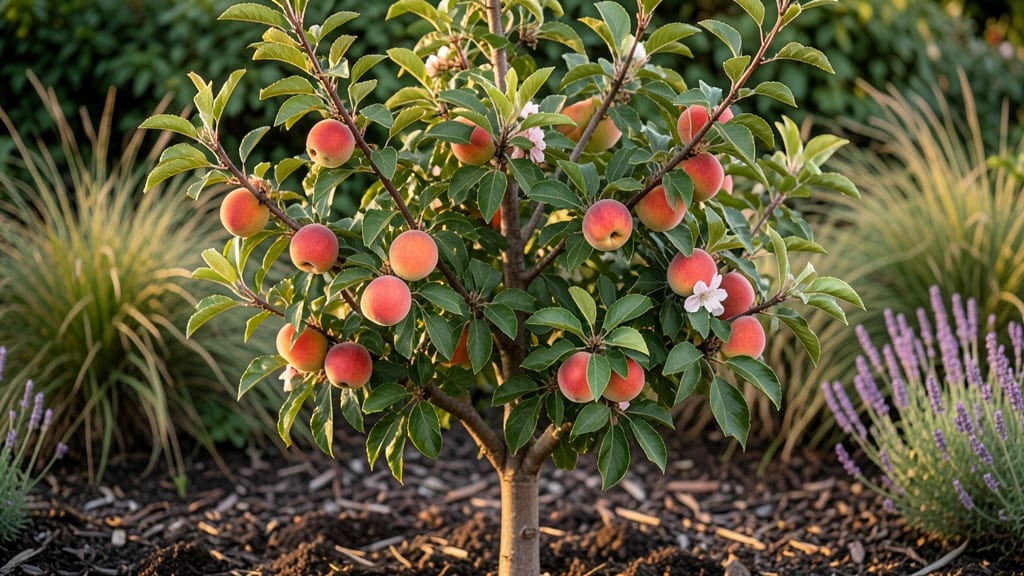
Growing Prunus persica 'Bonfire' peaches means fruit in half the time and space. 🌱 This dwarf peach tree produces sweet, juicy peaches within 2-3 years—no waiting a decade for rewards like with standard varieties.
My first 'Bonfire' tree now gives me 20+ pounds of fruit every summer, and it fits neatly in my 4' x 4' raised bed. The secret lies in its compact growth (8-10 feet tall) and cold-hardy nature—perfect for small yards, containers, or even urban balconies.
You’ll need well-draining soil, full sun (6+ hours daily), and consistent watering, but the payoff is worth it: early ripening, disease resistance, and bold red-orange fruit that tastes like summer in a bite.
Start with a 1-gallon container-grown tree in early spring, plant it 2-3 feet deep for stability, and prune lightly to encourage branching. By year two, you’ll see blossoms, and by year three, you’ll be canning or freezing your harvest. The tree’s self-pollinating nature means no need for a second variety.
For best results, mulch heavily in winter, watch for peach leaf curl (spray copper fungicide early), and thin fruit in June to improve size. My tree now outproduces its neighbors’ standard varieties—all in a fraction of the space.
📚 In This Guide
- What you need
- Instructions
- Tips and common mistakes
- Wrapping up and next steps
What you need
- ● Dwarf 'Bonfire' peach tree: 1 bare-root or container-grown sapling (ensure it’s labeled Prunus persica 'Bonfire' for the best results).
- ● Well-draining soil: A mix of native soil + compost (60/40 ratio) or a high-quality potting mix (for containers).
- ● Sunlight access: A spot with 6–8+ hours of full sun daily (partial shade in hot climates is fine).
- ● Watering can or hose: For consistent moisture (especially during the first year).
- ● Organic fertilizer: A balanced, slow-release formula (e.g., 10-10-10) or peach-specific fertilizer.
- ● Mulch: 2–3 inches of wood chips or straw to retain moisture and suppress weeds.
- ● Pruning shears: Sharp, clean shears (sterilized with rubbing alcohol) for shaping and maintenance.
- ● Container or raised bed: 15–20 gallon pot (if growing in containers; ensure drainage holes).
- ● Drip irrigation system: For automated watering (great for small spaces!).
- ● Tree support stake: 1–2 stakes + soft ties (for young trees in windy areas).
- ● Fruit thinning shears: For managing overabundant peaches in later years.
- ● Pest control (organic): Neem oil or insecticidal soap (preventative measure for aphids/peach leaf curl).
How to plant and care for Prunus persica 'Bonfire' dwarf peach tree
This compact peach variety delivers sweet fruit in just 2-3 years—here's how to set it up for success.
🌱 Step 1: Choose the Perfect Planting Location and Timing
Select a spot with 6-8 hours of direct sunlight and protection from strong winds—'Bonfire' peaches need warmth to thrive. The tree's dwarf rootstock keeps it manageable at 8-10 feet tall, but it still needs room to spread its branches 6-8 feet wide. I always plant in early spring, 2-4 weeks before the last frost, when soil temperatures reach 60°F.
Test your soil's pH before planting—'Bonfire' prefers slightly acidic to neutral soil, 6.0-7.0. If your soil is heavy clay, amend it with 2-3 inches of compost mixed into the top 12 inches of soil. This improves drainage while retaining moisture, which is critical for young roots establishing in their first season.
🪴 Step 2: Prepare the Planting Hole and Install the Tree
Dig a hole twice as wide as the root ball but no deeper—this encourages roots to spread horizontally rather than settling at the bottom. The top of the root ball should sit 1-2 inches above ground level to prevent waterlogging. Gently loosen any circling roots with your fingers before placing the tree in the hole.
Backfill with the native soil you removed, tamping lightly every 2-3 inches to eliminate air pockets. Create a 3-inch high berm around the base to hold water during initial watering. I always add a 5-gallon bucket of water immediately after planting to help settle the soil and eliminate gaps.
☀️ Step 3: Establish Proper Watering and Mulching Routine
Water deeply 2-3 times per week for the first 2 months, keeping the soil consistently moist but never soggy. You'll know you're doing it right when the top 2-3 inches of soil feel damp but not waterlogged. After the initial establishment period, reduce to 1 inch of water per week, including rainfall.
Apply 2-3 inches of organic mulch (like wood chips or straw) around the base, keeping it 3 inches away from the trunk to prevent rot. Mulch helps retain soil moisture and regulates temperature, which is especially important during summer heat waves. Replenish mulch annually as it breaks down.
✂️ Step 4: Prune for Structure and Fruit Production
Prune your 'Bonfire' in late winter or early spring before buds swell, removing any dead, crossing, or diseased branches first. Open the center of the tree to improve airflow and sunlight penetration—this reduces disease risk and encourages better fruit development. I aim to create an open vase shape, which works beautifully for this dwarf variety.
Thin fruit when they're 1 inch in diameter to 6-8 inches apart on each branch. This ensures larger, higher-quality peaches rather than a heavy crop of small fruit. Remove any suckers that grow from the base or trunk—these divert energy from fruit production. Always use clean, sharp pruners to prevent disease transmission.
🌿 Step 5: Fertilize for Optimal Growth and Fruit Set
Apply a balanced 10-10-10 fertilizer in early spring when new growth begins, using ½ cup per year of tree age (up to 1 cup maximum). Follow up with a low-nitrogen, high-phosphorus fertilizer (like 5-10-10) in late spring to promote flowering. Avoid high-nitrogen fertilizers after June—they encourage leafy growth at the expense of fruit development.
In late summer, apply a potassium-rich fertilizer (like 0-0-50) to strengthen the tree's cold hardiness and improve fruit quality. Always water the tree thoroughly before and after fertilizing to prevent root burn. I also add 1-2 inches of compost around the base annually in early spring to improve soil fertility naturally.
Tips & tricks for perfect Prunus persica 'Bonfire' peach tree growth
Here's what nobody tells you about maximizing your 'Bonfire' peach tree's potential—these details make all the difference.
Soil Temperature Matters: While the instructions specify planting when soil reaches 60°F, I've found that waiting until soil hits a consistent 65°F for at least a week gives roots a stronger initial push. Use a soil thermometer to monitor—cold soil slows root establishment, which is critical for the first 2 months when you're watering so heavily. The warmer soil helps prevent transplant shock, especially in cooler spring climates.
Root Ball Prep Technique: Before planting, soak the root ball in water for 15-20 minutes to fully hydrate the roots. This step is often skipped but makes a world of difference—especially when you're dealing with the 2-3 inches of compost-amended soil. The pre-soaked roots establish faster in their new home, which directly impacts how quickly your tree adapts to its new environment. I always do this even if the nursery soil looks moist.
Watering Visual Cues: For the critical first 2 months when you're watering 2-3 times per week, use a screwdriver to check moisture levels. Insert it 3-4 inches deep—if it comes out clean, you need more water. If it's damp but not soggy, you're hitting that perfect balance. This simple trick prevents both underwatering (which stresses young roots) and overwatering (which can cause rot). I check this every time I water during the establishment period.
Pruning for Dwarf Varieties: When creating that open vase shape in Step 4, focus on removing branches that grow inward at angles less than 45 degrees. These "V-shaped" branches often break under fruit weight. Also, leave at least 8-10 inches between branches—this spacing prevents them from rubbing together, which creates wounds that attract disease. The dwarf size makes this easier than with full-size trees, but precision matters for fruit quality.
Pro Tips for Prunus Persica Bonfire
- Here's what nobody tells you about maximizing your 'Bonfire' peach tree's potential—these details make all the differ...
- Soil Temperature Matters: While the instructions specify planting when soil reaches 60°F, I've found that waiting unt...
- Root Ball Prep Technique: Before planting, soak the root ball in water for 15-20 minutes to fully hydrate the roots. ...
Frequently asked questions
Got questions about growing the Prunus persica 'Bonfire' peach? You're not alone!
Here are answers to the most common concerns—from planting to harvest—so you can enjoy sweet, homegrown peaches without the hassle.
Can the 'Bonfire' peach tree grow in containers, or does it need to be planted in the ground?
The Prunus persica 'Bonfire' is a dwarf variety, making it perfect for containers! Use a large pot (at least 15 gallons) with drainage holes, and ensure it gets full sun (6+ hours daily). Just repot every 2–3 years and fertilize regularly. Pro tip: Elevate the pot for better drainage to prevent root rot.
How long does it take for a 'Bonfire' peach tree to bear fruit after planting?
Patience is key! Dwarf 'Bonfire' trees typically produce fruit within 2–3 years of planting, sometimes even sooner with proper care. Young trees need consistent watering, sunlight, and a balanced fertilizer (like 10-10-10) to encourage blooming. Fun fact: The first harvest might be small, but it grows bigger each year!
Why aren’t my 'Bonfire' peach tree’s flowers turning into fruit?
Several factors could be at play: late frosts damaging blossoms, poor pollination (hand-pollinate with a brush if bees are scarce), or nutrient deficiencies. Ensure your tree gets enough phosphorus and potassium (use a fruit-tree fertilizer) and protect it from cold snaps. Troubleshoot: Check for pests like aphids, which can stress the tree.
Does the 'Bonfire' peach tree need winter protection, or is it cold-hardy?
This variety is USDA zones 5–9 hardy, but young trees or harsh winters may need extra care. Wrap the trunk with tree guard and mulch heavily (3–4 inches) around the base. In extreme cold (<10°F), cover the canopy with frost cloth to protect blossoms. Pro tip: Avoid pruning late in the season, as new growth is more vulnerable to frost.
Can I grow other fruits alongside the 'Bonfire' peach tree, or do they compete?
'Bonfire' peaches thrive in small spaces, making them great companions for other dwarf fruits like blueberries, strawberries, or figs. Just ensure they have similar sunlight and water needs. Avoid planting walnut trees nearby, as they release juglone, a toxin harmful to peaches. Design tip: Use raised beds or containers to layer fruits vertically!
What’s the best way to prune a 'Bonfire' peach tree for maximum fruit production?
Prune in late winter or early spring before buds swell. Remove dead, crossing, or inward-growing branches to improve airflow. Thin out some fruit in spring (leave 6–8 inches between peaches) to prevent overloading and ensure larger, sweeter fruit. Safety note: Sterilize pruners with rubbing alcohol to prevent disease spread.
Wrapping up and next steps
The Prunus persica 'Bonfire' peach tree is a game-changer for small gardens, offering delicious fruit in record time with minimal space! 🌱 Its compact size, cold-hardy nature, and early blooms make it a standout choice for urban homesteaders and patio gardeners alike.
Whether you're a beginner or a seasoned grower, this dwarf variety proves that big flavors don’t require big yards.
Ready to plant your own Bonfire peach? Start by checking your local frost dates, then grab a tree from a reputable nursery. With the right care, you’ll be enjoying juicy, sun-ripened peaches in just a few years—what’s not to love? 🍑🔥