
Pruning
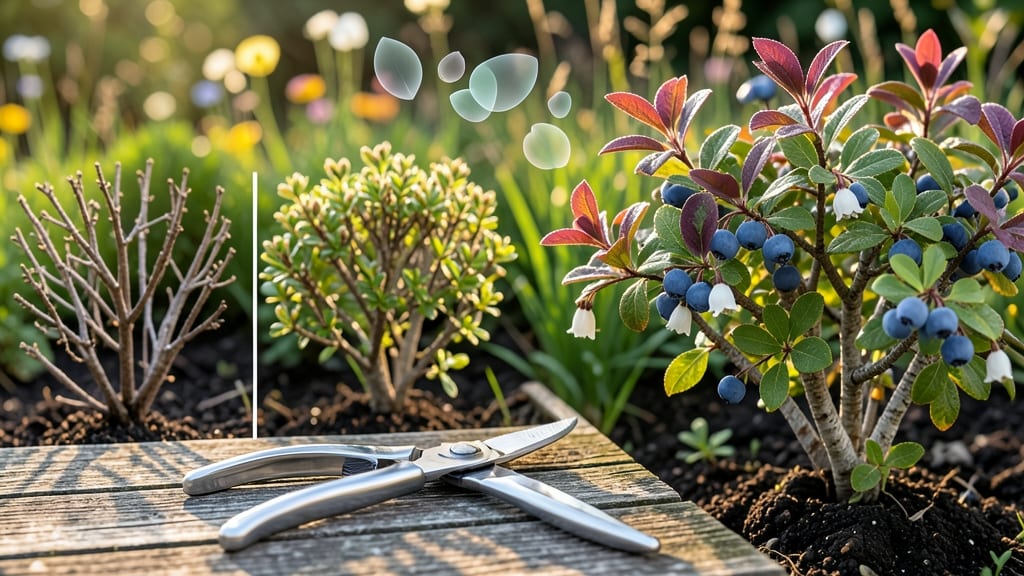
It's too late to prune blueberry bushes once flower buds appear in late winter or early spring, as you'll risk cutting off next year's fruit production. After mid-spring when new growth emerges, pruning disrupts flowering cycles and stresses the plant.
Blueberry bushes rely on last year's growth to produce flowers and fruit, so pruning at the wrong time can mean losing your harvest. 🌸 The buds form in late winter after the plant's winter chill requirements are met, and cutting them off removes the potential for next season's crop.
Even if you prune in early spring, you risk damaging the delicate flower clusters before they've had a chance to bloom. The key is to wait until after the harvest season when the plant is fully dormant again.
If you've already pruned too late, don't panic. Focus on post-pruning care to help your bushes recover. Increase watering to support new growth, apply a balanced fertilizer to replenish nutrients, and consider mulching to protect roots.
For southern climates with milder winters, timing might shift slightly, but the principle remains: never prune when flower buds are visible or when new growth is actively emerging.
💡 In This Article
- Blueberry Bush Flowering Cycle and Pruning Windows
- Late-Pruning Recovery Strategies for Blueberry Bushes
Blueberry bush flowering cycle and pruning windows
Blueberry bushes produce fruit on last year's wood, meaning their flower buds form in late winter (typically January-February in most growing zones) on the previous season's growth. These buds require 600-1,000 hours of winter chill (temperatures between 32-45°F) to develop properly—a process called dormancy breaking.
When you prune after these buds form but before flowering (usually 4-6 weeks prior to bloom), you're essentially cutting off next year's harvest. The buds are delicate, often no larger than a pea, but their removal means no flowers, no pollination, and no berries.
The timing gets even more critical when you consider the plant's growth cycle. After buds form, blueberries enter their active flowering phase (late spring), followed by fruit development.
Pruning during this period triggers stress hormones like ethylene, which can cause flower drop and reduce fruit set by up to 40%. For example, a study at the University of Georgia found that late pruning in March led to 25% fewer berries compared to dormant-season pruning in late winter.
The plant also diverts energy from root growth to compensate for the trauma, weakening its overall vigor for the next season.
Visual clues help determine if it's too late: look for swollen buds along the canes (they'll feel firm to the touch) or tiny flower clusters peeking through.
In northern climates, this happens around late February to early March, while southern varieties may bud as early as December due to milder winters. The 10-degree rule applies here—once daytime temperatures consistently stay above 50°F, new growth will begin, and pruning becomes risky.
This is when the plant shifts from dormancy to active photosynthesis, and cutting branches removes potential fruit-bearing wood.
What most gardeners overlook is how pruning affects the plant's photosynthetic balance. Blueberries are shallow-rooted shrubs, and their energy comes from the leaves on current and last year's growth. Removing too much foliage or flower buds forces the plant to allocate resources to regrowing leaves instead of developing fruit.
Think of it like a tree trying to grow new branches after a storm—it prioritizes survival over fruit production. The result? Smaller berries, fewer clusters, and potentially stunted growth for the next 2-3 years.
For those in USDA zones 6-9, the ideal pruning window is just after harvest (late summer to early fall) when the plant is fully dormant but hasn't yet formed buds. This gives you 3-4 months before winter chill requirements kick in.
In warmer climates (zones 8-9), where winters are mild, buds may form earlier, so prune by November at the latest. The goal is to remove only 10-20% of the plant's canopy—any more disrupts the delicate balance between flower buds and leaf production.
Here's what happens if you prune too late: the plant may produce water sprouts (fast-growing, weak branches) instead of flowers, or it could enter a state of physiological stress, making it more susceptible to diseases like mummy berry or botrytis blight.
In extreme cases, the bush may even skip flowering entirely. The good news? Blueberries are resilient—with proper care, they can recover, but it takes patience and attention to post-pruning recovery strategies.