
Pruning
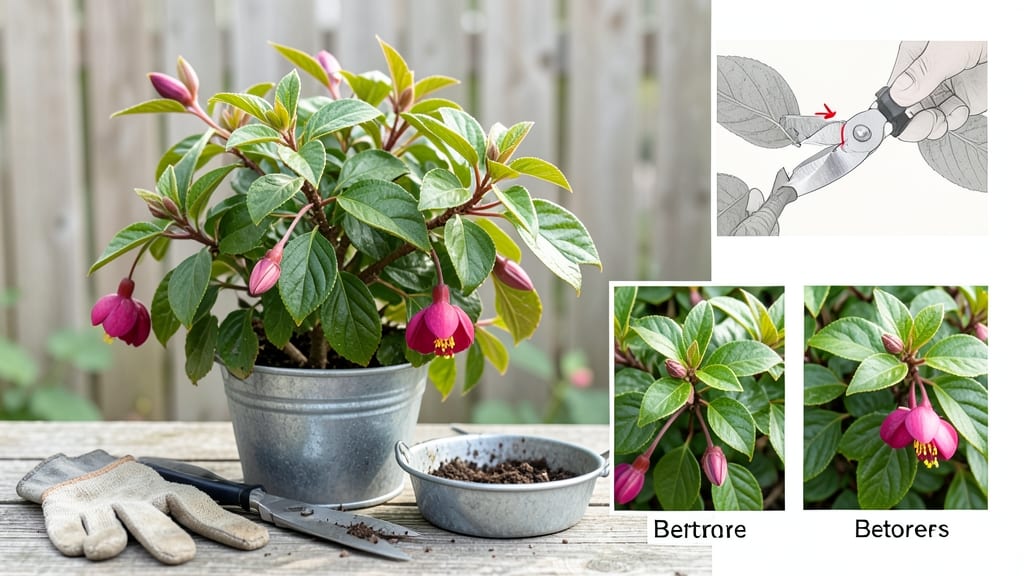
Pruning fuchsias isn’t about hacking back branches—it’s about coaxing those cascading blooms to last longer and grow bushier. ✨ I’ve turned my fuchsias from sparse, leggy plants into lush, flower-filled wonders by mastering just a few simple cuts at the right time.
The secret lies in understanding where to trim and when, so you encourage more growth without stressing the stems.
Timing matters most: prune right after flowering in late summer or early spring, never in the dead of winter when the plant is dormant. Grab sharp pruners or clean scissors and look for the tiny leaf nodes where new growth will sprout—cut just above these, never at a bare stem.
This one step transforms floppy stems into sturdy branches packed with buds.
You’ll see the difference within weeks: fresh, vibrant foliage and a bush that spills over containers with double the blooms. The key is patience—don’t rush the cuts, and avoid over-pruning, which can leave your fuchsia looking bare and stressed. A little precision goes a long way with these delicate beauties.
Works for both trailing and upright varieties, whether you’re growing in pots or garden beds. Once you’ve got the hang of it, your fuchsias will reward you with blooms that last from spring through fall—no harsh cuts required.
📚 In This Guide
- What you need
- Instructions
- Tips and common mistakes
- Wrapping up and next steps
What you need
- ● Sharp pruning shears – Bypass pruners (4-6 inch blades) are ideal for clean cuts. Avoid dull tools that crush stems!
- ● Hand pruners – For smaller branches (2-3 inches thick) and delicate trimming. Look for ergonomic grips to reduce hand fatigue.
- ● Disinfectant (70% isopropyl alcohol or rubbing alcohol) – Wipe tools before and after use to prevent disease spread.
- ● Garden gloves – Opt for nitrile-coated gloves (medium thickness) to protect against thorns and sap.
- ○ Rubbing alcohol (for wound sealing) – Dab on pruning cuts to reduce sap bleeding (optional but handy for heavy sap producers).
- ● Plant tie or twine – Useful if you’re staking new growth post-pruning.
- ● Pruning saw (for thick stems) – Only needed if your fuchsia has woody, mature stems (rare for most varieties).
- ● Bucket of water + bleach (1:9 ratio) – For soaking tools after use to sanitize thoroughly.
- ● Choose a dry, overcast day to minimize stress on the plant.
- ● Have a clean workspace (e.g., newspaper or tray) to lay out tools and trimmings.
- ● Know your fuchsia’s growth type (trailing, bushy, or standard) to tailor pruning goals.
Step-by-Step guide to pruning fuchsias for healthier growth
Here’s my go-to method for trimming fuchsias—it keeps them blooming all season without sacrificing those delicate stems.
✂️ Step 1: Wait for the Right Time to Prune
Prune your fuchsias in early spring when new growth begins, or right after the first flush of flowers in late summer. This timing ensures you’re not cutting back into dormant wood or removing potential blooms. You’ll know it’s the right moment when you see fresh, vibrant leaves pushing from the stems—those are your cues to start.
Never prune in fall or winter unless you’re in a mild climate. Cold weather stresses plants, and cutting back too late can stunt next year’s growth. If you’re unsure, wait until you spot at least 2-3 inches of new growth—that’s your green light to begin.
✂️ Step 2: Use Clean, Sharp Pruners and Identify Growth Points
Grab your sterilized pruners (wipe them with rubbing alcohol first) and locate the nodes—those little bumps on the stems where leaves and buds form. These are where new growth will sprout, so you’ll want to cut just above a node at a 45-degree angle. This prevents water from pooling on the cut and keeps the stem healthy.
I like to make my cuts about ¼ inch above the node—close enough to encourage new growth but not so high that it weakens the stem. If you’re unsure where the node is, look for the tiny leaf scars or buds along the stem. These are your guides for precise trimming.
✂️ Step 3: Trim Back Leggy or Overgrown Stems
Start by removing any dead, damaged, or crossing branches—these compete for energy and can stunt your plant’s ability to bloom. Next, focus on the long, leggy stems that have fewer leaves or buds. Cut these back by ⅓ to ½ of their length, always above a node. You’ll see the plant’s shape open up, allowing better airflow and light penetration.
If your fuchsia has grown too tall or top-heavy, you can also pinch back the tips of the main stems. This encourages bushier growth and more flowers. Just snip off the top 1-2 inches of the stem, and watch for new side shoots to form within a few weeks.
✂️ Step 4: Shape the Plant for Balance and Airflow
Step back and assess the plant’s overall shape. Fuchsias thrive when they’re rounded and full, not stretched or bare in the center. Trim any stems that are growing inward or rubbing against others—this prevents disease and keeps the plant looking neat. Aim for a natural, balanced silhouette that still lets light reach all parts of the plant.
For trailing or cascading varieties, you can also prune to encourage longer stems by cutting back the tips of the main branches. This tricks the plant into growing even more gracefully. Just remember: the more you prune, the more energy the plant puts into new growth, so don’t go overboard.
🌿 Step 5: Post-Pruning Care for a Strong Recovery
After trimming, give your fuchsia a light feeding with a balanced fertilizer (like 10-10-10) to support new growth. Water deeply but keep the soil evenly moist—not soggy—for the first week. You’ll notice fresh, bright green leaves emerging within 7-10 days, signaling that the plant is recovering well.
If you see any yellowing leaves after pruning, it’s usually a sign of overwatering or stress. Adjust your watering to let the top 1-2 inches of soil dry out between waterings. With the right care, your fuchsia will bounce back stronger than ever, ready to burst into bloom again.
Tips & tricks for perfect fuchsia pruning
Here's what I've learned after years of pruning fuchsias—these little tricks make all the difference between stressed plants and thriving bloomers.
Timing is Everything: I can't stress this enough—pruning in early spring or late summer gives your fuchsias the best chance to recover. The 2-3 inches of new growth you're looking for in Step 1 should be firm and bright green, not soft or yellow. If you're in doubt, wait another week rather than cutting too early. The plant's natural growth rhythm is your best guide.
The Right Angle Matters: When making those 45-degree cuts above the nodes in Step 2, think of it like creating a little roof over the cut. This simple angle prevents water from sitting on the stem, which could lead to rot. I always make sure my pruners are sharp—dull blades crush stems and create jagged cuts that heal poorly. A quick wipe with rubbing alcohol keeps them sterile too.
Don't Over-Prune: In Step 3, resist the urge to cut back more than ⅓ to ½ of the stem length. Fuchsias are delicate and can't recover from drastic pruning. I've seen people cut back entire stems, only to have the plant struggle to bloom for months. Think of pruning as sculpting rather than drastic haircutting—you want to shape, not remove. For trailing varieties, focus on cutting back the tips to encourage longer stems rather than removing entire branches.
Recovery Care is Critical: That first week after pruning is when your fuchsia needs the most attention. The 7-10 days mentioned in Step 5 for new leaf growth is actually a bit optimistic for some varieties—give it up to 2 weeks if you're in cooler climates. I've found that a light misting with water in the morning helps reduce stress, and I always avoid fertilizing for at least 2 weeks after pruning. The plant needs to focus on healing, not growing new leaves.
Pro Tips for Prune A Fuchsia
- Here's what I've learned after years of pruning fuchsias—these little tricks make all the difference between stressed plants and thriving bloomers.
- Timing is Everything: I can't stress this enough—pruning in early spring or late summer gives your fuchsias the best chance to recover.
- The Right Angle Matters: When making those 45-degree cuts above the nodes in Step 2, think of it like creating a little roof over the cut.
Frequently asked questions
Got questions about pruning fuchsias?
Here are answers to the most common ones—so you can trim with confidence and keep your plants thriving!
When is the best time to prune fuchsias?
Prune fuchsias after they finish blooming in late spring or early summer, or do a light trim in early spring to shape them. Avoid heavy pruning in fall—it gives stems less time to harden off for winter. For tropical varieties, prune lightly year-round to encourage bushiness!
Can I prune fuchsias in winter?
Winter is not ideal for pruning hardy fuchsias (like Fuchsia magellanica), as cold stress can harm new growth. Wait until spring when temperatures rise above 50°F (10°C). Tropical fuchsias indoors can be lightly pruned in winter, but avoid drastic cuts—focus on shaping instead.
What if my fuchsia looks sad after pruning?
Don’t panic! Yellowing leaves or leggy stems are normal post-prune. Boost recovery by watering deeply, fertilizing with a balanced liquid feed (like 10-10-10), and placing the plant in bright, indirect light. Avoid overwatering—soggy soil stresses roots further.
Should I deadhead fuchsias?
Yes! Deadheading (removing spent blooms) encourages more flowers and prevents seed pods from draining energy. Snip just above a set of leaves or a leaf node where new growth can sprout. For trailing varieties, deadhead regularly to maintain a lush, blooming cascade.
Can I propagate my pruned cuttings?
Fuchsias root easily from softwood cuttings. Dip 3–4 inch tips in rooting hormone, plant in moist perlite or sand, and cover with a plastic bag to retain humidity. Keep in bright, indirect light (60–70°F/15–21°C) until roots form in 2–4 weeks. Perfect for expanding your collection!
What if my fuchsia doesn’t bloom after pruning?
Check these fixes:
- Ensure it gets 6+ hours of sunlight (morning sun is best).
- Fertilize with a high-phosphorus feed (like 5-10-5) to promote blooms.
- Prune less aggressively—fuchsias bloom on new growth, so avoid shearing too hard.
- Verify it’s not overcrowded; thin stems if needed for airflow.
Wrapping up and next steps
Pruning your fuchsias doesn’t have to be intimidating—it’s all about timing, technique, and a little love! 🌸 With the right tools and a gentle hand, you’ll encourage healthier growth and stunning blooms all season long.
Now that you’re armed with the know-how, grab those shears and get pruning with confidence!
Ready to take it further? Experiment with different pruning styles or even propagate your cuttings to expand your garden. Happy trimming—and enjoy those vibrant fuchsias in full bloom! 🌿