
Pruning
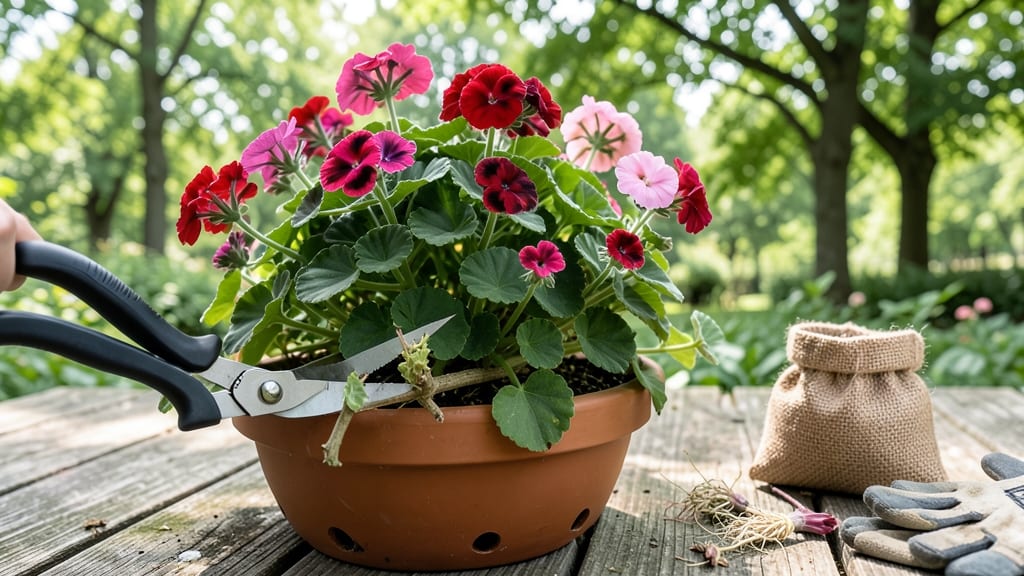
Pruning geraniums for better growth isn't just about keeping them tidy—it's the secret to nonstop blooms all season long. 🌸 I remember my first attempt where I snipped too much, and the plants looked sad for weeks.
Turns out, timing and technique make all the difference between leggy stems and bushy, flower-covered plants.
You only need sharp pruners, a pair of gloves, and a sunny morning to get started. The key is cutting just above a leaf node (that little bump where leaves grow) to encourage new branches.
Most gardeners prune twice a year—once in early spring to shape the plant and again after the first big flush of flowers to keep production going.
What you'll end up with is geraniums that look like they belong in a florist's display instead of your backyard. The plants grow fuller, flowers multiply, and you'll have fewer problems with pests hiding in dead wood.
Plus, the scent of crushed leaves becomes even more intoxicating when the plants are healthy.
Works for both patio pots and in-ground plantings, and the same principles apply whether you're growing zonal, ivy, or scented geraniums. Here's how to do it right without turning your plants into pruning casualties.
📚 In This Guide
- What you need
- Instructions
- Tips and common mistakes
- Wrapping up and next steps
What you need
- ● Sharp pruning shears – Choose bypass pruners (not anvil-type) to avoid crushing stems. A 5-inch pair is ideal for most geraniums.
- ● Clean, sterilized alcohol wipes (70% isopropyl alcohol) – 1 pack to disinfect tools before and after use (prevents disease spread).
- ● Garden gloves – A pair of durable, cut-resistant gloves (e.g., nitrile-coated) to protect your hands from thorns and sap.
- ● Sharp knife or razor blade – A small, clean utility knife for trimming close to the stem (great for hard-to-reach spots).
- ● Compost bin or bag – To collect pruned stems and leaves for composting.
- ○ Water spray bottle (optional but helpful) – A small 8-16 oz bottle to mist cuts and encourage faster healing.
- ● Pruning saw – If dealing with large, woody geraniums (rare but possible in mature plants).
- ● Rooting hormone – A small tube to encourage faster growth if propagating from cuttings.
- ● Plant food (balanced fertilizer) – A 5-10-5 or 10-10-10 formula to nourish geraniums post-pruning (apply 2-4 weeks after trimming).
- ● Mulch – Organic mulch (e.g., shredded bark) to retain moisture and protect roots after pruning.
Step-by-Step guide to pruning geraniums for bushier growth
Here’s how I transform leggy geraniums into full, vibrant bushes—no guesswork involved.
✂️ Step 1: Time Your Pruning for Peak Performance
Prune geraniums in early spring as new growth begins or after flowering to encourage bushier stems. This is when the plant naturally focuses energy on new shoots rather than seed production. Avoid pruning in fall—you’ll cut back growth just as winter approaches, leaving them vulnerable to cold.
Look for new leaf buds along the stems—these are your signal that the plant is ready. If you see long, bare stems with no signs of fresh growth, wait another week. I always prune on a dry, sunny morning so wounds dry quickly and reduce disease risk.
✂️ Step 2: Remove Dead or Leggy Stems First
Start by cutting back any dead, brown, or woody stems at the base with clean, sharp pruners. These stems won’t regrow and only take energy from the plant. Next, trim leggy stems—those stretched-out branches with sparse leaves. Cut them back to just above a leaf node (the bump where leaves attach).
Don’t worry about making perfect cuts—geraniums are forgiving. If you accidentally cut into a leaf, just snip a little more to clean it up. The goal is to leave healthy, outward-facing leaves on the remaining stems so they can photosynthesize efficiently.
✂️ Step 3: Shape for Fullness and Airflow
Now focus on shaping. Step back and look at the plant—aim for a rounded, bushy shape rather than a flat top. Cut back the longest stems by about one-third to encourage branching. Make cuts at a 45-degree angle just above a leaf node to prevent water from pooling.
If your geranium is flowering, wait until after the blooms fade to prune. This gives you a chance to enjoy the flowers while still encouraging new growth. You’ll see new shoots emerging within 2-3 weeks—that’s your reward for pruning correctly.
🌿 Step 4: Encourage New Growth with Light Trimming
After the initial pruning, keep an eye out for overcrowded stems or branches growing inward. These compete for sunlight and weaken the plant. Trim them back to open up the center and improve airflow, which reduces humidity and disease risk.
Here’s the thing—geraniums respond best to gradual pruning. If you cut back too aggressively all at once, you might shock the plant. Instead, do a little maintenance every 2-3 weeks during the growing season. You’ll end up with a dense, lush plant that blooms nonstop.
💧 Step 5: Care for Pruned Geraniums
After pruning, water the plant deeply to help it recover. Geraniums are drought-tolerant, but fresh cuts need moisture to heal. Avoid overhead watering—it can introduce fungal diseases to the wounds. Instead, water at the base of the plant in the morning so the foliage dries quickly.
Move pruned geraniums to a bright, sunny spot (at least 6 hours of direct sun daily). They’ll need this light to fuel their new growth. Within 4-6 weeks, you’ll see a noticeable difference—thicker stems, more leaves, and a fuller shape. That’s the payoff!
Tips & tricks for perfect geranium pruning
Transforming leggy geraniums into lush, bushy plants takes more than just cutting—it’s about timing, technique, and care. Here’s how to elevate your pruning game.
Timing is Everything: The early spring timing in Step 1 is crucial because that’s when geraniums naturally redirect energy toward new growth. If you prune too early, you risk cutting back tender new shoots that haven’t fully hardened off. I’ve learned the hard way that waiting until you see those first fresh leaf buds makes all the difference—it’s your plant’s way of saying, "I’m ready!"
Tool Prep Matters: Before you start, clean your pruners with rubbing alcohol to sterilize them. I always do this between plants to prevent spreading diseases like powdery mildew. Sharp tools make cleaner cuts that heal faster, so take a minute to hone your blades if they feel dull. The goal is to make precise cuts just above leaf nodes—this encourages branching without leaving ugly stubs.
Shape with Purpose: When shaping in Step 3, think of your geranium like a topiary—you want that rounded, full shape that catches the light from all angles. Cutting back the longest stems by one-third might feel aggressive, but trust me, it works. The key is to leave at least three or four leaf nodes on each remaining stem so the plant has energy to regrow. I often sketch a quick mental outline before cutting to visualize the final shape.
Post-Pruning Care: The deep watering in Step 5 isn’t just about hydration—it’s about helping those fresh cuts seal properly. I’ve noticed that plants watered immediately after pruning show new growth within days, while those left to dry out can take weeks to recover. Pair that with morning watering to give foliage time to dry completely, and you’ll dramatically reduce the risk of fungal issues. That bright, sunny spot isn’t optional either—geraniums need at least six hours of direct sunlight daily to fuel their comeback.
Pro Tips for Prune Geraniums For Better Growth
- Transforming leggy geraniums into lush, bushy plants takes more than just cutting—it’s about timing, technique, and care.
- Timing is Everything: The early spring timing in Step 1 is crucial because that’s when geraniums naturally redirect energy toward new growth.
- Tool Prep Matters: Before you start, clean your pruners with rubbing alcohol to sterilize them.
Frequently asked questions
Got questions about pruning geraniums? You’re not alone! Here are some common concerns and quick answers to help you prune like a pro.
When is the best time to prune geraniums?
Prune geraniums in early spring (just as new growth starts) and again in mid-summer to encourage bushier blooms. Avoid pruning in fall or winter—this can stunt growth when the plant is dormant. If you notice leggy stems anytime, a light trim can help, but timing matters most for long-term health!
How much should I cut back my geraniums?
Aim to trim back one-third to one-half of the plant’s height during spring pruning. For summer maintenance, snip just the tips of leggy stems (about ¼ inch above a leaf node) to promote branching. Over-pruning can stress the plant, while under-pruning may lead to sparse blooms.
Can I prune geraniums too much?
Yes! Over-pruning—especially cutting into old wood or removing too many leaves—can weaken the plant. Stick to healthy stems and avoid stripping the plant bare. If you accidentally go too far, don’t worry—geraniums are resilient! Just reduce future trims and focus on watering and sunlight.
What if my geraniums don’t bloom after pruning?
Lack of blooms often means too little light, over-fertilizing, or improper pruning. Ensure your geraniums get 6+ hours of sunlight daily and prune above a leaf node (not just random cuts). Deadhead spent blooms regularly too—this encourages more flowers! If issues persist, check for pests or root-bound pots.
Can I prune geraniums indoors?
Indoor geraniums follow the same rules: prune in spring and summer to shape them and remove dead growth. However, they may need grow lights to compensate for limited natural light. Avoid overcrowding pots—root-bound plants bloom poorly. Repot every 2–3 years for better growth!
Wrapping up and next steps
Pruning your geraniums doesn’t have to be intimidating—it’s all about timing, technique, and a little love! By following these steps, you’ll encourage lush blooms, stronger stems, and healthier plants all season long. Remember, the key is consistency and confidence—your geraniums will thank you!
Now that you’re armed with the know-how, grab those shears and get pruning! 🌿✂️ For even more tips, check out our guide on fertilizing geraniums to keep your beauties thriving year-round.