
Pruning
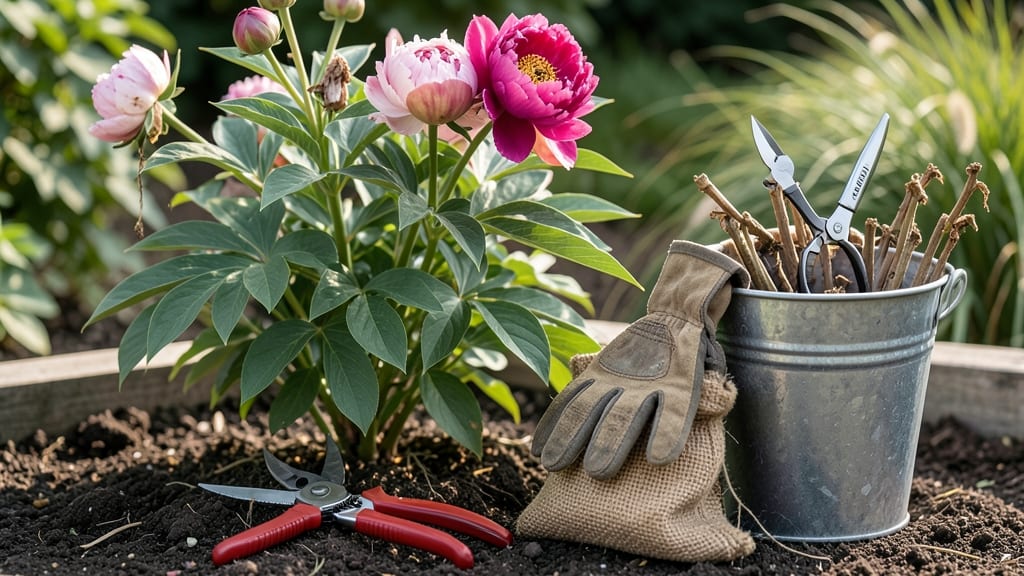
Pruning peonies in summer isn't about cutting back hard—it's about keeping them healthy and blooming next year. 🌸 Unlike fall pruning, summer cuts focus on removing spent blooms and diseased foliage before they drain the plant, while preserving the energy stored in last year's growth that fuels those iconic flowers.
The key is timing: prune right after blooms fade but before the foliage yellows completely. You'll need sharp, sterilized pruners to make clean cuts just above a leaf node, never more than a third of the plant's height.
This simple step prevents fungal issues and keeps your peonies looking tidy without sacrificing next season's blooms.
After pruning, give your peonies a drink of water and a light mulch layer to protect roots. The goal isn't dramatic transformation—it's maintenance that keeps them strong. You'll see fewer floppy stems, cleaner plants, and better blooms in 2-3 years of consistent summer care.
This method works for all peony types, from herbaceous to tree peonies. Just remember: patience is key. Over-pruning now means fewer flowers later—so cut lightly and focus on removing only what's necessary. Let's get those blooms looking their best!
📚 In This Guide
- What you need
- Instructions
- Tips and common mistakes
- Wrapping up and next steps
What you need
- ● Bypass pruners – Sharp, clean pruners (5-7 inch blades) for precise cuts. Must be sterilized with rubbing alcohol to prevent disease spread.
- ● Garden shears or loppers – For thicker stems (4-6 inch blades). Opt for bypass-style to avoid crushing stems.
- ● Gloves – Heavy-duty gardening gloves (nitrile-coated for grip) to protect against thorns and dirt.
- ● Disinfectant – 70% isopropyl alcohol or a 10% bleach solution (1 part bleach to 9 parts water) for tool sterilization.
- ○ Pruning saw – Optional but helpful for stubborn, woody stems (8-10 inch blade).
- ● Compost or mulch – 2-3 inches of organic matter (e.g., shredded bark, aged compost) to replenish soil after pruning.
- ● Fertilizer (balanced or low-nitrogen) – 10-10-10 or 5-10-10 formula (1 tbsp per plant). Avoid high-nitrogen—it encourages foliage over blooms!
- ● Rake or hoe – To clear debris and loosen soil around the base.
- ● Watering can or hose – For post-pruning hydration (1-2 gallons per plant).
- ● Trash bag or bucket – For disposing of pruned stems and debris.
- ● Timing – Prune after peonies finish blooming (late June to early July) but before new buds form.
- ● Weather – Choose a dry, overcast day to minimize stress on the plant.
- ● Plant health check – Inspect peonies for pests (aphids, Japanese beetles) or diseases (powdery mildew) before pruning.
Step-by-step instructions for pruning peonies in summer
Here's the exact method I use to keep peonies blooming vigorously year after year—no guesswork, just precision.
✂️ Step 1: Identify and Remove Spent Blooms
Start by locating the spent blooms—those that have fully opened and begun to wilt. You'll see them as the largest, most open flowers on the plant. Use clean, sharp pruners to cut the stem 1-2 inches below the bloom, just above a set of leaves or a bud. This prevents the plant from wasting energy trying to seed the spent flower.
I always prune on a dry morning when the plant isn't stressed. Avoid cutting into the thick, woody stems—these are the plant's energy reserves. The goal is to redirect that energy into new growth and next year's blooms.
✂️ Step 2: Trim Back Leggy or Weak Growth
Next, scan the plant for leggy stems—those that stretch tall and thin without producing buds. These stems rarely bloom and can drain the plant's resources. Use your pruners to cut these back to the ground, but only if they're completely spent and not showing signs of new buds.
Watch for new buds forming along the stems. These look like small, tightly closed buds nestled in the leaf axils. Never prune above these buds—they're the promise of next year's flowers. If you're unsure, wait a week to see if new growth appears.
✂️ Step 3: Thin Overcrowded Foliage
Peonies can become overcrowded, especially in established gardens. Look for stems that are growing too close together, competing for sunlight and nutrients. Use your pruners to remove 1-2 of the thinnest stems per plant, cutting them at the base. This improves airflow and reduces the risk of fungal diseases.
I like to prune in stages if the plant looks particularly crowded. Remove a few stems now, then wait a week to see how the plant responds. You'll notice the remaining stems thicken and grow stronger as they have more space to access sunlight and water.
🌿 Step 4: Clean Up Debris and Disinfect Tools
After pruning, gather all the clippings and remove them from the garden area. Leaving old foliage and spent blooms on the ground can harbor pests and diseases. Drop them in a compost bin or trash bag—never compost peony debris, as it can spread fungal spores.
Disinfect your pruners with rubbing alcohol or a 10% bleach solution to prevent cross-contamination. Wipe down the blades thoroughly and let them dry before storing. This step is critical—it ensures your tools are ready for the next pruning session without carrying pathogens.
☀️ Step 5: Fertilize and Water for Recovery
Once pruning is complete, give your peonies a light feeding with a balanced, low-nitrogen fertilizer (like 10-10-10). This encourages root growth without promoting excessive foliage at the expense of blooms. Water the plant deeply to help it recover from the pruning stress.
Keep an eye on the soil moisture for the next 2-3 weeks. You'll see new growth emerge as small, bright green shoots. This is your signal that the plant is healing and preparing for next year's blooms. Avoid heavy watering or fertilization after this point—peonies thrive on consistency, not excess.
Tips & tricks for perfect summer peony pruning
These precision-focused tips will help you prune like a seasoned gardener and keep your peonies thriving for years.
Timing is Everything: I can't stress enough how important it is to prune on a dry morning after the blooms have fully opened but before they start to seed. The 1-2 inches below the bloom rule in Step 1 is critical—this is where new buds often form. If you cut too close, you risk removing potential next-year blooms. Look for that small bump just below the flower where the stem starts to swell—that's your target zone.
Tool Prep Matters: Your pruners are your most important tool, and they need to be ready for action. Before you even touch the plant, wipe down your blades with rubbing alcohol or a 10% bleach solution. I've seen so many gardeners skip this step and end up with infected plants. Also, make sure your blades are sharp—dull pruners crush stems instead of making clean cuts, which stresses the plant. A quick test: if you're struggling to cut through a peony stem easily, your blades need sharpening.
Visual Cues for Healthy Pruning: In Step 2, when you're looking for those leggy stems, remember this trick: healthy stems should be about as thick as your thumb at the base. Anything thinner is likely not producing buds and should be removed. For the buds themselves, they'll look like tiny green nubs tucked into the leaf axils—think of them as little green buttons. If you're unsure whether a stem has buds, wait a week before pruning to see if new growth appears.
Recovery Strategy: After pruning, don't be tempted to go overboard with water or fertilizer. The 2-3 week recovery period mentioned in Step 5 is when your peonies are most vulnerable. I've seen gardeners drown their plants or over-fertilize right after pruning, which can actually set them back. Instead, give them a deep watering and let nature take its course. You'll know you're doing it right when you see those bright green shoots emerge—this is your plant's way of saying "thank you" for the careful pruning.
Pro Tips for Prune Peonies In Summer
- These precision-focused tips will help you prune like a seasoned gardener and keep your peonies thriving for years.
- Timing is Everything: I can't stress enough how important it is to prune on a dry morning after the blooms have fully opened but before they start to seed.
- Tool Prep Matters: Your pruners are your most important tool, and they need to be ready for action.
Frequently asked questions
Got questions about summer peony pruning?
You’re not alone! Here’s a quick guide to the most common concerns—so you can prune with confidence and keep your peonies thriving.
Can I prune peonies in summer if they’re already blooming?
Yes, but only after the flowers have fully faded and browned. Cutting back blooms too early (while still green) removes next year’s buds, which form on stems after flowering. Wait until late summer—around August or September—for the best results. Patience pays off!
What’s the best time of day to prune peonies?
Prune on a cool, overcast day or early morning to reduce stress on the plant. Avoid midday heat, which can shock peonies and invite pests or disease. If you must prune in summer sun, water the plant thoroughly beforehand and trim in stages to minimize stress.
Do I need special tools to prune peonies, or will regular scissors work?
While clean, sharp pruners (or shears) are ideal, you can use regular scissors in a pinch. Just ensure they’re sterilized with rubbing alcohol to prevent spreading disease. Avoid dull tools—they crush stems, slowing healing. For large clumps, bypass pruners make the job easier.
What if I accidentally cut into the peony’s crown? Can it still recover?
Peonies are tough, but cutting into the crown (the swollen base) can weaken the plant or invite rot. If it happens, stop pruning immediately and monitor for signs of stress (yellowing leaves, wilting). Keep the soil moist but not soggy. Most peonies recover, but growth may be slower that season.
Should I fertilize peonies right after summer pruning?
Hold off on fertilizer until early spring (March–April). Summer pruning is about cleanup, not feeding. Over-fertilizing now can encourage weak, floppy growth that’s prone to disease. Instead, focus on watering deeply (1–2 inches per week) and mulching to protect roots.
Wrapping up and next steps
Pruning peonies in summer is your secret weapon for bigger, healthier blooms next season! By following these steps—like cutting back spent flowers, thinning crowded stems, and avoiding over-pruning—you’ll keep your peonies thriving. Remember, timing and precision are everything, so don’t rush the process.
Now that you’re armed with the know-how, grab those shears and get pruning! 🌸 Your garden (and future floral displays) will thank you. For extra care, consider testing your soil or planning a mulching schedule to boost your peonies’ long-term health.